
By Thapelo Molefe
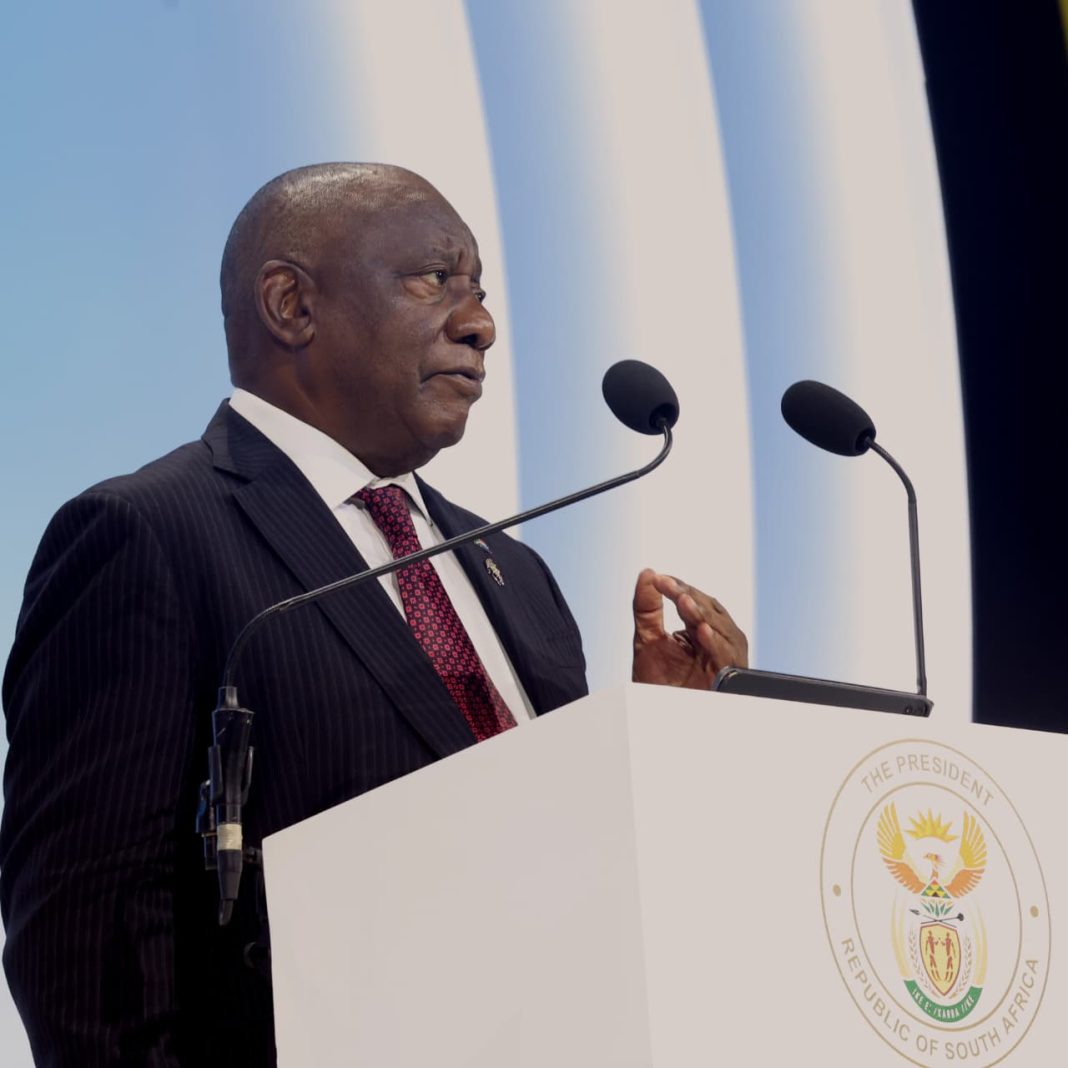
President Cyril Ramaphosa has asked the Western Cape High Court to stop Parliament from commencing public hearings in its Section 89 impeachment process until the court rules on his application to review the independent panel’s report that found sufficient evidence to justify an impeachment inquiry.
During proceedings on Wednesday, Ramaphosa’s counsel, Advocate Wim Trengove SC, said the President was seeking only an interim interdict pending the review hearing, scheduled for 2 to 4 September.
“The scope of the interdict he seeks is limited to the commencement of the public hearings,” Trengove told the court.
“So this court’s interdict will expire when this court gives judgment in the review.”
Trengove argued that the independent panel applied the wrong legal test by equating “sufficient evidence” with a prima facie case instead of conducting a broader qualitative assessment of whether the evidence justified the “momentous step” of a public impeachment inquiry.
“The panel got the test wrong,” he said.
“It simply said, ‘Is there a prima facie case?’ By asking itself the wrong question, it deprived the President of the protection of the requirement that there be sufficient evidence for the momentous step of an inquiry.”
He argued that the Section 89 impeachment process is punitive in nature and that Parliament’s rules require an independent panel to shield a president from a public inquiry unless there are sufficient grounds.
Trengove also submitted that the panel failed to consider whether there was evidence that Ramaphosa acted intentionally or in bad faith in relation to the allegations against him.
“The panel never even asked that question,” he said.
“It can’t come to the conclusion that there is prima facie evidence that the President acted in bad faith when it never asked that question and never answered it.”
The judges questioned whether a public impeachment inquiry would necessarily prejudice the President, suggesting it could equally result in his exoneration.
Responding, Trengove said: “It is humiliating to put a president on trial without good reason. The legislature created that buffer, and he’s entitled to that protection.”
Counsel for Parliament’s impeachment committee, Advocate William Mokhare SC, opposed the application, arguing that granting the interdict would undermine Parliament’s constitutional duty to hold the President accountable.
He warned that the order would “set a dangerous precedent because it means that it will open a way where even other presidents that are still coming may simply stall this important constitutional accountability process.”
Mokhare argued that the independent panel was not required to determine the President’s guilt, but only whether the evidence before it established a case for him to answer.
“The panel’s duty is simply to say that we have now looked at this material placed before us, we are satisfied that there is a case to answer by the President and then that step is concluded,” he said.
He rejected Ramaphosa’s contention that the panel had confused “prima facie evidence” with “sufficient evidence”, arguing that the Constitutional Court had used the concepts interchangeably.
Mokhare said the panel repeatedly referred to “sufficient evidence” throughout its report and correctly applied its mandate before recommending that the matter proceed to an impeachment inquiry.
He further submitted that the Constitutional Court had triggered the impeachment process and that Parliament was constitutionally obliged to carry it through.
While the President was entitled to challenge the panel’s report on review, Mokhare argued, that did not automatically suspend Parliament’s accountability process or justify halting the committee’s work.
The hearing continues.





