

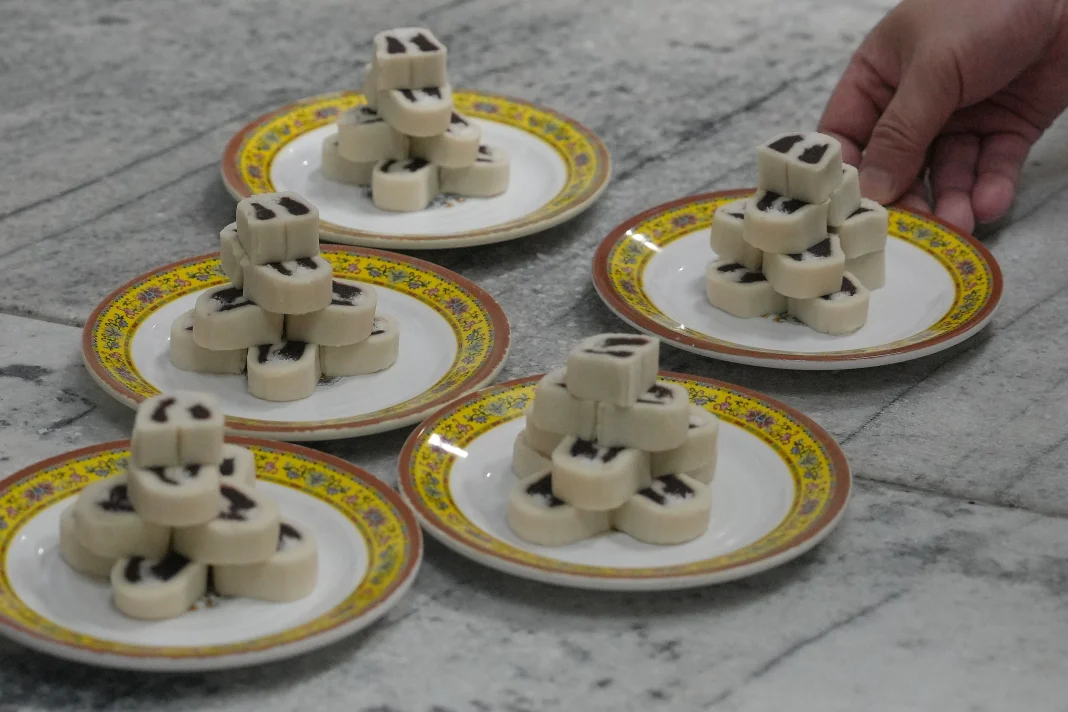


It is said that Empress Dowager Cixi once dreamed of a pastry during the final decades of imperial China.
The same treat was served to her at breakfast the following morning. Delighted, she summoned her chef and rewarded him with a silver ingot.
“It was originally called ‘minced pork pancake,’ but because it had fulfilled her dream, it later became known as ‘dream pastry,’” said Zhou Tong, a chef at Fangshan Restaurant in Beijing.
Fangshan specializes in imperial cuisine, preserving dishes like the one associated with Cixi and other culinary traditions from China’s imperial court.
The restaurant was founded in 1925 by former chefs from the Qing Dynasty at Beihai Park, a garden where royals from several dynasties rested, handled government affairs and performed ritual sacrifices.
“The name Fangshan literally means ‘imitating the imperial cuisine,’” said assistant general manager Di Xin.
A handful of other Beijing restaurants also serve versions of imperial cuisine, while the Palace Museum preserves
You’ve reached your free article limit
Subscribe to enjoy unlimited access to trusted journalism. Cancel anytime.
Subscribe nowNeed help? molokom@insidepolitic.co.za






