



By Lebone Rodah Mosima
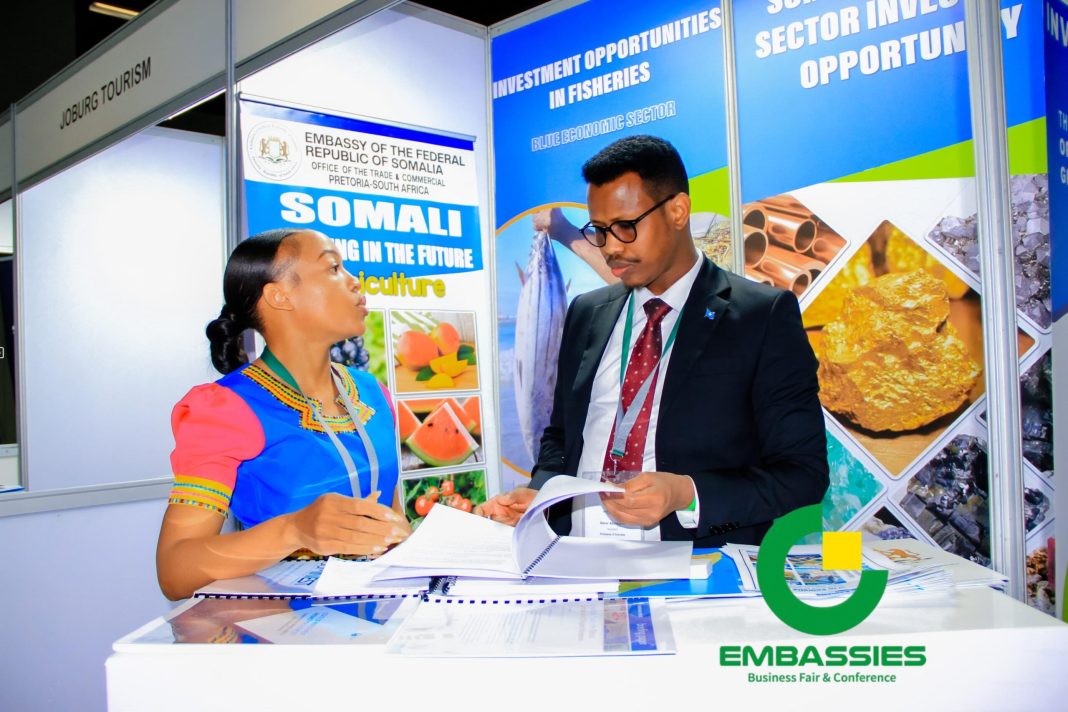
The third annual Embassies Business Fair & Conference will take place in Pretoria next week, targeting more than 80 local and international buyers and 60 investors as African businesses seek greater access to regional and global markets.
The two-day event, scheduled for September 8 and 9 at the CSIR International Convention Centre, will bring together businesses, buyers, investors, policymakers and trade representatives, with a focus on cross-border trade and investment.
Organisers said the conference would offer more than 25 pitching opportunities for export-ready products and seek to create links into more than 30 global markets.
“As African businesses look beyond their domestic markets for new buyers, investors, and commercial opportunities, economic diplomacy is playing an increasingly important role in helping them navigate unfamiliar markets and build relationships across borders,” the organisers said.
“Business events provide a practical platform for these connections.”
High commissions and trade representatives can assist businesses by providing information about different markets, trade requirements and commercial environments, while helping companies establish links with potential partners, the organisers said.
The conference comes as African governments seek to increase intra-African trade through the African Continental Free Trade Area, while regional arrangements such as the SADC Free Trade Area are also aimed at reducing barriers to trade.
Governments can establish trade frameworks and bilateral agreements, but private companies ultimately translate them into economic activity through investment, production and the movement of goods and services across borders, the organisers said.
Founder and Managing Director of the Embassies Business Fair & Conference Sihle Dube said improving businesses’ understanding of how economic diplomacy could assist with market access was a central focus of the event.
“Many African businesses have products and services with the potential to reach wider markets, but access remains a challenge. Economic diplomacy can help connect businesses with the buyers, investors, and networks needed to turn market opportunities into sustainable growth and jobs,” Dube said.
The organisers said the benefits of securing new markets could extend beyond individual transactions, particularly for manufacturers and small and medium-sized businesses.
“A manufacturer that secures a substantial order, for example, may need to increase production, source additional goods and services, strengthen logistics, secure investment, and employ more people,” the organisers said.
“One trade opportunity can, therefore, create value across a much wider economic chain.”
The event will be held during Tourism and Heritage Month, with South Africa also seeking to increase the economic contribution of its business-events industry.
The organisers said conferences and other business events also generate demand for accommodation, transport, hospitality, venues, retail and local suppliers.
“Taking place during Tourism Month and Heritage Month, the conference comes at a time when South Africa’s business-events sector continues to make a measurable contribution to the economy,” the organisers said.
“In February 2026, Tourism Minister Patricia de Lille announced that South Africa had secured 52 bids for international and regional business events to be hosted between 2025 and 2030. These events are expected to attract more than 33,000 delegates and contribute nearly R1 billion to the economy.”
Gauteng Tourism Authority Acting CEO Crezelda Venter said the economic effect of tourism should also be measured through its impact on local businesses and communities.
“When tourists visit Gauteng’s townships, they are not just experiencing authentic culture; they are investing in local dreams, supporting small businesses, and changing lives,” Venter said.
“Township tourism is where economic inclusion meets cultural excellence, creating opportunities that leave a lasting impact long after visitors return home. It is about transforming lives.”
The organisers said tourism-related spending also created demand in food, retail, fashion, creative industries, locally produced goods and other services.
“This creates opportunities for South African entrepreneurs and producers to reach local and international visitors and, potentially, wider markets,” the organisers said.
The conference will be held under the theme “Direct Business Exchange Amongst Embassies: Meet Suppliers, Manufacturers and Distributors – The Future Global Economic Impact while Advocating for the AfCFTA Agenda”.
Organisers said its focus would be the relationship between economic diplomacy, market access, trade and investment.
They said the economic value of business tourism could extend beyond spending generated while delegates were attending an event.
“A meeting can lead to an order, an order can create demand for investment and greater production capacity, and business growth can create further opportunities for suppliers, workers, and communities locally and across borders.”
INSIDE POLITICS






