


By Johnathan Paoli
World Bank anti-corruption specialist Laura Pop has advised that South Africa consider a once-off, legally entrenched integrity evaluation of senior and high-risk officials across the criminal justice system if ordinary accountability mechanisms are incapable of dealing with systemic corruption and infiltration.
Appearing before the Madlanga Commission on Wednesday, Pop said that such a process would have to be independent, tightly defined and subject to strong legal safeguards, while giving evaluators the power to scrutinise officials’ wealth, associations, conflicts of interest and past conduct.
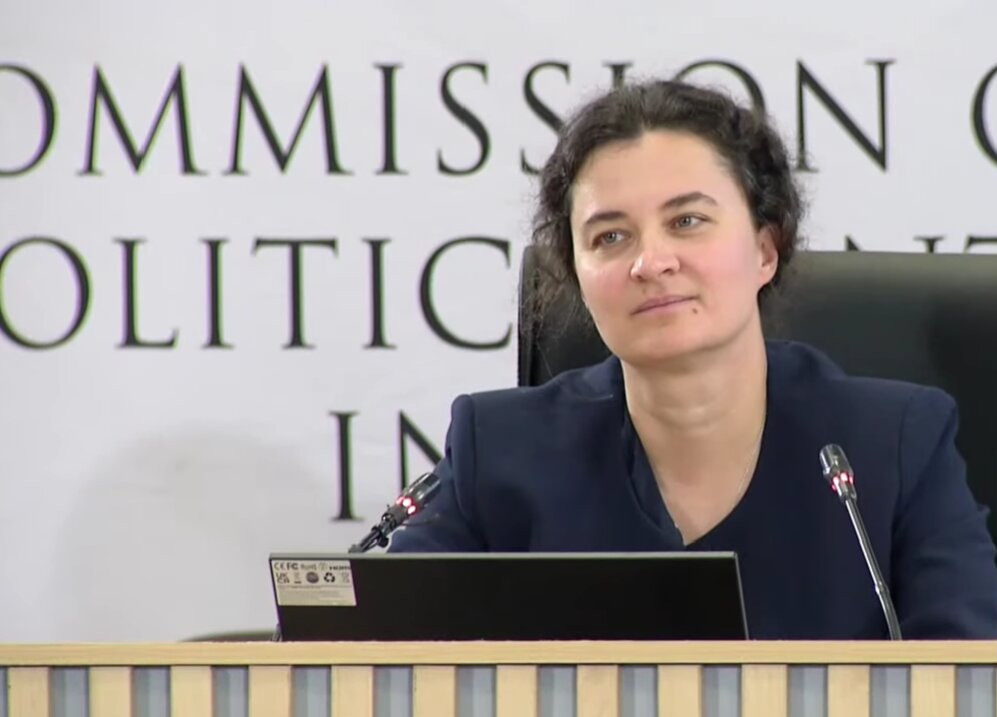
“Most importantly, the implementation of such an extraordinary process should be understood as a once-off deep cleaning exercise to address documented integrity failures in a compromised institution and restore integrity and rebuild public trust,” she said.
Pop is a senior financial sector specialist and member of the World Bank-United Nations Stolen Asset Recovery Initiative (StAR), and has17 years’ experience working on anti-corruption, anti-money laundering and asset recovery programmes.
She has worked in South Africa and numerous other countries and advised on reforms involving financial disclosure, corruption investigations and criminal justice institutions.
Her evidence was based on international experience in countries including Kenya, Albania, Moldova and Ukraine, where extraordinary vetting mechanisms were introduced after serious concerns about institutional corruption, capture or loss of public confidence.
Pop said that conventional disciplinary and criminal proceedings may be inadequate where corruption has become systemic.
ALSO READ: New AfriForum report details brutality of farm attacks
She said countries confronting institutional capture generally began by using existing mechanisms to investigate or discipline compromised officials, but several found that this could not deal with entrenched corruption “at scale”.
Criminal cases could take years, while the legal frameworks that had failed to prevent infiltration could themselves be inadequate.
Pop recommended that the process focus on senior management, officials occupying high-risk functions (including those controlling financial resources or able to start, stop, suspend or transfer criminal cases) and people being considered for appointment, promotion or transfer into those positions.
Lower-level officials would generally remain subject to existing disciplinary and integrity systems.
The assessment itself would centre on financial integrity, associations and conflicts of interest, and past conduct.
Officials would be required to make comprehensive declarations covering assets, income, expenditure, liabilities and interests, including those indirectly controlled and those involving family members.
The information would then be checked against property, company, vehicle, banking and tax records, potentially alongside lifestyle audits.
An untruthful or incomplete declaration would itself constitute grounds for an adverse finding.
The assessment would also examine undisclosed relationships with individuals or entities, including organised crime, using intelligence, institutional records, complaints and open-source information.
ALSO READ: ANC loses Electoral Court bid over candidate nomination blunder
Past conduct could include interference in investigations, protecting criminal syndicates, misuse of intelligence or official registers, and giving or following manifestly unlawful instructions.
Pop said the evaluation body must have powers to obtain records without relying on an official’s consent.
Those powers should extend, within defined limits, to spouses, children, dependants and other people linked to an official’s wealth.
The process should also have a legislated look-back period.
Pop suggested up to 10 years for financial matters and five years for conduct, but warned against forcing officials to reconstruct transactions for periods where records no longer realistically exist.
In Kenya, she said, a constitutional reform following the 2007-08 post-election violence created a Judges and Magistrates Vetting Board.
It assessed 53 judges and 298 magistrates between 2012 and 2016, finding 11 judges and 14 magistrates unsuitable.
The board included foreign judges, among them former South African Constitutional Court justice Albie Sachs.
Albania subjected about 800 judges, prosecutors and other legal officials to extraordinary evaluation based on assets, links to organised crime and professional proficiency. By March 2026, final statistics showed 348 confirmations and 283 dismissals, while 173 proceedings were terminated, including 114 following resignations.
Moldova adopted a staged model, while Ukraine used repeated integrity assessments covering judges, prosecutors, police, customs and economic crime investigators.
Pop said Ukraine’s experience also demonstrated the value and limitations of creating new institutions with high integrity standards rather than trying to reform compromised institutions wholesale.
But Pop said that South Africa could not simply copy these systems.
She said an independent evaluation body with secure tenure and its own professional secretariat of analysts and investigators was needed.
The process should be based on published criteria, individual hearings, access to evidence, reasoned decisions and a clear avenue of judicial review.
She called for regulating resignations so officials cannot wait until damaging evidence emerges and then leave without consequences.
ALSO READ: VIDEOS: Mzansi appeals for employer flexibility to protect women amid Ekurhuleni murders
Those who resign within an initial window could leave without an adverse finding but face a re-employment bar, while refusal to undergo the evaluation or submit the required declaration should result in dismissal.
She said that the exercise could produce significant vacancies.
Internationally, departures ranged from a third to half of those assessed, requiring parallel recruitment, training and capacity-building measures.
She said extraordinary vetting should be temporary.
Preventing renewed infiltration would require permanent reforms to financial disclosure, appointments to high-risk positions and independent oversight.
The commission continues.






