

By Sihle Mavuso
The Department of Water and Sanitation (DWS) has rejected eThekwini Municipality’s request to draw more water from the uMngeni Water Supply System, saying the city has failed to sufficiently reduce high water losses and demand.
In a letter dated 9 September — which Inside Politics has seen — Water and Sanitation Minister Pemmy Majodina told Mayor Cyril Xaba that the metro’s non-revenue water remained “unacceptably high”, and unresolved water faults had increased.
“The Department is furthermore concerned that the municipality continues to experience shortages of plumbers, vehicles and critical resources, while delays in appointing external plumbing contractors have constrained leak repairs.
“As a result, NRW remains unacceptably high at 55.6%, while unresolved water faults increased from 744 in November 2025 to 14 776 by May 2026, significantly undermining efforts to reduce water losses and demand,” Majodina said.
She said the department had granted eThekwini six concessions and deferments since July 2023 to reduce demand and excessive water losses.
She said there was no reasonable basis to conclude that another deferment would produce a different result.
An August 2025 concession had been granted on the understanding that eThekwini would reduce demand by about 1% a month for eight months, but Majodina said the municipality had failed to meet that target.
She said continued abstraction above licensed levels posed a threat to the uMngeni system.
“The 2026/27 Annual Operating Analysis confirms that continued operation above licensed volumes will increase the risk of severe restrictions and potential system failure to supply water, with serious consequences for water users and the regional economy.
“These consequences pose a risk to all stakeholders within the system, threatening a reliable supply to all user groups. It is also anticipated that these risks will be exacerbated by the predicted strong El Niño, which is expected to persist through the end of the 2026/27 summer season.
“Applying the principle that water use can be restricted, the Department will balance the risk of system failure by introducing curtailments incrementally and equitably to different user groups during periods of short supply and declining dam levels.
“The Department, therefore, cannot permit the continued abstraction of water above licensed limits. The Municipality is required to intensify the implementation of all demand management and NRW reduction measures to achieve a sustained reduction in water demand of at least 1% per month over the next 12 months,” she said.
The rejection comes as parts of Durban continue to experience intermittent water supply. In August, the metro said several areas were facing prolonged interruptions caused by infrastructure problems, high demand, illegal connections and constraints on bulk-water availability.
The municipality said it was using pressure management, leak detection and controlled supply in some areas to stabilise reservoirs and manage demand.
The city’s plumbing capacity had also been disrupted by a dispute over a new contracting model. eThekwini said in July that its previous plumbing contracting arrangement had not complied with municipal supply-chain policy and that a replacement model using its Contractor Infrastructure Panel had been introduced. The changes triggered objections and legal challenges from some contractors.
Xaba said on 23 August that an agreement had finally been reached on hourly rates and recruitment arrangements, while a 15% management fee would no longer be deducted from plumbers’ hourly rates.
The city said plumbers would be recruited from an existing pool of 1,886, with 712 required for the first shift. At the time of the agreement, 337 plumbers had already been recruited.
The municipality has acknowledged that additional bulk supply remains necessary over the longer term. Last month, it said completion of the Upper uMkhomazi Dam was critical to meeting growing demand, while upgrades to the Southern Aqueduct were among the measures intended to improve supply to the south of the city.
eThekwini spokesperson Senzelwe Mzila said the metro continues to implement a multi-pronged approach to address water supply challenges across communities.
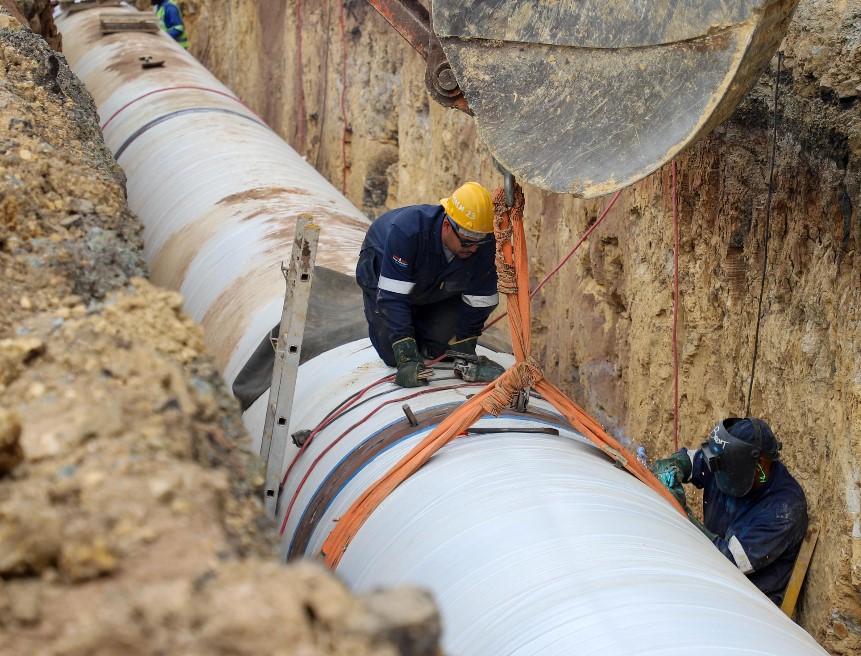
The interventions include the repair and maintenance of critical water infrastructure, management of planned shutdowns to enable upgrades and repairs, deployment of water tankers in affected areas, acceleration of leak detection and repair programmes, rehabilitation and replacement of ageing pipelines, as well as development of alternative water sources including boreholes and other augmentation projects.
“The Municipality also continually monitors water distribution networks, responds to service interruptions, and works to improve long-term water security through infrastructure investment and operational improvements. Major projects such as the Southern Aqueduct are almost complete and will improve the stability of the City’s water supply,” he said.
This story has been updated to reflect the response from the municipality.
INSIDE POLITICS