



By Staff Reporter
African leaders have called for faster implementation of the continent’s free-trade agreement, including removing unnecessary trade barriers, improving cross-border payments and building stronger African manufacturing and value chains.
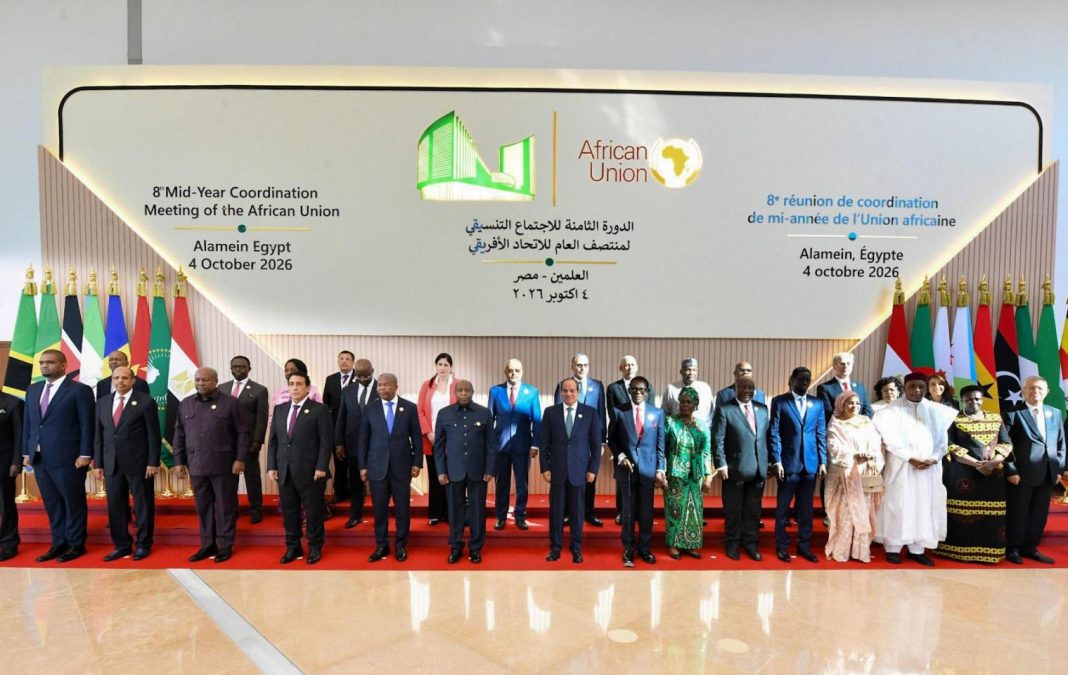
The African Union said in a statement following its 8th Mid-Year Coordination Meeting in El-Alamein, Egypt, on Sunday that leaders had reaffirmed accelerated continental integration as central to achieving Agenda 2063.
Particular emphasis was placed on the African Continental Free Trade Area (AfCFTA), with the meeting welcoming progress on preferential trade arrangements but calling for further action.
According to the AU statement, leaders called for the removal of “unjustified and unnecessary non-tariff barriers”, improved trade facilitation and stronger cross-border payment systems.
They also called for the expansion of regional value chains while encouraging African businesses, including small and medium-sized enterprises, to invest more in innovation, production and value addition.
African Union Commission chairperson Mahmoud Ali Youssouf told the meeting that commitments needed to be converted into results.
“Africa’s integration agenda must move decisively from aspiration to implementation,” Youssouf said.
The AU statement said economic integration would also have to be accompanied by greater productive and manufacturing capacity.
It said Africa’s natural resources, human capital and growing markets should be used to strengthen African value chains, industrialise economies, transfer technology and create jobs.
Egyptian President Abdel Fattah El-Sisi, who hosted the meeting, argued that Africa needed to move beyond its traditional role as a supplier of raw materials.
El-Sisi called for stronger manufacturing, integrated value chains, greater value addition within Africa, technology transfer and expanded intra-African trade.
Burundi President Évariste Ndayishimiye similarly warned that creating a continental free-trade area would not on its own deliver integration.
Ndayishimiye identified inadequate productive capacity, infrastructure shortages, insufficient financing, shared water-resource challenges, insecurity and conflict as major obstacles.
He called for greater investment in manufacturing and infrastructure, including interconnected roads, railways, energy networks, ports and digital infrastructure.
The meeting also called for accelerated investment in cross-border infrastructure and transport corridors and the operationalisation of the Single African Air Transport Market.
Water and sanitation formed another part of the meeting’s outcomes.
Leaders reaffirmed the importance of sustainable water availability and safe sanitation and hygiene services, alongside stronger governance, accountability and monitoring.
The meeting also called for climate-resilient water planning, integrated water-resource management and greater cooperation between countries sharing water resources.
Particular attention should be given to women, young people, schools and vulnerable communities, the AU said.
Peace and security were also identified as essential to economic development and integration.
The leaders called for stronger preventive diplomacy, early-warning systems and coordination between regional mechanisms and AU peace and security institutions.
On financing, the meeting highlighted the role of the African Development Bank and other African financial institutions in funding infrastructure, industrialisation and AfCFTA implementation.
The statement said member states were also encouraged to advance the ratification of legal instruments establishing African financial institutions, subject to their domestic constitutional and legal procedures.
The meeting further considered the division of responsibilities between the AU, regional economic communities and regional mechanisms.
It instructed the AU Commission to finalise guidelines governing that division of labour and report on progress at the next Mid-Year Coordination Meeting.
The meeting ultimately adopted its declaration, which the AU said reaffirmed a collective commitment to continental integration, stronger institutional coordination, sustainable development and peace.
INSIDE POLITICS






