

Staff Reporter
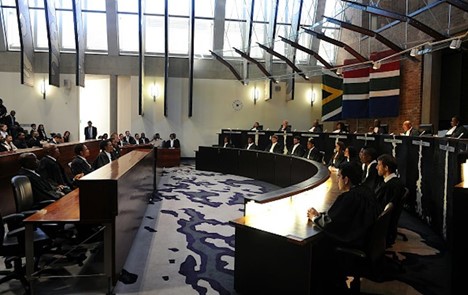
The Constitutional Court on Friday dismissed two challenges to the National Health Insurance (NHI) Act, ruling unanimously against the Board of Healthcare Funders and rejecting the Western Cape premier’s case by six votes to five.
“The application is dismissed,” the court said in its order in each case.
Both challenges concerned whether Parliament had met its constitutional duty to involve the public before passing the bill. Both applicants sought direct access to the court under section 167(4)(e) of the Constitution.
ALSO READ: WATCH: City of Johannesburg’s second council meeting underway as key leadership elections begin
The Act has yet to come into force.
The Board of Healthcare Funders, which represents about 65 medical schemes, administrators and managed-care organisations, had argued that Parliament failed to provide essential information about the scheme’s costs, funding, services and operating model.
Parliament and the health minister said that the complaint was in truth a rationality challenge that did not engage the court’s exclusive jurisdiction.
The court found that the case, read as a whole, was a genuine public participation challenge over which it has exclusive jurisdiction.
The court held that “the Constitution requires enough information to make participation meaningful, not perfect information”.
The court said leaving key details out of the bill “was a deliberate legislative choice that the Legislature was entitled to make.” It added: “That very choice was what the public was able to participate in.”
The Western Cape premier challenged the process in the National Council of Provinces (NCOP). The majority, in a judgment written by Justice Kollapen, found that Gauteng residents had a reasonable opportunity to influence the bill despite the absence of a report from the provincial legislature. It also found that the upper house had considered the Western Cape’s concerns despite receiving its formal mandate late.
“All that public participation guarantees is a reasonable opportunity to influence the outcome, but it does not guarantee that the outcome will change,” the court said.
Justice Majiedt, writing for the minority, found the NCOP’s public participation process unreasonable and therefore unconstitutional. The minority found that amendments proposed through provincial consultations “were never deliberated on, voted on or even considered by the NCOP”.
It also found that the NCOP had mechanically treated the provinces’ mandates as votes in favour of the bill.
ALSO READ: Durban to host Soweto derby in Carling Knockout final
The minority found that Gauteng’s consultation report was missing and that the Western Cape’s submissions were considered after the other eight provinces had adopted their final mandates, which it attributed to an inflexible timetable.
“By then, its input could not realistically influence the Bill.”
The court made no order as to costs in either case.