

By Johnathan Paoli
Congestion at Transnet’s Durban Gateway Terminal is expected to persist into January, prolonging disruptions to businesses, manufacturers and the delivery of essential medicines as the port struggles to recover from an operational crisis.
But Transport Minister Barbara Creecy has attempted to reassure South Africa, confirming that emergency measures have been introduced to ease the backlog, including additional berthing capacity, equipment deployments, prioritisation of critical cargo and tighter accountability for the terminal operator.
In an opinion piece published in News24, Creecy acknowledges the scale of the disruption, warning that the consequences extend far beyond the port.
“South Africa cannot compete if it costs too much to move goods. That is the blunt truth at the heart of our logistics reform. For a trading nation, logistics is not a back-office function. It determines whether a factory can produce, whether a farmer can export, whether a manufacturer can compete, and whether jobs are created or lost,” she wrote.
Creecy said logistics costs accounted for 14.6% of gross domestic product, their highest level since 2003, describing the costs as a burden on businesses, exporters and consumers.
A war room involving shipping lines, the port authority and terminal operators has since been established to monitor operations and address blockages, while Transnet has added capacity at Pier 1 and arranged for additional equipment.
However, the SA Federation of Trade Unions (Saftu) has rejected the government’s reliance on private sector participation, arguing that the crisis exposes the shortcomings of transferring operational control of strategic public infrastructure to private companies.
Saftu general secretary Zwelinzimaa Vavi said this week that the delays of up to 20 days were disrupting the movement of goods, threatening production and exports, delaying essential medicines and driving up costs.
“The public is entitled to ask: if private operators are as efficient and capable as government claims, why must public institutions step in when private management fails?” he said.
Saftu said Transnet had invested approximately R1.5 billion in equipment at Pier 2 during the 18 months before the handover, disputing claims that the International Container Terminal Services (ICTSI) had inherited an entirely dysfunctional terminal.
The federation called for Operation Vulindlela to be scrapped, the reversal of agreements transferring control of strategic infrastructure to private interests, and the restoration of ports, rail, electricity, water and municipal services to democratic public ownership.
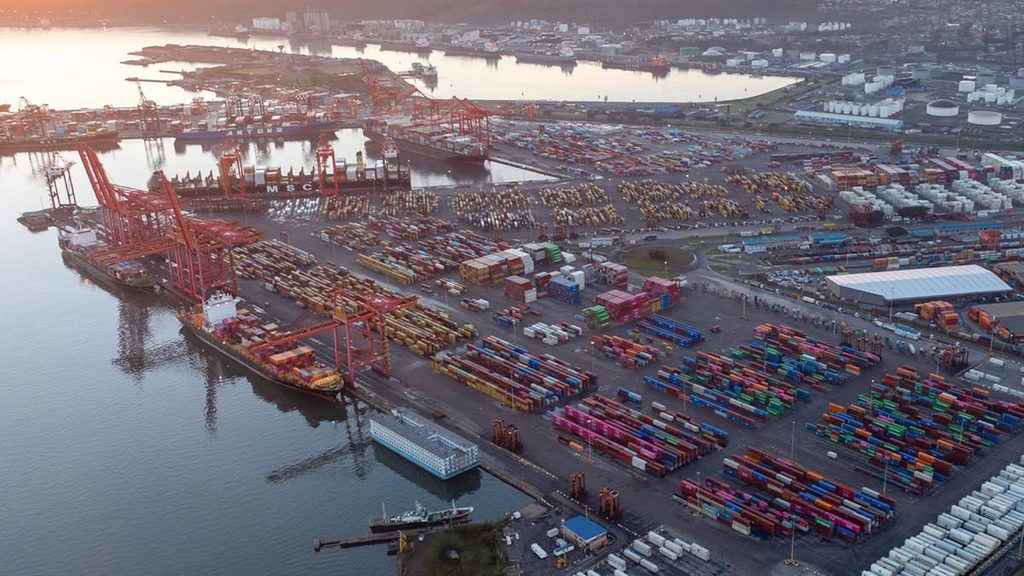
Transport economist Professor Jan Havenga, of Stellenbosch University, described the Durban crisis as the result of a “perfect storm”, pointing to changes in Transnet management, ministerial oversight, equipment procurement delays and the transition to the new terminal operator.
In an interview with SABC News, he said the partnership with ICTSI had been delayed by two years in court, potentially discouraging investment in equipment while the transaction was pending, and argued that the operational difficulties were the culmination of problems that had been building for years.
Havenga said the economic consequences were substantial, estimating the daily cost of the disruption at about R300 million when additional transport costs and wider supply-chain losses were combined.
He warned that prolonged disruption could have lasting consequences if shipping lines changed their routes to bypass South African ports, potentially leaving the country facing higher freight costs even after operations recovered.
Havenga said he did not expect the congestion to be resolved before Christmas, with the recovery likely to extend into January.
The crisis centres on the 25-year partnership between Transnet and ICTSI, which took effect on 1 January.
ICTSI acquired a 49% stake for approximately R10.5 billion and assumed operational control of the Durban Gateway Terminal, while Transnet retained 51% ownership.
The terminal, formerly Durban Container Terminal Pier 2, handles a significant share of South Africa’s container traffic and is a critical gateway for imports, exports and regional trade.
The operational crisis followed the introduction of a new terminal operating system and equipment shortages, resulting in vessel delays, cargo backlogs and mounting pressure on businesses, including automotive suppliers.
The National Ports Authority has placed the terminal’s operators on notice, with performance to be monitored over three months and possible sanctions, including the loss of the operating licence, if improvements are not achieved.