

By Akani Nkuna
Former president Phumzile Mlambo-Ngcuka’s life was about breaking barriers and opening doors that had been closed to women and to Black South Africans for generations, according to President Cyril Ramaphosa.
She was the first black woman to serve as minerals and energy minister, the first woman to be deputy president of the country, and the first African to head UN Women.
“Each of these was an achievement in its own right. Yet, important as these milestones were, they do not in themselves define the greatness of her life.
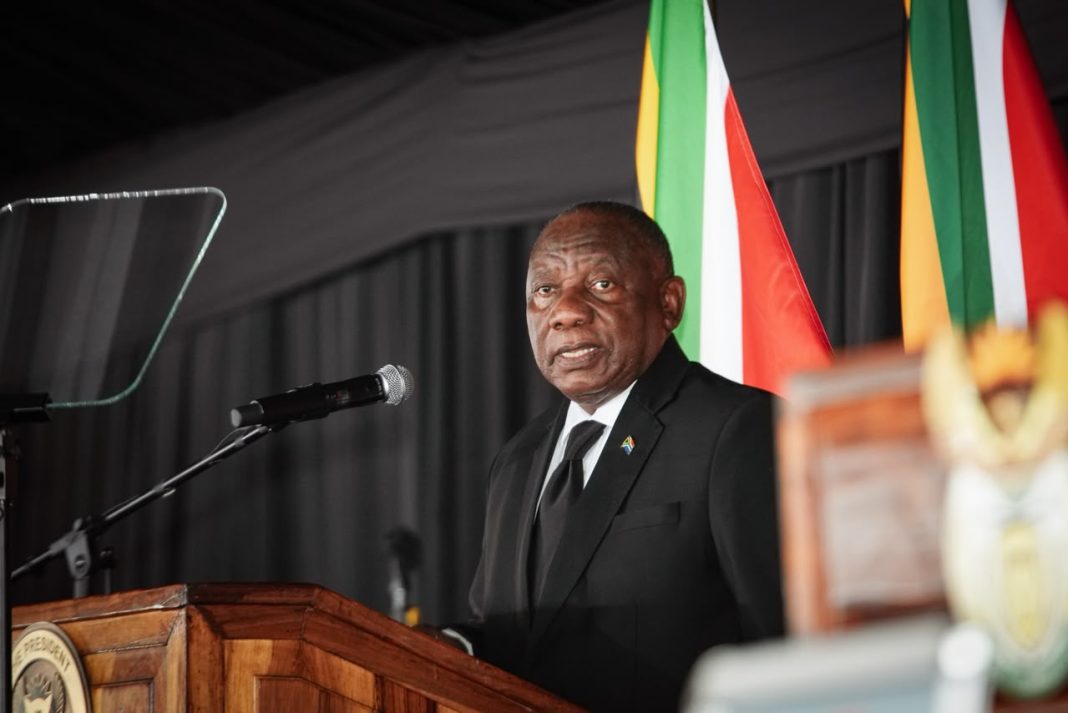
“It is not for the positions that she held that we honour her. What defines her greatness is what she did with the opportunities she was given. It is for how she used those positions to improve the lives of others,” he told those attending Mlambo-Ngcuka’s funeral on Saturday.
Ramaphosa also described Mlambo-Ngcuka as a champion for women’s inclusion in the mining sector, saying that she facilitated the breaking of racial barriers that enabled the enrichment of a white minority.
“She challenged the notion that the ownership of our mineral resources should remain the preserve of a privileged few. The laws that she sponsored required mining companies to invest in their workers and in the communities around their operations,” he said.
“She challenged the deeply entrenched prejudice that mining was a man’s domain. Today, tens of thousands of women work in our mining industry, occupying positions that previous generations of women could scarcely have imagined.”
Ramaphosa delivered the eulogy at Mlambo-Ngcuka’s funeral, where her family, comrades, political leaders and colleagues gathered to bid her farewell. She passed away on Friday last week at the age of 71.
Ramaphosa said that through her work at the UN she showed great determination in fighting for the integration of women as part of the global economy, advocating for equality.
He said that she stood against the injustices suffered by women, and acted as a unifier between governments and social formations across the globe to preserve women’s rights.
“She knew that no country could be free until its women were free. And she knew that women could not be free until they had an equal stake in the economic life of the nation. She insisted that women be part of the transformation of the mining industry,” said Ramaphosa.
“She was determined that women should own and run businesses. That they should receive finance, support and opportunities.”
INSIDE POLITICS