



Carla Klehm
On the shores of Lake Turkana in east Africa, about 5,000 to 4,000 years ago, pastoralists buried their dead in communal cemeteries that were marked by stone circles and pillars.
The north-west Kenya “pillar sites” were built around the same time as Stonehenge in the UK. But these places have a different story to tell: about how mortuary traditions reflect people’s environments, behaviours and reactions to change.
The burial sites appeared at a time of major environmental and economic change in the region. The Sahara, which received enough rainfall 9,000-7,000 years ago to sustain populations of fisher-hunter-gatherers and pastoralists, was drying, causing groups of people to move east and south.
Even in eastern Africa, lake levels were dropping dramatically; grassy plains were expanding. Around Lake Turkana, people began herding animals in addition to fishing and foraging.
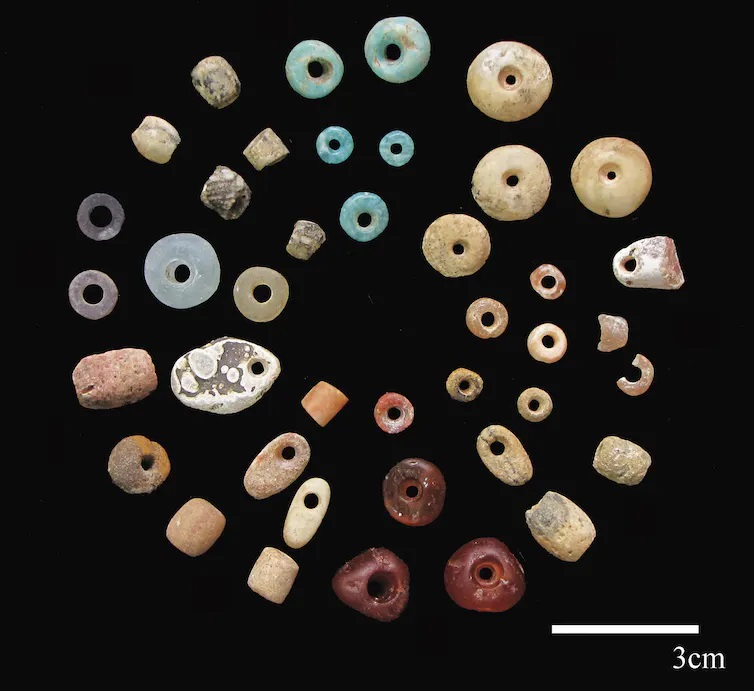
At several of the pillar sites around Lake Turkana, archaeologists have found
You’ve reached your free article limit
Subscribe to enjoy unlimited access to trusted journalism. Cancel anytime.
Subscribe nowNeed help? molokom@insidepolitic.co.za






