
- Advertisement -spot_img

ANALYSIS: EFF emerge as heroes of the budget debacle

- Advertisement -spot_img

Must read

By Thebe Mabanga

The Economic Freedom Fighters have emerged as the real heroes of the budget crisis that has engulfed the country since the cancelled budget speech in February, correctly calling out the matter on principle and procedure and ultimately getting the reset of the process it has been calling for since the beginning of April.

Their victory was confirmed on Sunday when the Western Cape High Court set aside the Fiscal Framework and Revenue Proposals that were adopted by Parliament’s finance and appropriations committees on 1 April and the two houses of Parliament the next day.  

The court ruling also nullified the lingering threat of a 0,5% VAT increase that was to kick in on Thursday.

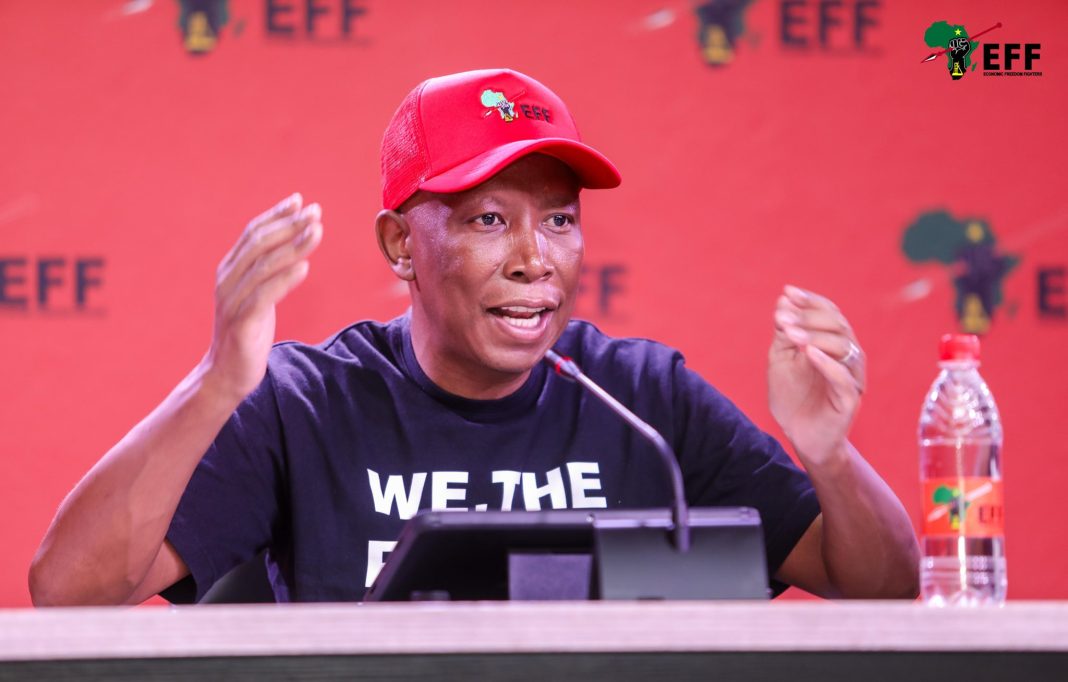
“This decisive court order vindicates the principled stance the EFF has consistently taken to defend the Constitution, the rule of law, and the interests of the poor and working class against political expediency and executive overreach.” EFF president Julius Malema said at a press conference on Monday.

To be clear the Democratic Alliance put up an equally brave fight. Their opposition made an admirable touching spectacle of a party that is viewed as white and upper middle class championing a cause of the poor and working class.

But their fight was somewhat undermined by the fact that at the height of bargaining, they were willing to support the VAT increase in exchange for compromises on the Basic Education Laws Amendment Act and Expropriation Act, which were battles they had already lost.

Also, their court action was narrow and technical, focused mostly on the VAT increase and ministerial powers to unilaterally announce it. As Malema pointed out, most of the outcomes granted by the court were on the EFF wishlist, or prayers as they are called in legal parlance.

As it turns out, the EFF pointed out in writing to the Speaker the procedural flaw of the 1 April meeting. They reiterated this on the floor ahead of adoption on 2 April before making good on their threat to go to court.

The parties that supported the ANC did so on condition that alternatives to the VAT hike would be sought within 30 days and Speaker Thoko Didiza tried to save the situation by retrospectively pointing out on 21 April, that the framework and proposals were adopted “with conditions”.

But Malema has since made the point that there was no provision for conditional approval in the law.

A new framework and proposals, effectively a new budget, will have to be tabled to replace what Malema calls “a shallow political compromise aimed at appeasing financial markets”.

He points out that this victory also does not have anything to do with the ANC’s reduced majority in Parliament.

Malema said that when the ANC had the majority, the EFF (together with the United Democratic Movement) took Parliament to court over former president Jacon Zuma’s residence in Nkandla, and the legislature was reined in a landmark ruling.

The issue is that South Africa has a constitutional, not parliamentary, supremacy.

The EFF has since written to both Didiza and Dr Joe Maswangayi, chairperson of the Standing Committee on Finance, to halt the proceedings scheduled for Wednesday to process the Money Bill that seeks to reverse the VAT hike.

But proceeding with the committee sitting would be a face saving and moot exercise on the part of the ANC, designed to appear in control of a process they have lost control of. The reality is, as the DA and EFF pointed out in their court papers, the VAT increase reversal needed to be an order of the court, partly because they do not trust Finance Minister Enoch Godongwana or the ANC.

The parties that supported the ANC, who include the IFP, ActionSA, the PAC, Rise Mzansi, Bosa, GOOD Party and the PA among others, did so purely on good faith and a handshake.

As the finance minister announces the changes in VAT through the VAT Act of 1991, a Money Bill may have proven insufficient to halt it.

Godongwana could have broken the promise and implemented the increase on a whim or a technicality, shrugged his shoulders and then called in President Cyril Ramaphosa to charm the parties with an apology and “look for a solution” while the country adjusted to higher VAT.

Now of course Parliament, and South Africa, will have to live with an emboldened EFF, ready to dish out lectures on parliamentary procedures and the Constitution.

“The GNU has failed the people of South Africa.” Malema declared.

Drawing on the significance of the 27th of April as the date on which the judgment was delivered, Malema called this a “turning point” in how the ANC would have to negotiate any piece of legislation it needed to pass. The ANC now knows it can draw on partners outside of the GNU should it need to, which raises the question of what the point is of having some people inside the GNU tent.

The EFF has now called itself “the official opposition” and as the fourth largest party with 10% of the vote, that might be a stretch.

“There are people who call themselves opposition in numbers, but not in substance,” Malema said.

He then noted that the EFF would not support a vote of no confidence in Godongwana, whom they have called on to resign alongside Treasury director-general Duncan Pieterse.

The EFF’s argument is that it’s the president who appoints ministers and not Parliament.

However, it will support a motion of no confidence against Ramaphosa.

As things stand, the country will operate with last year’s budget until the new one is tabled. So, grants will be paid, but without the proposed increases.  

Malema could not resist taking a swipe at his former lieutenant Floyd Shivambu, who shook the EFF with his departure to the MKP. Describing him as being perceived as the “think tank” of the EFF, Malema questioned evidence of his “think tank” capabilities from his current role as secretary general of the MKP.

One phrase that we are going to have to get used to is that, as a country, we must “submit to superior logic” admittedly demonstrated throughout this debacle.

The phrase was also famously used by Shivambu to the late finance minister Tito Mboweni when the latter unveiled the post-Covid economic policy

Malema started his briefing by acknowledged the passing of Pope Francis, praising his selflessness and fight for the poor.

INSIDE POLITICS

More articles

LEAVE A REPLY

Please enter your comment!
Please enter your name here

Inside Education E-Edition

spot_img

CATHSSETTA

spot_img

AVBOB STEP 12

spot_img

Inside Metros G20 COJ Edition

spot_img

JOZI MY JOZI

spot_img

QCTO

spot_img

Latest article



