
By Akani Nkuna
The EFF has written an urgent letter to the Speaker of the National Assembly, Thoko Didiza, calling for a Parliamentary debate on the recent remarks made by National Director of Public Prosecutions (NDPP), Advocate Shamila Batohi.
In an interview with journalist Xoli Mngambi on Newzroom Afrika, Batohi said that despite no external executive interference, there were internal and external elements with vested agendas who have infiltrated the National Prosecuting Authority (NPA), posing a threat to the rule of law.
“I have not had interference from any members of the executive whilst I have been the national director. But I what I do want to say is that there are other issues that I can’t really speak about that actually makes me worry sometimes,” Batohi told Newzroom Afrika on Friday.
“That the NPA is actually being infiltrated by people that do not have the rule of law at heart, they don’t sleep comfortably at night because of that, not because I think that the NPA is a failing organisation.”
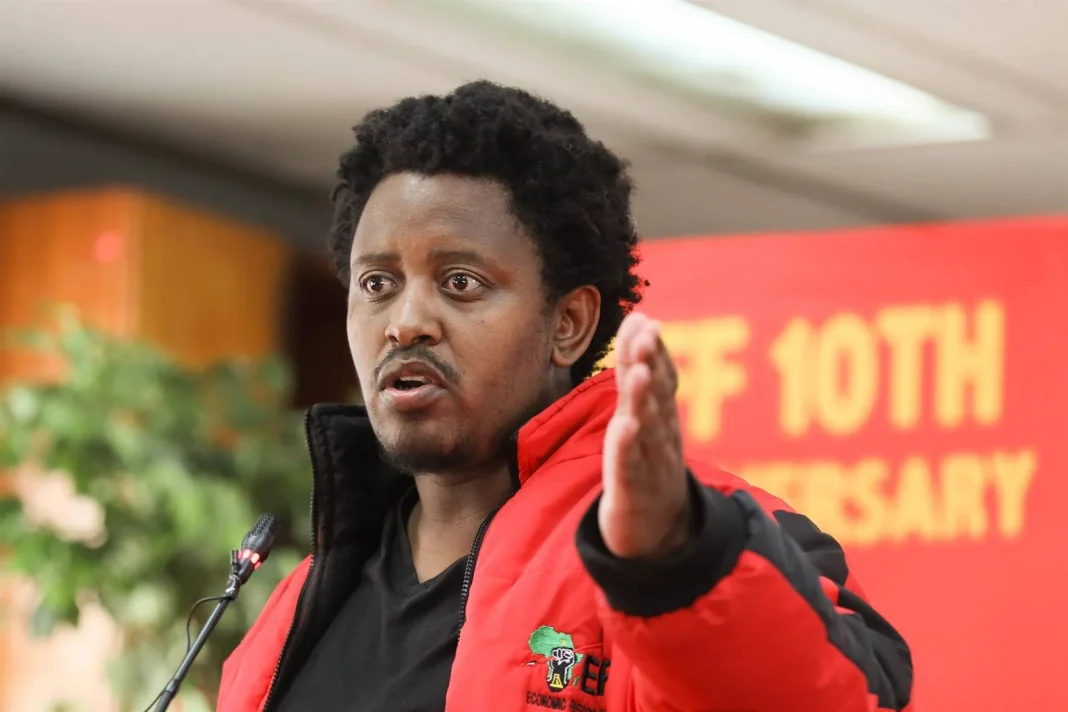
EFF spokesperson, Sinawo Thambo, said the people of South Africa deserve a prosecuting authority that functions without fear or favour.
“What we have instead is an institution in crisis, led by someone who cannot admit that there is a crisis at all,” said Thambo.
“This is why the EFF has since written to the Speaker of the National Assembly demanding a debate on the claims made by Batohi as this is a matter of national importance.”
According to Thambo, Batohi has admitted that the NPA is under both internal and external pressure—going as far as to describe the institution as “captured”—yet failed to provide specifics or propose any concrete solutions.
Thambo criticised Batohi for refusing to name those allegedly interfering with the NPA’s operations and for her stated intention to address the matter with the executive, raising serious concerns about the prosecuting authority’s transparency, accountability, and independence.
“Batohi admits that the NPA is under both internal and external pressure and refers to the institution as ‘captured,’ yet she provides no detail and offers no solutions,” Thambo said.
“Her refusal to disclose who is interfering, and her suggestion that she will ‘take it up with the Executive,’ raises serious questions about transparency, accountability, and the independence of the prosecuting authority.”
Meanwhile, EFF Parliamentary Chief Whip Nontando Nolutshungu has called for an urgent parliamentary debate following Batohi’s televised interview on 5 June 2025.
“The implications of her statement are far-reaching,” said Nolutshungu.
“The prosecutorial authority is central to ensuring justice, particularly in cases involving corruption, organised crime, and gender-based violence. In a country besieged by a crisis of femicide and systemic corruption, any infiltration of the NPA threatens to collapse public confidence in the state’s ability to secure justice and accountability.”
EFF Member of the Portfolio Committee on Justice and Constitutional Development, Rebecca Mohlala, has also written to the committee’s chairperson requesting an urgent meeting.
She stressed that the party is not seeking punitive or reactionary measures but is calling on Parliament to fulfil its constitutional oversight duty.
Mohlala urged the committee to summon those in positions of power to appear before elected representatives, rather than relying on public media platforms for critical disclosures.
“Advocate Batohi must explain what she meant by ‘infiltration,’ what forms of manipulation she is facing, who the internal or external actors are, and what corrective or protective steps have been taken,” she said.
“The public deserves answers—and those answers must be provided before Parliament.”
Mohlala described Batohi’s admission not as a routine complaint, but as a full-blown constitutional crisis.
She warned that claims of infiltration by the head of the NPA threaten the rule of law, the integrity of the justice system, anti-corruption efforts, and public trust.
“This matter does not merely affect the internal operations of the NPA,” she said.
“It strikes at the very character of the state. We are in the midst of a constitutional crisis, where allegations of state capture, institutional dysfunction, and the politicisation of prosecutorial functions are becoming increasingly entrenched.”
INSIDE POLITICS



