By Johnathan Paoli
President Cyril Ramaphosa mounted a strong defence of South Africa’s transformation agenda, stressing that by focusing on growth that is inclusive, real progress could be made towards ensuring that the people share in the country’s wealth.
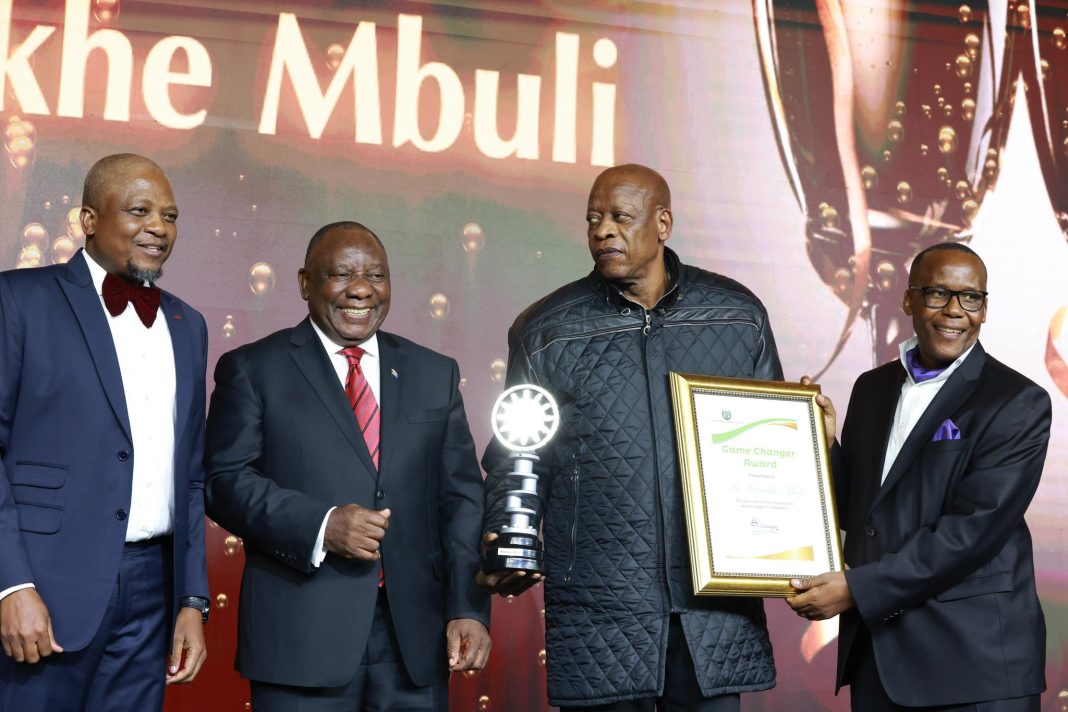
Addressing an audience of business leaders, government officials and representatives from across the economic spectrum during the Black Business Council (BBC) gala dinner at the Radisson Hotel and Convention Centre in Ekurhuleni, the president reiterated that transformation is not a cost to the economy, but an investment in its inclusive and sustainable growth.
“Transformation is vital if growth is to be meaningful and inclusive. We must dispense with the false choice between growth and transformation. Our task is to ensure we pursue both, in concert, with greater vigour and effect,” Ramaphosa said.
The gala dinner marked the conclusion of the BBC’s two-day annual summit, with Ramaphosa delivering a speech focused on the enduring relevance of Black Economic Empowerment (BEE), economic redress, and the role of the Government of National Unity (GNU) in promoting a more equitable South Africa.
Ramaphosa framed his remarks around the Preamble to the Constitution, noting that the drive for transformation is grounded in a moral and legal obligation to redress apartheid-era injustices.
He stressed that economic empowerment must be holistic, beginning from early childhood and extending through education, employment and business ownership.
He highlighted government interventions including fee-free schooling, expanded access to tertiary education for poor and working-class families, school nutrition programmes and job creation schemes like the Basic Education Employment Initiative.
These, he said, form part of a broader empowerment strategy that seeks to build equity from the ground up.
“The economic empowerment of black South Africans starts at birth. From nutrition to early childhood development, we must ensure the black child receives the same developmental foundation to succeed,” he noted.
The president challenged the notion that BEE and related transformation policies are burdens on the economy.
Instead, he called on South Africans to view them as strategic tools for building a competitive and inclusive economy.
Citing Statistics South Africa, he acknowledged progress in closing the racial income gap, black African households saw a 46% rise in real income between 2006 and 2023, but conceded that disparities remain stark.
“Despite this progress, the average income of white households is still nearly five times higher than that of black African households,” he said.
Ramaphosa cited employment equity figures, noting that black Africans now occupy 27% of senior management positions, up from 14% in 2003.
“Important progress, but not at the scale or pace we need,” he said.
Ramaphosa addressed recent public concerns about whether the newly formed Government of National Unity might dilute commitments to transformation.
While acknowledging ideological differences among GNU partners, he insisted that the unity government provides a strong platform for continued empowerment efforts.
“We need to recognise that there was concern about the effect that the GNU would have on economic empowerment. But our agreed priorities, inclusive growth, reducing poverty, and building a developmental state, speak directly to transformation,” the president said.
He highlighted ongoing structural reforms and infrastructure investments as key enablers of transformation.
With over R1 trillion allocated to public infrastructure over the next three years, Ramaphosa called for greater participation of black-owned businesses not just in construction but in the supply of materials, services, and logistics.
He also noted the promise of emerging sectors like renewable energy, electric vehicles, and green hydrogen in opening new opportunities for black industrialists and women-owned businesses.
Programmes like the Black Industrialists initiative, the Transformation Fund, and the Public Procurement Act were cited as tools to unleash underutilised economic potential.
In one of the evening’s more pointed moments, Ramaphosa took aim at critics, particularly political parties who challenge empowerment legislation in court.
“You often wonder, is it greed that is driving them, or is it jealousy?” he asked, in apparent reference to the Democratic Alliance’s challenge to the Employment Equity Act.
He reiterated that transformation measures are constitutional imperatives, not optional policies.
“We must never forget what happened in the past. It must inform what we do now and inspire our future.”
Closing his speech, Ramaphosa called for continued boldness in improving and expanding economic empowerment initiatives.
He praised the Black Business Council for its leadership and pledged ongoing partnership with business to build an economy that truly belongs to all who live in it.
INSIDE POLITICS