

By Johnathan Paoli
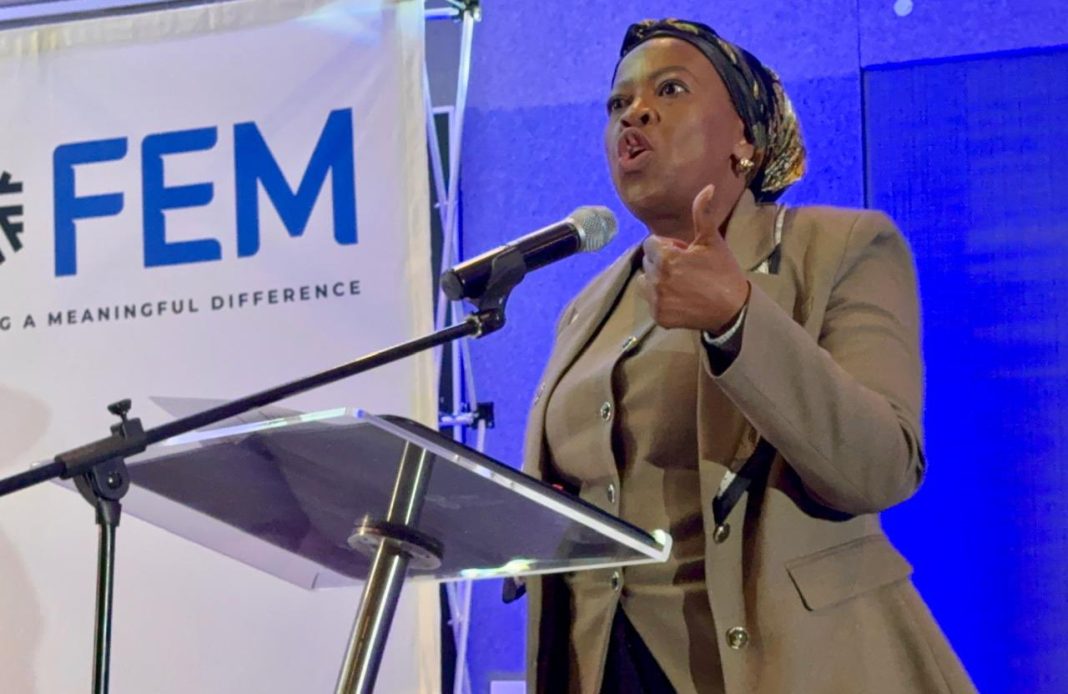
Minister of Planning, Monitoring, and Evaluation (DPME), Maropene Ramokgopa, has revealed the department’s crucial role in enhancing democracy and constructing a proficient, ethical and progressive state.
In her presentation of the 2025/26 Budget Vote in Parliament, Ramokgopa outlined decisive measures aimed at enhancing accountability, expediting inclusive development, and fortifying long-term planning capabilities across all government levels.
She emphasised that the DPME’s mandate includes coordinating national planning efforts, monitoring progress towards Vision 2030, and evaluating governmental initiatives to ensure they achieve substantial outcomes.
“The Department remains committed to its mandate and role to promote coherence through the institutionalisation of planning, development of an integrated monitoring system, evaluation of critical government programmes, and production of research outputs to inform decision-making. We will continue to undertake these efforts with the guidance and support of this august House,” she said.
Ramokgopa confirmed that Cabinet had approved the Medium-Term Development Plan (MTDP) 2024–2029 in February 2025.
As the final planning cycle before the NDP and SDG 2030 deadlines, the MTDP’s priorities are: driving inclusive economic growth and job creation, reducing poverty and the cost of living, and building a capable, ethical state.
Ramokgopa noted strong cross-sectoral support for these goals, including from NEDLAC and private sector stakeholders like the JSE and Standard Bank.
To ensure results, her department will submit biannual progress reports to Cabinet, tracking both output and outcome-level impacts.
A new Budget Prioritisation Framework (BPF) will also be developed annually to better align planning with National Treasury’s budgeting process.
Ramokgopa detailed the department’s support for strategic programmes, including the District Development Model (DDM) and efforts to align provincial growth strategies with the MTDP.
In response to criticisms of weak coordination, Ramokgopa revealed a renewed effort to revitalise intergovernmental cluster systems and develop delivery scorecards for DDM Champions.
She affirmed the DPME’s role in monitoring state-owned enterprises (SOEs) through the integration of the former Department of Public Enterprises and announced the introduction of the National State Enterprises Bill, aimed at creating a centralised, performance-based governance model for SOEs.
The Minister highlighted the importance of evidence-based policymaking, outlining upcoming reforms to the National Evaluation Policy Framework (NEPF) and the launch of a new National Evaluation Plan (2025–2030).
Recent evaluations include the parole system, the 16 Days Campaign, and renewable energy projects funded by BRICS’ New Development Bank.
Ramokgopa also reported the DPME’s role in G20 leadership, where South Africa chairs the Development Working Group.
She outlined its three key themes namely curbing illicit financial flows, promoting universal social protection, and enhancing access to global public goods.
A G20 Ministerial Meeting is set for later this month at Kruger National Park.
Addressing international partnerships, Ramokgopa shared that her department supports the International Relations department’s review of Bi-national Commissions and the SADC’s regional development strategy.
Domestically, a National Planning Summit held in June 2025 with Sol Plaatje University in the Northern Cape marked the beginning of broader consultations to shape a new long-term development strategy as the NDP nears expiry.
The Minister’s R450 million budget request received mixed responses from opposition parties, with both structural support and pointed critiques emerging from the floor.
uMkhonto weSizwe Party (MKP) MP Mzwanele Manyi launched a stinging critique, calling the department “toothless” and structurally incapacitated.
He lambasted the absence of enabling legislation, claiming the department operates on vague mandates and lacks authority to reject poor departmental plans.
Manyi cited South Africa’s failures to meet NDP targets on unemployment, inequality, economic growth, and literacy as proof of systemic dysfunction.
He called the department a “jobs programme for comrades,” with 72% of its budget allocated to salaries.
The MKP rejected the budget outright, demanding either legislative empowerment or total dissolution of the department.
Democratic Alliance’s Katherine Christie offered more measured criticism, acknowledging the department’s value while warning that its aspirations must translate into measurable outcomes.
She praised the department’s recent evaluation efforts but stressed that without a fully resourced Statistics SA, their work would remain undercut.
Christie drew from examples in her Khayelitsha constituency, noting persistent unemployment and poor education outcomes.
She called for bold reforms and a more business-friendly approach to drive job creation.
Economic Freedom Fighters MP Chumani Matiwane also rejected the budget, arguing that the department’s internal dysfunction prevents it from overseeing national planning effectively.
He cited wasteful expenditure on the Presidential Hotline and consultant-heavy staffing as examples of inefficiency.
Matiwane warned that the failure to produce tangible results has increased public frustration, fueling service delivery protests.
He criticised budget cuts to the department’s core programmes and called the upcoming National Dialogue a symbolic gesture lacking substance.
INSIDE POLITICS