
- Advertisement -

Mchunu was ‘angry’ when political killings task team took on new cases, Masemola tells inquiry

- Advertisement -

Must read

By Johnathan Paoli

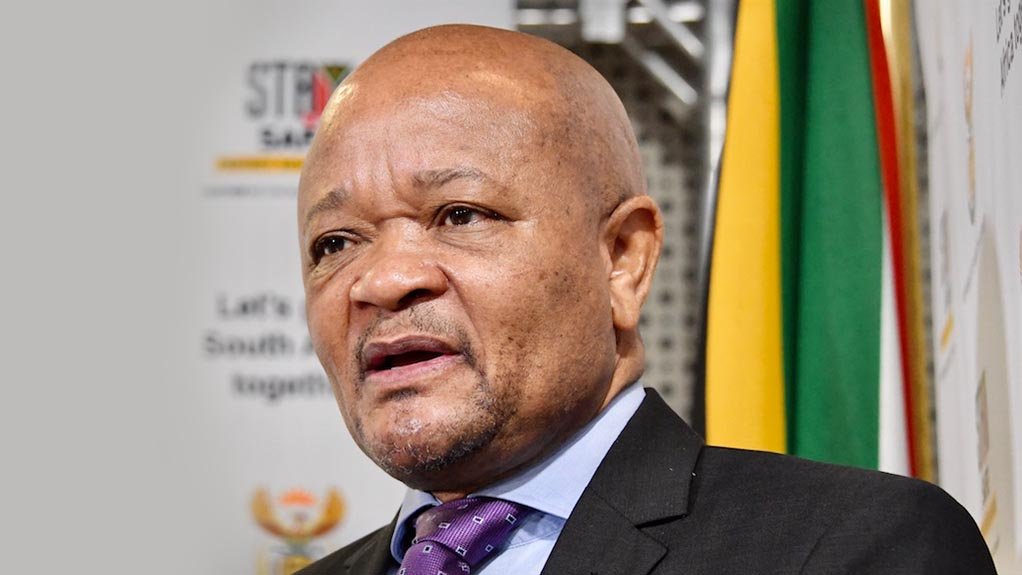
Police Minister Senzo Mchunu was “visibly angry” when the KwaZulu-Natal Political Killings Task Team (PKTT) took on new cases despite his instruction to wind down, National Police Commissioner Fannie Masemola told the Madlanga Commission of Inquiry on Tuesday.

Masemola said he found it “strange” that a minister would react with anger to police success.

“It was the first time in my career that I saw a minister angry because police had done a good job,” he testified.

“The meeting ended abruptly. He said he would only talk to me, not to Khumalo and the rest. What surprised me was exactly that … how could one be angry when police did what they are supposed to do?”

Masemola added that Mchunu had questioned the need for the PKTT, claiming President Cyril Ramaphosa had agreed it should be disbanded.

“At some point during the meeting Minister Senzo Mchunu stated that he did not understand why we were so adamant that the PKTT must not be disbanded, and he said President Cyril Ramaphosa agreed that the team must be disbanded,” Masemola testified.

“When I briefed the Presidency on 1 February 2025, the President was taken aback and said he would speak to Minister Mchunu.”

Masemola accused Mchunu of undermining police operations, noting that the attempted disbandment left more than 120 dockets untouched.

The PKTT, originally set up to tackle political killings in KwaZulu-Natal, was later given an expanded mandate covering cases in the Eastern Cape and syndicate-related murders in Gauteng.

According to Masemola, the team was instrumental in solving several high-profile cases, including the murder of Armand Swart, which led to the arrest of Gauteng businessman Vusimuzi “Cat” Matlala.

That investigation also exposed Matlala’s broader criminal network, culminating in attempted murder charges against his former partner, actress Tebogo Thobejane.

“It takes a team, not an individual, to investigate political killings. These kinds of cases involve many role players, and the PKTT was designed to manage that complexity,” Masemola said.

Despite this record, Mchunu ordered the task team to be disbanded in December 2024 without receiving a full briefing on its work.

Instead, the minister preferred “selective updates” on matters of personal interest, Masemola claimed.

One of the most serious revelations was that 121 dockets were withdrawn from the PKTT on the instruction of Masemola’s deputy, Lieutenant-General Shadrack Sibiya.

Once reassigned, no further investigations were carried out.

Masemola admitted giving Sibiya the order to return the cases to their original police stations but said the move effectively stalled critical probes.

“The minister’s conduct regarding the disbandment of the PKTT was concerning,” Masemola said, adding that he later realised the directive amounted to unlawful interference in police operations.

He also criticised Sibiya’s handling of sensitive cases, saying the senior officer wanted to move dockets away from Crime Intelligence and into the hands of detectives.

Masemola said he had advised Sibiya to focus on his demanding portfolio instead of restructuring established units critical to SAPS operations.

Former KwaZulu-Natal Hawks boss Johan Booysen, who clashed with political interference during his own tenure, said the saga was depressingly familiar.

“Nothing has changed since 2011,” he told reporters.

“Back then, a unit was shut down and critical dockets reassigned without proper investigation. Watching this at the Madlanga Commission feels like déjà vu.”

Masemola confirmed that SAPS is now moving ahead with plans to establish a Gauteng-based PKTT to continue investigating political killings and syndicate-linked crimes.

INSIDE POLITICS

More articles

LEAVE A REPLY

Please enter your comment!
Please enter your name here

AVBOB STEP 12

Inside Education Quarterly Print Edition

Inside Metros G20 COJ Edition

JOZI MY JOZI

QCTO

Latest article



