
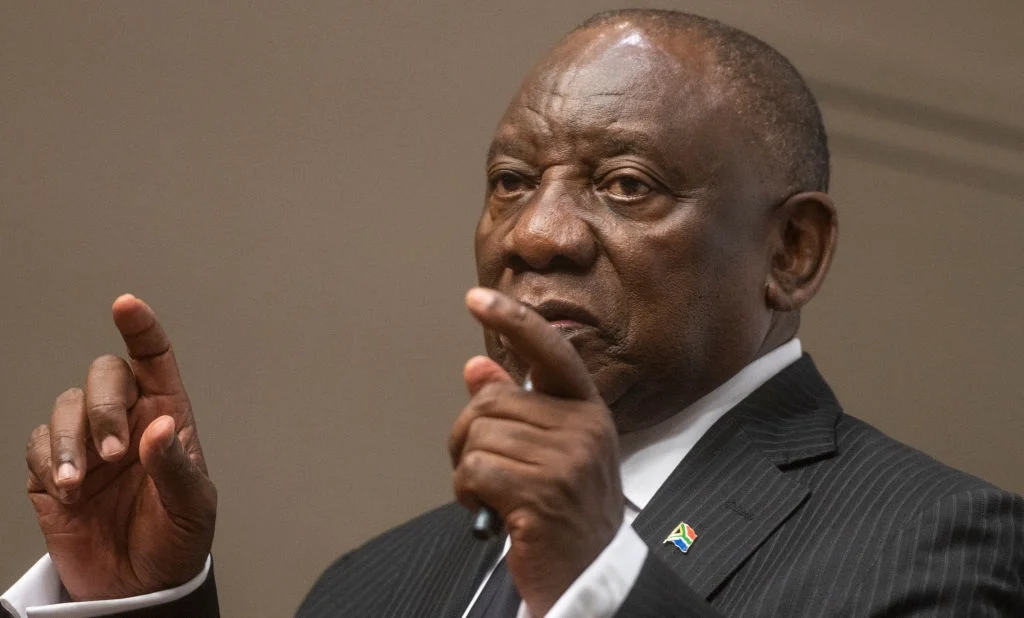
From the desk of the President
President Cyril Ramaphosa on Monday said South Africa’s removal from the Financial Action Task Force (FATF) grey list should mark the start of a new phase in fighting corruption and financial crime.
But he also warned that government must not become complacent after reaching the “milestone”.
In his weekly newsletter, Ramaphosa called the exit “a boost for our international reputation and global standing,” but said there is a long road ahead to strengthening institutions and rebuilding public trust.
“Much work remains to be done to reduce and prevent financial crimes, and ensure speedier investigations, prosecutions and convictions,” he wrote.
“We will make sure that the FATF decision does not result in complacency but supports increased vigilance.”
South Africa was placed on the FATF grey list in February 2023 after the Paris-based body identified weaknesses in its ability to detect and prosecute money laundering and terrorism financing.
It was removed last week after what the FATF described as “significant progress” in strengthening oversight and enforcement.
Ramaphosa said the reforms implemented, which were led by the National Treasury and Financial Intelligence Centre, demonstrated South Africa’s commitment to improving the business and investor climate.
Some of the improved measures included tightening reporting rules around beneficial ownership and giving regulators greater powers to investigate complex financial networks used to conceal corruption.
“These changes will make it much more difficult for individuals and syndicates to funnel the proceeds of their corrupt activities through complex webs of shell companies, trusts and companies owned by friends and relatives,” he said.
More spending had been committed to countering money laundering and terrorism financing, he said.
The president said the delisting would have tangible benefits for citizens, and that greater investor confidence and a stronger currency would ease pressure on the cost of living.
“Ultimately, the return of international financial confidence and a reduced risk perception will attract more foreign direct investment. As our currency strengthens, the cost of living for citizens and doing business will improve.”
South Africa’s removal from the list has been widely welcomed by business groups and investors. Economists said the grey listing had complicated cross-border transactions and discouraged foreign capital inflows, costing the economy an estimated 1 percentage point in
The Financial Intelligence Centre (FIC) said it “hailed” the grey list exit.
“We commend the collective efforts by partners in government, the private sector and civil society who help in South Africa’s fight against financial crime. Lifting the mantle of the grey list does not mark the end of this endeavour but lays the foundation for the next phase as we draw lessons from this experience,” said FIC acting director, Pieter Smit.
“Exiting the grey list is half the battle won and one that must continue. The FIC will continue to enhance its abilities to contribute to the fight against financial crime,” said Smit.
He said South Africa had already started the process of preparing for the fifth round of mutual evaluations, due to take place between 2026 and 2027.
INSIDE POLITICS





