

Marcus Moloko
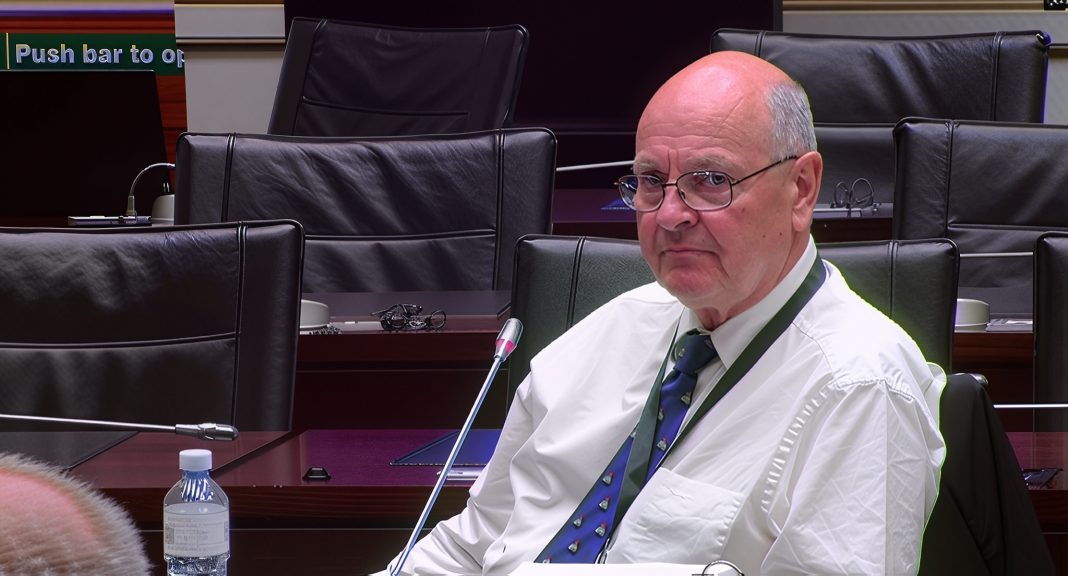
Parliament’s Ad Hoc Committee hearing turned into a political theatre of confrontation on Monday, when forensic investigator Paul O’Sullivan clashed with Members of Parliament over what he could disclose to the committee and what he deemed a safety concern.
MPs opposed the notion that O’ Sullivan could choose which questions to answer and which to refuse.
ALSO READ: Civil society asks Ramaphosa to block murder-accused Solly Lechoenyo’s Special Forces promotion
What was expected to be a straightforward testimony quickly escalated into a combative exchange, with MPs pressing O’Sullivan on transparency, credibility, and his role in shaping investigations into government officials.
Here are five explosive allegations from O’Sullivan’s testimony
Refusal to discuss pre-1990 history
O’Sullivan stunned MPs by flatly refusing to answer questions about his personal history before 1990, citing “security concerns.” Parliamentarians said that such secrecy undermined the committee’s mandate, accusing him of deliberately withholding information. His refusal set the tone for a tense session, with MPs questioning whether he was obstructing parliamentary oversight.
Admission of no formal qualifications at ACSA.
When pressed about his appointment to a senior position at the Airports Company South Africa (ACSA), O’Sullivan admitted he lacked formal qualifications.
ALSO READ: O’Sullivan rejects spy claims, outlines background before Parliament committee
MPs seized on this, suggesting his rise was based on influence rather than merit.
The revelation sparked debate about gatekeeping in public institutions and whether O’Sullivan’s career trajectory reflected systemic loopholes.
Claim of training President Cyril Ramaphosa
In a surprising twist, O’Sullivan claimed he once trained President Cyril Ramaphosa. MPs challenged the relevance of this assertion, suggesting it was an attempt to bolster his credibility.
The claim raised eyebrows and fueled speculation about the depth of O’Sullivan’s connections within the political elite. The EFF’s Julius Malema said it was an unlikely turn of events that needed further clarification.
Refusal to recognise certain political parties
Perhaps the most contentious moment came when O’Sullivan declared he would not “recognise” certain political parties. MPs accused him of contempt for democratic institutions, arguing that such statements undermined the legitimacy of Parliament itself.
Acknowledgment of his firm’s influence over government investigations
Finally, O’Sullivan admitted that his firm’s investigations had wielded significant influence over top government officials. While he framed this as evidence of his effectiveness, MPs countered that it suggested an outsized, unaccountable role in shaping political outcomes.
ALSO READ: ‘It smells of supremacy’, Malema tackles O’Sullivan paragraph 3 with limits
The committee continues.
INSIDE POLITICS