By Johnathan Paoli
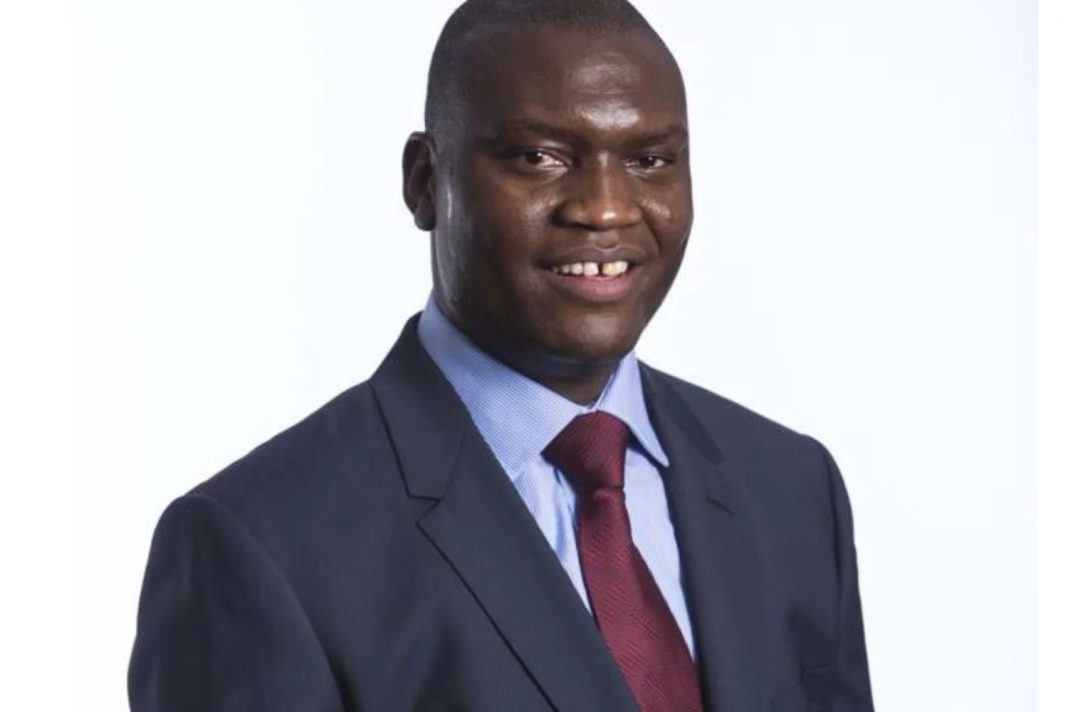
President Cyril Ramaphosa’s special adviser, Bejani Chauke, has rejected claims by forensic examiner Paul O’Sullivan that he was asked to provide input into the appointment of the National Police Commissioner, insisting he did not solicit O’Sullivan’s involvement and that the process was conducted with integrity.
In a post on social media, Chauke responded to what he claims as false allegations made by O’Sullivan before Parliament’s ad-hoc committee investigating corruption and interference in the criminal justice system.
“Ordinarily, as a special adviser to the President of the Republic, I received both solicited and unsolicited advice from third parties, which is a normal part of my official role and helps clarify the context,” Chauke said.
He said that in terms of the appointments and suitable candidates, he would receive a “barrage of suggestions”, and that it was not unusual for him to receive third-party advice on matters under presidential consideration, including appointments.
However, he disputed O’Sullivan’s version of events.
“Mr O’Sullivan was one of the people who approached me, almost to the point of stalking and harassing me, to influence, as though I could, the process in favour of a candidate he or his ‘community’ wanted,” Chauke said.
Chauke further emphasised that the process to appoint the South African Police Service (SAPS) Commissioner was “transparent and proper, as confirmed by the panel that reviewed the candidates, which should reassure South Africa of its integrity”.
His response follows testimony by O’Sullivan, who told MPs that Chauke had approached him for “informal advice” on candidates shortlisted to replace then National Commissioner Khehla Sithole.
“He informed me that they were looking to appoint a permanent appointee, they asked for informal advice,” O’Sullivan said.
According to O’Sullivan, his non-profit organisation, Forensics For Justice, conducted lifestyle audits on eight shortlisted candidates.
Among them, he said, were National Commissioner Fannie Masemola and KZN Police Commissioner Lieutenant-General Nhlanhla Mkhwanazi.
O’Sullivan said he compiled and submitted a report after assessing the candidates, adding that his recommendation was that six of the eight candidates were unsuitable due to concerns arising from their lifestyles.
The issue arose during questioning by ANC MP Khusela Diko, who asked O’Sullivan how the National Commissioner is appointed.
O’Sullivan replied that, to his understanding, “it is a decision by the president”.
Diko challenged his earlier assertion that former police minister Bheki Cele had “pushed his favourite”, Masemola, noting that Cele “has no authority to appoint the national commissioner.”
O’Sullivan maintained that he had discussions with senior political figures, including Finance Minister Enoch Godongwana, about the matter, and suggested that political preferences played a role in the appointment process.
The competing accounts have now placed renewed scrutiny on the circumstances surrounding the selection of the country’s top cop, with Chauke firmly denying any impropriety of O’Sullivan’s claims.
“Let me conclude by putting it on record that I did not solicit Mr O’Sullivan’s involvement. I challenged his blanket accusation that all candidates are corrupt and asked him to produce any supporting evidence,” Chauke said.
INSIDE POLITICS