



By Akani Nkuna
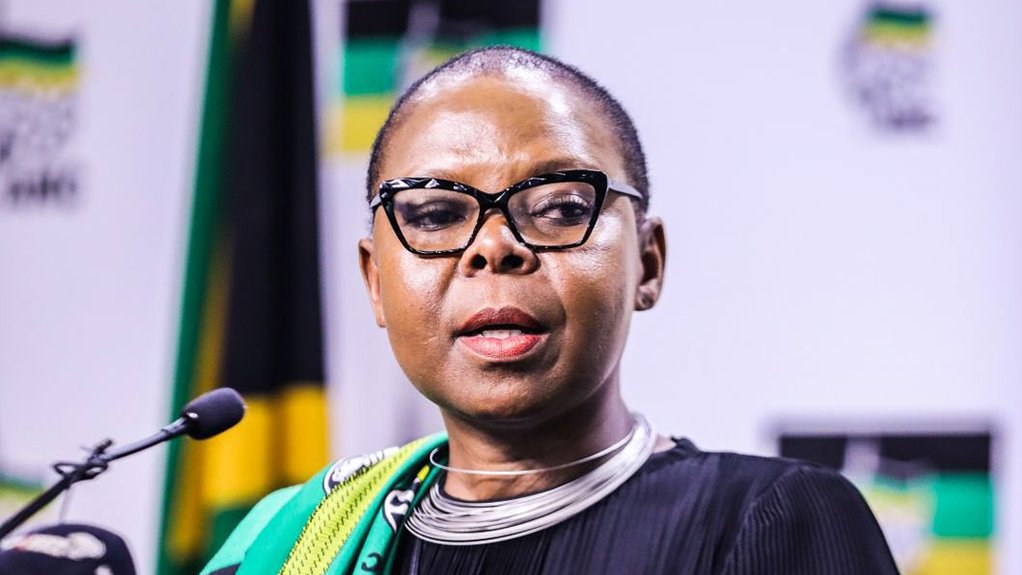
ANC spokesperson Mahlengi Bhengu has dismissed speculation about President Cyril Ramaphosa’s resignation following the party’s poor performance in the 2026 local government elections, saying that he will remain in office.
“The president is going nowhere, there is no pressure on the part of the ANC leadership collective [for him] to leave. There is a lot of publication that the president has offered to resign, we urge South Africans to treat that as [rumour],” she said.
Speaking to reporters on the sidelines of the ANC’s special National Executive Committee (NEC) meeting at the Birchwood Hotel in Boksburg on Thursday, Bhengu defended Ramaphosa’s leadership of the party’s election campaign.
ALSO READ: Sakeliga takes ICASA to court over 30% black ownership requirement for communications licences
“The ANC performance at this LGE requires a proper reflection today and today is the day where that is going to happen, and it will be a collective reflection. The president ran and led the campaign with excellence, some of you were travelling with us criss-crossing the country, and would have noted how he led from the front. There is no sense in which the president should be resigning.”
The special NEC meeting comes four days after the Electoral Commission of South Africa (IEC) declared the election results, which confirmed the ANC’s continued electoral decline under Ramaphosa’s leadership.
It secured 30.76% of the national municipal vote, down from 45.59% in the 2021 local government elections, a decline of 14.83 percentage points.
The result has ramped up scrutiny of Ramaphosa’s leadership, including criticism from former ANC president Thabo Mbeki.
Mbeki said Ramaphosa would be taking the “correct position” if reports that he had offered to resign were true. He said such a decision was “normal” in a democratic system when a leader presides over an electoral “disaster”.
With political parties negotiating power-sharing agreements in municipalities where no party secured an outright majority, Bhengu said several parties had approached the ANC about possible coalitions.
But she added that the ANC had not itself initiated coalition negotiations.
She said the party had extensive experience in local government and an established programme of action outlining service-delivery priorities.
She said that the ANC’s failures at municipal level could not simply be attributed to a lack of policy or knowledge, but reflected other shortcomings that the party needed to confront.
“We are taking those lessons very strongly,” Bhengu said.
ALSO READ: ANALYSIS | Coalition discussions or not, the water crisis is still here
She said the ANC would not adopt a “blanket approach” to coalition negotiations, but would assess the circumstances of individual municipalities, including their specific challenges and the representation of political parties.
“You really need to analyse municipality by municipality. You need to look at Johannesburg directly, eThekwini differently… so the posture of the ANC is likely to be in that direction… you cannot tackle this thing as one-size-fits-all.”






