
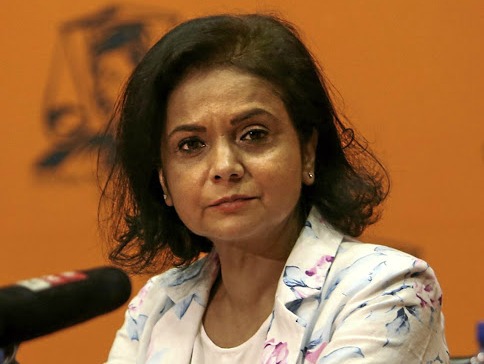


By Johnathan Paoli
Prosecution’s boss Shamila Batohi’s decision to leave the Nkabinde Inquiry mid-testimony, while still under cross-examination, has thrown a high-stakes process into procedural uncertainty, raising questions about how the panel can proceed, what it can compel, and how much credibility damage the inquiry, and Batohi, may now have to manage.
Batohi declined to return to the witness stand after a lunch adjournment in December, saying she needed legal advice before continuing her testimony.
Her absence was flagged when proceedings resumed and she did not return to the chamber, prompting Advocate Tembeka Ngcukaitobi, counsel for suspended South Gauteng Director of Public Prosecutions Andrew Chauke, to ask the panel to establish her whereabouts.
Advocate David Mohlamonyane, representing the evidence-leading team, confirmed that Batohi wanted to be excused in order to consult legal counsel.
When she was called back before the panel, Batohi confirmed the decision not to return was her own and that she had not sought permission.
“I decided, Chairperson, that I was not going to come back, pending getting proper legal counsel,” she told the inquiry, describing her stance as a matter of personal integrity.
The panel, chaired by former Constitutional Court justice Elizabeth Nkabinde, told Batohi that while the inquiry is not a conventional court, it is a formal process constituted by the president following Batohi’s own referral regarding Chauke’s fitness to hold office.
Batohi apologised for any perceived disrespect but maintained she was not withdrawing. Crucially, she rejected the idea of making a formal application for postponement, instead framing her move as a temporary halt pending legal advice.
That choice matters because it leaves the inquiry in procedural limbo.
Without a formal postponement or excusal application, Batohi remains a witness under cross-examination but is unavailable to answer questions from counsel or the panel. The panel now faces a set of practical and legal dilemmas: whether it can compel her return, what conditions might attach to any return, and how to treat testimony that started but did not conclude.
The disruption also carries broader credibility risks. Commissions of inquiry depend on orderly procedure and witness cooperation — especially when the witness is the head of a constitutional institution such as the National Prosecuting Authority. Batohi’s unilateral decision may strengthen arguments that the process is becoming unmanageable or unfair, and could fuel future legal challenges.
At the same time, the walkout may complicate Batohi’s own position. Ngcukaitobi warned during proceedings that, in other contexts, witnesses who leave formal inquiries while under questioning have faced serious legal consequences. He also said Chauke’s legal team does not believe Batohi has an automatic right to simply resume her testimony later.
The inquiry is set to resume on 26 January 2026.
INSIDE POLITICS