
- Advertisement -spot_img

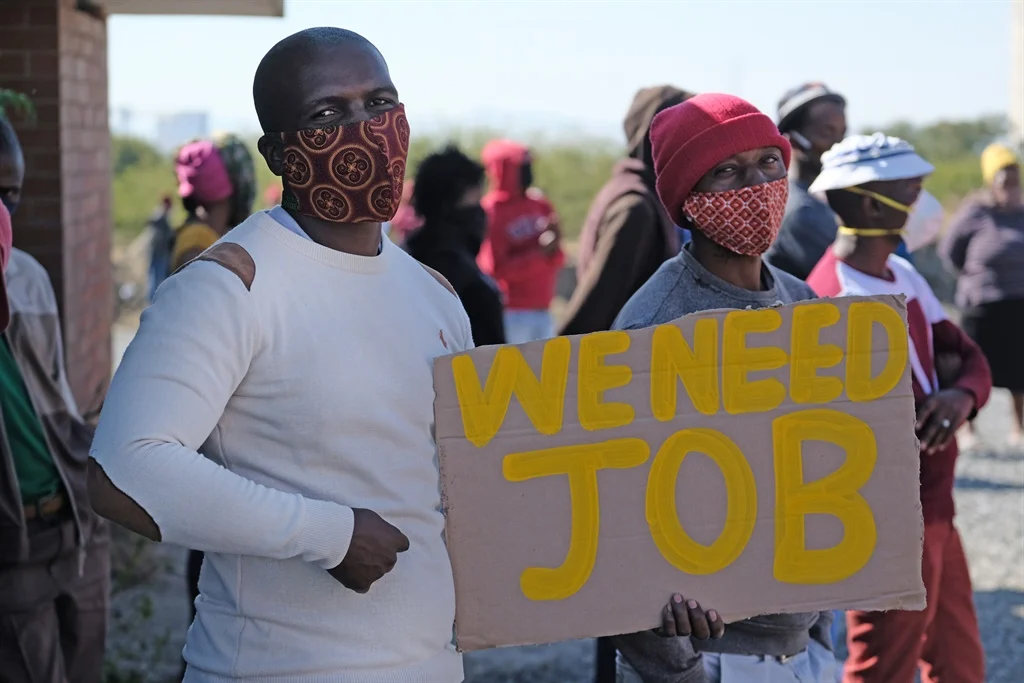
Budget Justice Coalition calls for job creation as unemployment rises to 32.7%

- Advertisement -spot_img

Must read

By Lebone Rodah Mosima

The Budget Justice Coalition (BJC) says South Africa’s unemployment crisis now affects about 13 million people, including the unemployed, underemployed and discouraged work-seekers, under the expanded definition of unemployment.

The coalition raised alarm over the latest first-quarter 2026 labour market figures, which showed the official unemployment rate rising from 31.4% to 32.7%, while the broader labour underutilisation rate increased from 45.7% to 46.3%.

ALSO READ: Taxi boss Joe “Ferrari” Sibanyoni’s bail hearing postponed to Friday

“Our unemployment rates represent, to a significant and incontrovertible degree, a direct failure of fiscal policy,” the BJC said.

The coalition said government had failed to place large-scale job creation at the centre of economic policy and instead continued to prioritise fiscal consolidation and investor confidence over employment creation.

“As a Coalition, we have long called for government to place large-scale job creation at the centre of economic policy; this requires mobilising the budget as a tool to confront unemployment, rather than as a victim of the socio-economic challenges facing the country,” it said.

The BJC argued that while unemployment typically rises in the first quarter of the year, the scale of the latest increase pointed to deep structural problems requiring urgent intervention.

“The Budget is one of the most important avenues to tackle this critical priority, and our government’s budgetary approach to unemployment is not reaping rewards; on the contrary, a people-centred budget would,” the coalition said.

ALSO READ: SA secures R2.5bn OPEC Fund loan for infrastructure

The coalition said the unemployment crisis continued to disproportionately affect young people, Black South Africans and women.

It noted that the narrow unemployment rate among people aged 25 to 34 rose to 40.6%, while unemployment among those aged 15 to 24 climbed to 60.9%.

Labour underutilisation rates increased to 53.1% for people aged 25 to 34 and 73.1% for those aged 15 to 24.

“The impact of unemployment is intersectional, as Black South Africans still face by far the highest unemployment rate, with the narrow rate increasing by 1.1 percentage points to 36.4%, and the labour underutilisation rate reaching 50.7% this quarter,” the BJC said.

The coalition also warned that young women were increasingly being pushed out of the labour force, with the proportion of young people classified as not in education, employment or training (NEET) continuing to rise.

“Young women continue to be significantly more likely not to be in education, employment, or training, with the NEET rate increasing by 1.7 percentage points for young women, compared to a 0.7 percentage point decrease for young men,” it said.

The BJC said barriers such as the cost of job-seeking, limited access to education, precarious self-employment and weak social networks continued to isolate young people from sustainable economic opportunities.

It added that long-term unemployment had worsened significantly over the past decade.

According to the coalition, the number of unemployed South Africans increased from 5.7 million in the first quarter of 2016 to 8.1 million in the first quarter of 2026, while the proportion of long-term unemployed rose from 64.9% to 77.4%.

ALSO READ: WATCH: Ramaphosa tells BlackRock summit SA is rebuilding investor confidence   

“Long-term unemployment accrues the impact of unemployment, with individuals losing their skills by not practicing them, and tearing social cohesion and the glue that keeps our communities together,” it said.

The coalition criticised government austerity measures, saying continued budget cuts had undermined education, youth employment initiatives and social protection programmes.

It specifically raised concern over cuts to Public Employment Programmes in the 2026 National Budget, including the Basic Education Employment Initiative (BEEI), which supports teacher assistants in public schools.

The BJC warned that nearly 200,000 positions could be at risk after funding for the programme was limited mainly to project management costs.

“Additionally, as we near the middle of the year it’s unclear if Phase 6 of the BEEI will be implemented, taking away opportunities for young people, and much needed support for teachers in public schools,” the coalition said.

The coalition called for the reinstatement and expansion of the BEEI, increased funding for the Expanded Public Works Programme (EPWP) and Presidential Employment Stimulus (PES), the recruitment of more healthcare and education workers, and greater investment in infrastructure maintenance and public services.

It argued that employment-intensive public programmes could help generate household income, strengthen social infrastructure and improve long-term economic productivity.

“These interventions are not only socially necessary but can also have strong fiscal multipliers by raising demand and improving long-term productivity,” the coalition said.

The BJC urged government to engage more openly with the unemployment crisis and adopt a more employment-centred growth strategy.

“South Africans, especially our youngest, cannot afford another quarter of deflection, nor do they deserve it,” the coalition said.

INSIDE POLITICS

More articles

LEAVE A REPLY

Please enter your comment!
Please enter your name here

CATHSSETTA

spot_img

AVBOB STEP 12

spot_img

Inside Education E-Edition

spot_img

Inside Metros G20 COJ Edition

spot_img

JOZI MY JOZI

spot_img

QCTO

spot_img

Latest article



