



By Ismail Joosub
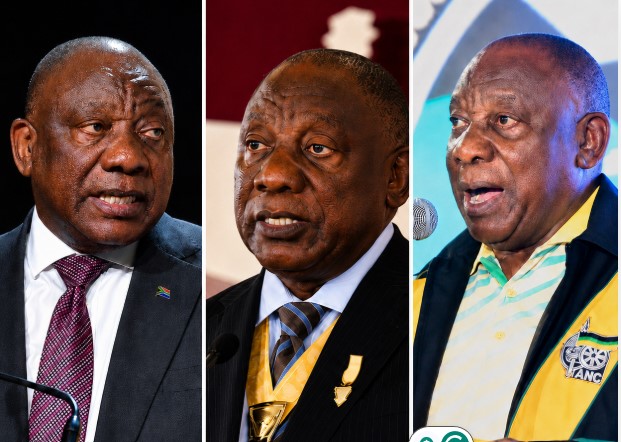
President Cyril Ramaphosa’s decision not to resign this week was always going to provoke fierce reaction. For some, it is evidence of political survivalism. For others, it is a necessary act of constitutional steadiness at a moment when South Africa can least afford institutional rupture.
But the more careful view is that the President’s decision to remain in office neither ends the Phala Phala matter nor places him above accountability.
What it does do is prevent South Africa from tumbling overnight into a potentially destabilising leadership vacuum while constitutional processes continue to unfold.
Much of the public discourse over the last several days has treated resignation as though it were legally inevitable following the Constitutional Court’s judgment. It was not.
The Court did not find Ramaphosa guilty of misconduct, nor did it order his removal from office.
Instead, it found that theNational Assembly acted unlawfully in December 2022 when it blocked the progression of the section 89 impeachment process.
This was after an independent parliamentary panel already concluded that there was prima facie evidence suggesting that Ramaphosa may have committed serious misconduct and may have acted inconsistently with his office.
The Constitutional Court’s ruling was therefore procedural.
It reaffirmed that Parliament cannot simply suppress an impeachment process at the preliminary stage because the political consequences may be inconvenient.
The Court ordered that the panel report be referred to an impeachment committee “unless and until” the report is set aside on review.
Ramaphosa has chosen to take the panel report on judicial review. Legally, he is entitled to do so.
Judicial review is one of the Constitution’s core accountability mechanisms and there is nothing unconstitutional about a President challenging a report that he believes contains legal or factual flaws.
But there is an important qualification that cannot be ignored: launching a review application does not automatically suspend Parliament’s impeachment process. The Constitutional Court did not say that the process stops once review papers are filed. It said the process continues unless and until the report is actually set aside.
That means the President will almost certainly have to approach the High Court for interim relief if he wishes to pause Parliament’s impeachment proceedings while the review is heard.
Constitutionally, this creates an unusual situation.
A lower court may effectively be asked to suspend the operation of a process revived by the Constitutional Court itself. Whether such an interdict is granted will likely determine the immediate political tempo of the crisis.
If the interdict fails, Parliament’s impeachment committee may proceed while the review simultaneously unfolds through the courts. If it succeeds, the matter could slow considerably, buying the President time but not a final escape from scrutiny.
And scrutiny will remain unavoidable.
The political difficulty for Ramaphosa is that Phala Phala has now moved beyond being merely an opposition slogan. The recent IPID findings regarding the conduct of police officials, together with the revived section 89 process, have reinforced public concern about the relationship between state power, private interest and accountability at the highest level of government.
At the same time, the legal picture remains more complex than many public narratives suggest. The Public Protector previously found no substantiated breach of the Executive Ethics Code. The National Prosecuting Authority declined to prosecute. The Reserve Bank found no completed exchange-control transaction on the evidence before it.
The issue now is, therefore, not whether every institution has condemned the President. It is whether Parliament may finally complete a constitutional accountability process that was prematurely halted.
This is precisely why Ramaphosa’s decision not to resign may ultimately be better for constitutional democracy than an abrupt departure.
South Africa’s Government of National Unity (GNU) remains politically young and structurally delicate. Had the President resigned this week, the country would not merely have faced a change of office-bearer. It would have triggered a succession battle inside the ANC, fresh coalition negotiations within the GNU, and significant uncertainty regarding the future direction of the state itself.
Constitutionally, Deputy President Paul Mashatile would temporarily act as President under section 90, but any permanent successor would still need to be elected by the National Assembly under section 86. In the current parliamentary arithmetic, that process would immediately become a coalition contest.
This is where economics enters the discussion.
South Africa’s recovery remains fragile. Growth forecasts remain modest,unemployment painfully high, and investor confidence heavily dependent on political predictability and reform continuity.
Markets can absorb accountability processes. What they struggle to absorb is prolonged uncertainty over executive authority and coalition stability. The greatest danger at present is therefore not constitutional scrutiny itself, but institutional destabilisation.
That reality will inevitably shape the road to the 4 November 2026 municipal elections.
Opposition parties will seek to turn Phala Phala into a referendum on the ANC’s moral credibility. Some within the ANC itself may quietly view the crisis as an opportunity to reposition internal power ahead of 2027 succession battles.
The electorate is also likely to judge whether the GNU can maintain stability, continue institutional reform and allow constitutional processes to function without collapsing into political chaos.
That, ultimately, is the real significance of this moment. President Ramaphosa has not survived because the Constitution shielded him from accountability. He has survived because the Constitution still insists on process.
South Africa now faces the difficult but necessary task of balancing constitutional scrutiny with constitutional stability. The challenge ahead is not to protect individuals. It is to protect the Republic from the twin dangers of impunity on the one hand and institutional collapse on the other.
Ismail Joosub is manager of the Constitutional Advancement Programme at the FW de Klerk Foundation.
INSIDE POLITICS






