- Advertisement -spot_img

Cachalia: Four new provincial commissioners to be appointed as Reset Agenda begins

- Advertisement -spot_img

Must read

By Charmaine Ndlela

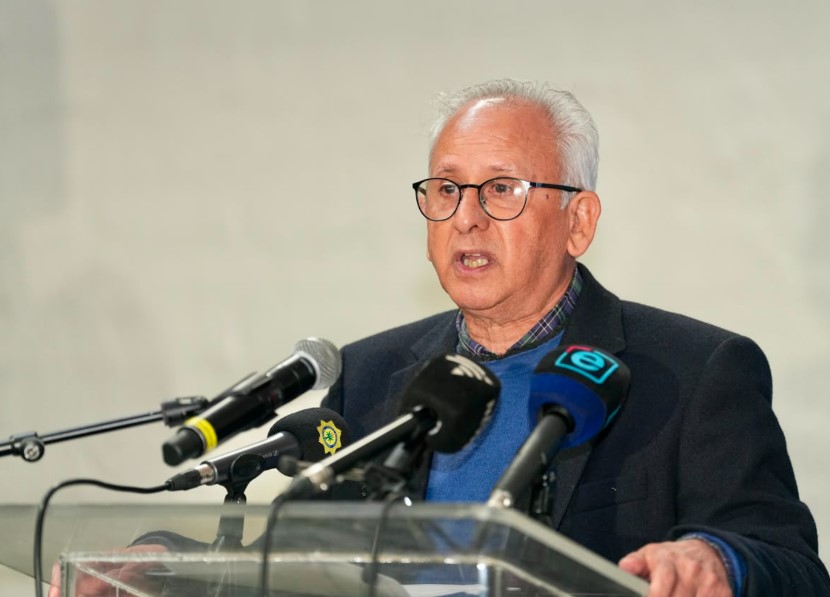
Acting Police Minister Firoz Cachalia has announced that four provincial commissioners will be appointed in the coming weeks as part of government’s drive to fill critical leadership vacancies and strengthen the South African Police Service (SAPS).

The appointments form a key element of the first phase of the Police Reset Agenda, which was unanimously adopted at the second Police MINMEC meeting of 2026 held in Mpumalanga.

Addressing the media on Saturday, Cachalia said the reform programme has moved from proposal to implementation and will initially target 140 high-crime police station precincts.

The stations will receive targeted operational support, improved infrastructure, enhanced oversight, additional resources and stricter performance monitoring so they can serve as demonstration sites for measurable improvements in policing and service delivery.

“The Police Reset Agenda is no longer a reform proposal. It has entered the implementation phase,” Cachalia said.

He said the MINMEC meeting was a defining moment that shifted the forum from a routine intergovernmental meeting into a strategic platform institutionalising a common national programme for policing reform.

The agenda aims to restore professionalism, integrity, accountability and operational excellence within SAPS while transforming the service into a modern, intelligence-led and technology-driven institution.

Alongside the policing reforms, MINMEC reaffirmed the Integrated Crime and Violence Prevention Strategy, recognising that crime cannot be tackled through law enforcement alone and requires coordinated action on its social, economic and environmental drivers.

Government also resolved to strengthen Community Policing Forums and expand partnerships with business, civil society, traditional leaders and faith-based organisations.

A five-year implementation framework for the Community Patrollers Programme was approved to improve visibility and community safety, with proper governance, training and accountability. Cachalia said that patrollers are intended to support police officers, not replace them.

A central pillar of the Reset Agenda is rebuilding Crime Intelligence to enable more proactive policing and a stronger response to organised crime.

MINMEC endorsed the National Organised Crime Strategy, led by KwaZulu-Natal Provincial Commissioner Lieutenant General Nhlanhla Mkhwanazi, to coordinate intelligence-led operations against syndicates operating across provincial boundaries. Progress is already being recorded through operations targeting illegal firearms, drug trafficking, violent offenders and organised crime networks.

In addition to the forthcoming provincial commissioner appointments, SAPS is filling other critical vacancies. Under Project 11 000, a further 5 500 police recruits will soon begin training to boost frontline capacity. Reforms also include stronger anti-corruption measures through lifestyle audits, enhanced vetting, procurement reforms, improved detective services and the digitisation of policing systems.

Cachalia acknowledged that despite extensive legislative reforms, South Africa continues to face an entrenched gender-based violence and femicide (GBVF) crisis.

He said government has established victim empowerment centres, strengthened domestic violence legislation and trained officers to investigate sexual offences, but these steps have not yet delivered the desired outcomes because of deep social, familial and cultural roots.

Efforts will now intensify to identify policy and implementation gaps while strengthening existing programmes. He praised Deputy Police Minister Polly Boshielo and police leadership for developing comprehensive action plans on GBVF.

Acting National Commissioner Puleng Dimpane said SAPS was expanding forensic science services, particularly for GBVF cases.

Work is underway to expand the forensic laboratory in KwaZulu-Natal through specialised equipment procurement, while plans are being developed for a forensic laboratory in Mpumalanga in partnership with the private sector.

SAPS is working closely with the National Prosecuting Authority to prioritise GBVF dockets and prevent investigation backlogs.

“We can confirm that GBVF dockets are being prioritised. We have all the necessary kits to deal with these cases,” she said, adding that expanding forensic capacity remains an operational priority.

Cachalia said the ultimate measure of the Police Reset Agenda’s success will be whether communities experience tangible improvements in policing and whether public confidence in SAPS can be restored.

INSIDE POLITICS

More articles

LEAVE A REPLY

Please enter your comment!
Please enter your name here

Inside Education E-edition June 2026

spot_img

Services Seta 2026

spot_img

CATHSSETTA

spot_img

AVBOB STEP 12

spot_img

Inside Metros G20 COJ Edition

spot_img

JOZI MY JOZI

spot_img

QCTO

spot_img

Latest article