
- Advertisement -spot_img

Community groups warn against blaming migrants for job crisis

- Advertisement -spot_img

Must read

By Lebone Rodah Mosima

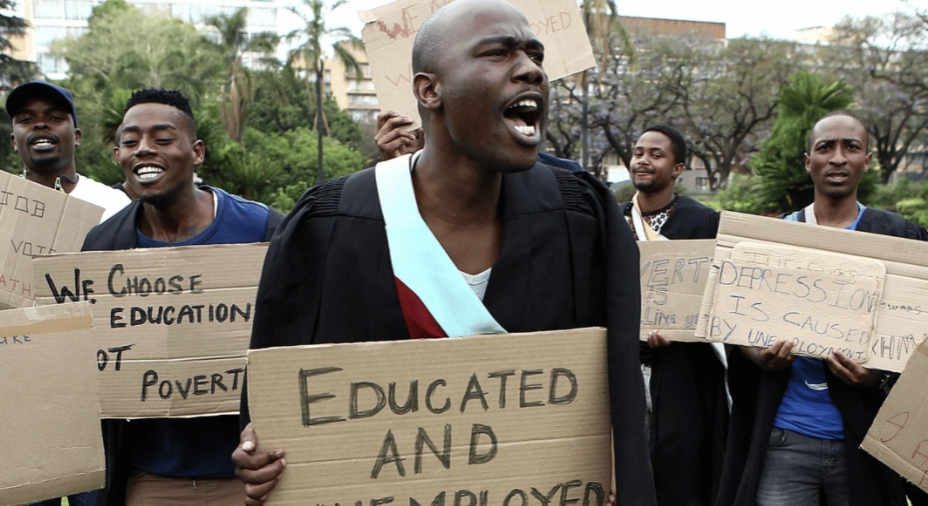
The Assembly of the Unemployed and the Cry of the Xcluded have rejected “the politics of division and scapegoating”, saying migrants and foreign nationals are not responsible for South Africa’s unemployment crisis.

In a statement on Thursday, the community groups said the latest Quarterly Labour Force Survey – released on Wednesday — painted a devastating picture of deepening social crisis, economic exclusion and mass despair facing millions of working-class and poor people across the country.

The official unemployment rate increased to 32.7%, with the number of unemployed people rising by 301,000 in just one quarter to more than 8.1 million.  

Employment declined by 345,000 jobs during the same period, while the number of discouraged work-seekers rose to nearly 3.9 million people.

They said the broader measure of labour underutilisation now stood at 46.3%, exposing the scale of social abandonment and wasted human potential in the country.

The organisations said the situation facing young people was “catastrophic”, with more than 60% of youth aged 15 to 24 who are in the labour force unemployed, while 37.6% of young people were not in employment, education or training.

Women also continued to carry a disproportionate burden, with the unemployment rate for women increasing to 36.4%, significantly higher than for men.

They said provinces including the Eastern Cape, Mpumalanga and North West were experiencing unemployment levels comparable to a “humanitarian disaster”.

In the Eastern Cape, the unemployment rate had climbed to 44.6%, while the broader labour underutilisation rate exceeded 57%.

“These figures expose the complete failure of the economic path pursued by successive ANC governments over the past three decades,” the organisations said.

“Neoliberal policies centred on austerity, privatisation, fiscal cuts, deregulation and blind faith in ‘investor confidence’ have destroyed jobs, weakened public services and deepened inequality.”

They said South African “capital” had engaged in what they described as an ongoing investment strike, while corporations continued to hoard wealth, export profits, automate production and engage in financial speculation as millions were denied decent work and dignity.

The organisations said the structural causes of unemployment and poverty had to be confronted, but warned that “opportunist political forces” were instead trying to redirect the anger of poor communities towards migrants and foreign nationals.

“In communities devastated by unemployment, rising food prices, collapsing municipal services, electricity crises and government abandonment, anti-immigrant sentiment and xenophobia are being cynically exploited for political gain,” they said.

They said migrants did not cause unemployment, foreign nationals did not impose austerity, and poor African migrants did not privatise public services, close factories, casualise work or loot public resources.

“Xenophobia only divides the working class while protecting the real beneficiaries of inequality and exploitation,” they said.

They said the real crisis lay in an economic system that enriched a “tiny elite” while condemning the majority to unemployment, hunger and insecurity.

The organisations also rejected what they described as the predictable response from government, the Democratic Alliance and big business that South Africa must attract investment and create a better climate for corporations.

“This strategy has failed repeatedly. Decades of tax cuts, labour market flexibilisation and concessions to capital have not produced jobs at the scale required,” they said.

“South Africa needs a radically different economic strategy centred on people’s needs rather than corporate profits.”

The Assembly of the Unemployed called for an immediate Living Basic Income Grant of at least R1,500 a month for all unemployed and economically excluded people.

It also called for the abandonment of austerity policies, a rejection of privatisation and public sector cuts, large-scale state-led investment in productive sectors of the economy, and a mass public housing programme capable of creating hundreds of thousands of jobs.

The organisations further demanded a major expansion of affordable public transport, public investment in renewable energy and energy infrastructure, and the expansion of public healthcare and education systems.

“Such an investment programme can create jobs directly, stimulate local manufacturing and economic development, and create conditions that may draw in productive private investment rather than speculative capital,” they said.

But the organisations said they were under no illusion that change would come from above.

They said 30 years of ANC rule had taught the unemployed and the poor to depend on their own organised strength.

INSIDE POLITICS

More articles

LEAVE A REPLY

Please enter your comment!
Please enter your name here

CATHSSETTA

spot_img

AVBOB STEP 12

spot_img

Inside Education E-Edition

spot_img

Inside Metros G20 COJ Edition

spot_img

JOZI MY JOZI

spot_img

QCTO

spot_img

Latest article



