
- Advertisement -spot_img

DA Congress opens as Zille, Steenhuisen hail liberalism’s rise amid populism

- Advertisement -spot_img

Must read

PHOTOS: EDDIE MTSWENI

By Johnathan Paoli

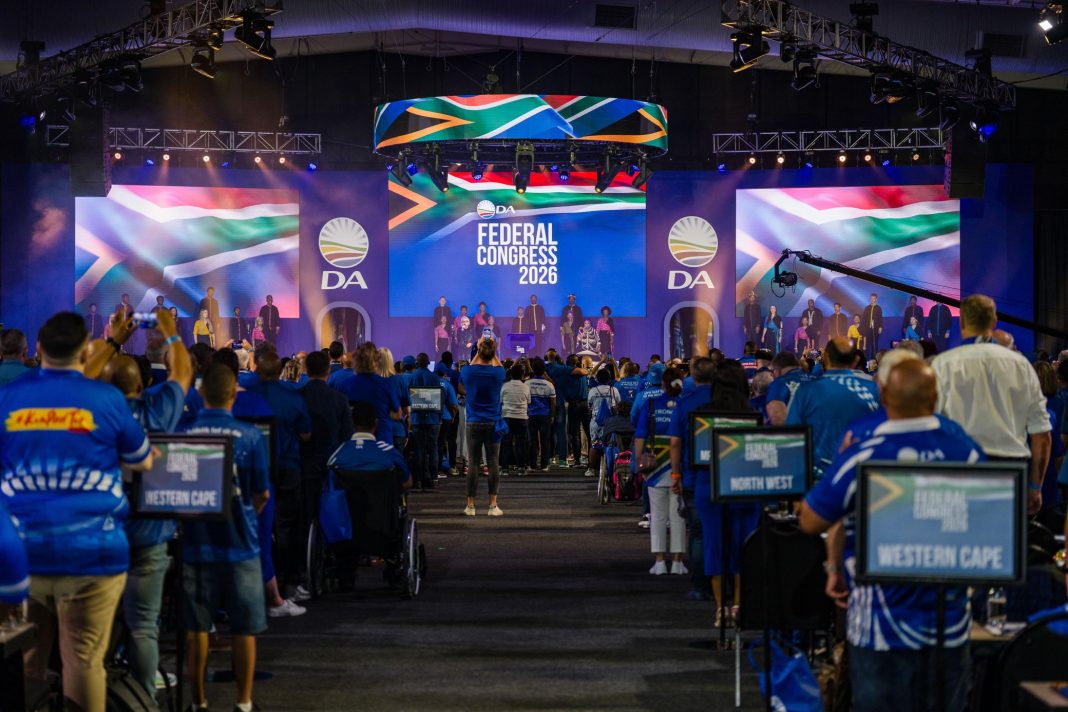
The Gallagher Convention Centre was awash in blue on Saturday morning as the Democratic Alliance (DA) opened its highly anticipated 2026 Federal Congress, marking a pivotal moment for the party as it gathers for the first time since entering South Africa’s Government of National Unity (GNU).

Delegates, party officials and members of the media streamed into the Midrand venue in the early hours, coffee cups in hand, as a carefully choreographed programme got underway.

The atmosphere carried a sense of anticipation as more than 2,000 attendees prepared for a weekend that will shape the party’s leadership and policy direction.

In her opening address, DA federal council chairperson Helen Zille struck a balance between humour and ideological conviction, joking about the tightly run schedule before pivoting to a broader reflection on the party’s mission and history.

“My friends and delegates, my blue family, I wish I could dance now but the people running this Congress are running like a Swiss train and there isn’t something on the run sheet that says I may dance now because we might lose a minute,” Zille said.

Zille used her address to situate the DA within a longer liberal tradition, arguing that the party had inherited, rather than invented, its core values.

“We took the baton from those who ran this race for liberal democracy before us, in fact 67 years ago. To Congress delegates as young as you, 67 years may seem a long time. In political evolution it is the blink of an eye,” she said.

“Those who study these things remind us that in building a sustainable liberal democracy the first 500 years are always the most difficult and yet and yet in just under seven decades we have made extraordinary progress. We have made extraordinary progress in soil that has never been fertile for liberal democracy.”

Framing the DA as a bulwark against rising global and domestic populism, Zille warned against identity politics and racial nationalism.

“We are the party of inclusion, not division. We call ourselves the blue people, not black, not white, not brown, but blue,” she said.

She argued that the party’s commitment to constitutionalism, individual freedom and a market-based economy set it apart in an era where liberal democratic norms are increasingly under pressure.

Zille also highlighted the DA’s internal culture, describing it as one “rooted in open contestation and institutional strength”.

She concluded with a call to delegates to expand the party’s support base ahead of future electoral contests, stressing that “democracy is never finally won” and must be defended across generations.

The spotlight then shifted to outgoing federal leader John Steenhuisen, who delivered his final address to congress.

“That a party once consigned to irrelevance and ridicule now shapes the destiny of South Africa, is the legacy I leave behind for the Democratic Alliance. It is with a full heart, profound gratitude and immense pride that I speak to you today for the final time as the federal leader of the Democratic Alliance,” Steenhuisen said.

Reflecting on his tenure since 2019, he recalled a party “on its knees, polling at 16%, divided and riven by a crisis of confidence”, and contrasted that with its current position.

“The DA today is stronger, larger, more relevant and more influential than any time in our history,” he said.

Steenhuisen credited the party’s recovery to what he termed a “moonshot mission” launched at the 2023 congress, aimed at transforming the DA into a party capable of governing nationally.

He pointed to the party’s role in the national government as evidence of its growing influence, citing interventions in key portfolios such as agriculture, home affairs, education and infrastructure.

He highlighted policy battles, including opposition to a proposed VAT increase and legal challenges to controversial legislation.

“The only reason we are fixing broken departments, and the only reason that our economy is showing signs of life, is because the DA accomplished our moonshot mission to enter a national governing coalition,” Steenhuisen said.

Steenhuisen also framed the party’s project as a response to rising global illiberalism, warning against “populism and ethnic nationalism” while arguing that South Africa’s coalition government model could serve as an example of inclusive governance.

As he closed his speech, Steenhuisen described his departure as “mission accomplished” and pledged continued support for the party.

“I hand over the baton of leadership with immense pride and complete confidence,” he said.

The congress continues over the weekend, with delegates set to elect a new federal leader and other top officials, as well as debate key policy proposals.

Voting is scheduled to begin on Sunday morning, after campaigning closes, with the outcome expected to chart the DA’s course as it seeks to expand its electoral footprint ahead of the upcoming local elections.

INSIDE POLITICS

More articles

LEAVE A REPLY

Please enter your comment!
Please enter your name here

CATHSSETTA

spot_img

AVBOB STEP 12

spot_img

Inside Education E-Edition

spot_img

Inside Metros G20 COJ Edition

spot_img

JOZI MY JOZI

spot_img

QCTO

spot_img

Latest article



