



By Lebone Rodah Mosima
Tourism Minister Patricia de Lille has called on young innovators to develop digital solutions that will help rural and township tourism businesses overcome barriers to accessing markets and expanding their operations.
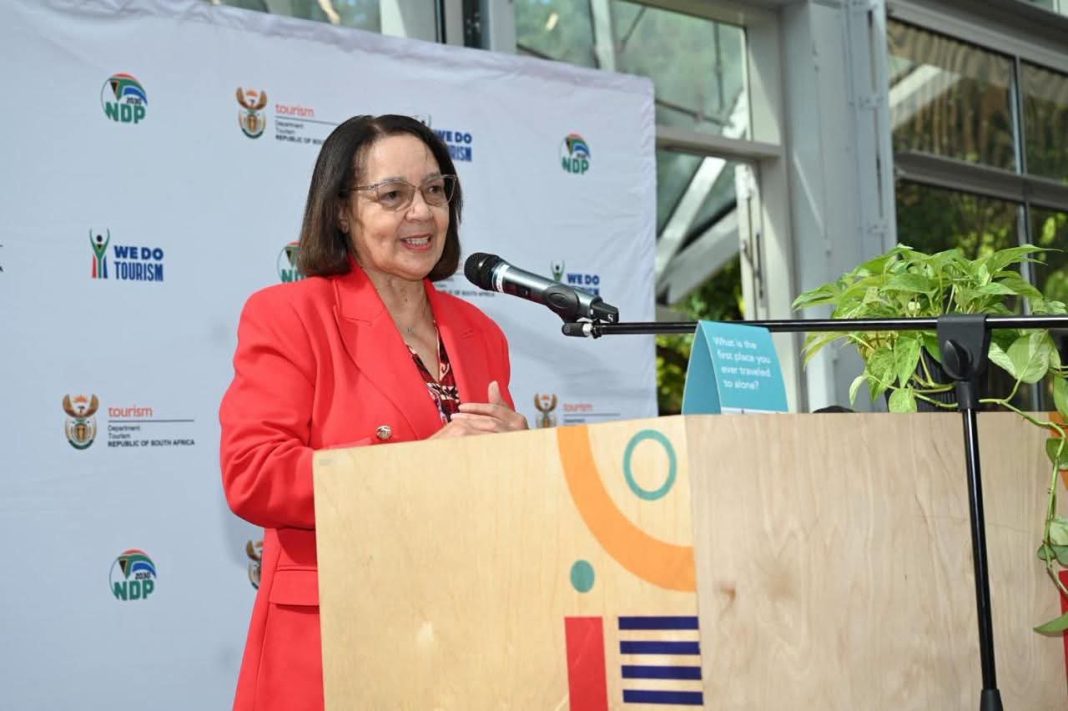
Launching the 2026 Tourism Hackathon Challenge in partnership with the University of Cape Town (UCT) on Saturday, de Lille said the digital economy was changing how people discover, plan and book travel, as well as how tourism businesses reach customers and compete.
“Our responsibility is to ensure that rural and township businesses can participate in that economy and share in the growth it makes possible,” de Lille said.
“That’s why our theme for the 2026 Tourism Hackathon Challenge is: Community Based Tourism and Rural Inclusion.”
She said tourism policy was closely connected to economic development.
“Tourism policy is economic policy. The decisions we make about how we develop and promote our destinations have a direct bearing on where investment goes, where jobs are created and who has the opportunity to build a business.”
As more of the visitor journey takes place online, access to digital tools and markets must form part of those decisions, she said.
“For the Department of Tourism, that means making it easier for local businesses to reach travellers, secure bookings and earn income from the experiences they offer,” de Lille said.
“It also means ensuring that communities have a say in how their destinations are developed and how their stories are told.”
She added: “Digital innovation can support both goals when the people who will use the technology help shape it from the start.”
De Lille said the challenge formed part of the Tourism Growth Partnership Plan 2025–2030, which aims to support tourism development, job creation and economic inclusion.
“Product development and job creation go hand in hand. When travellers can discover and book more of what a destination offers, local businesses have a better chance of earning income, growing their operations and creating work,” she said.
She said the department’s three-year strategic partnership with UCT would bring expertise in design thinking, innovation, entrepreneurship and financial technology to the initiative.
Reflecting on the inaugural Tourism Hackathon Challenge in 2025, de Lille said 48 students from 21 higher education institutions across South Africa had participated.
“They were young, determined, and fearless in their thinking,” she said.
The winning team, The Catalyst, developed a concept called the Hologram Hub, a platform designed to allow rural communities to share their stories, showcase their culture and attract visitors.
“Imagine arriving in a remote village and being welcomed by a hologram that tells you about its heritage, its crafts, its cuisine, and its people. That is innovation rooted in culture,” de Lille said.
The participating students received a combined R500 000 in cash prizes, with The Catalyst taking the overall first prize of R175 000.
Map My Biz secured second place and R140 000 for an AI-supported entrepreneurship learning platform designed to equip township and rural entrepreneurs with essential business skills through offline-accessible learning kiosks.
“The solution integrates a smart digital map that connects certified local businesses with tourists, increasing their visibility and access to markets,” she said.
Ubuntu Unlimited took third place and R105 000 for a digital tourism platform using virtual reality, artificial intelligence and blockchain technology to preserve and showcase African rural culture to international audiences.
“The solution connects tourists with authentic cultural experiences while creating sustainable income opportunities for rural communities,” she said.
De Lille recalled watching the top three teams present their solutions to tourism ministers from around the world during the G20 Tourism Ministers’ Meeting in Mpumalanga in 2025.
Their innovations were also showcased during the World Tourism Day celebrations in Limpopo in September 2026.
Building on the inaugural competition, the department has brought together 50 students from public and private universities for the 2026 challenge, themed “Community-Based Tourism and Rural Inclusion”.
Addressing the students, de Lille challenged them to work directly with communities and tourism businesses to identify barriers to growth and develop practical solutions.
“Your task is to work with communities and tourism businesses to identify a barrier to growth and build something that helps remove it,” she said.
“When you return to pitch your prototype, show us what it could change for a business and the people who depend on it.”
She emphasised that tourism innovation must respond to the everyday realities of the people and businesses it seeks to serve.
“Behind every booking is a business that has to deliver an experience, and behind every experience are people whose knowledge, skills and time give it value,” she said.
She urged students to engage with tourism operators and understand their challenges before developing technological solutions.
“Use that opportunity to ask better questions about the businesses you want to serve. Ask a guide how customers currently find them.”
Students were encouraged to investigate how homestay owners manage bookings, which payment methods village tourism operators use and how quickly businesses need to receive payments.
They were also urged to consider who would be responsible for updating information on digital platforms and the cost of maintaining those services.
“The answers may change what you decide to build. A booking tool might need to work on a basic smartphone and use very little data,” she said.
The department and UCT will explore opportunities to support the top three finalists through innovation and entrepreneurship development programmes.
Participating teams will refine their concepts ahead of the final pitching and awards event, scheduled for between January and March 2027.
“To all our students, we look forward to seeing what you build and hearing from the people you build it with,” de Lille said.
INSIDE POLITICS






