
- Advertisement -spot_img

Diakonia foreign nationals remain outside refugee centre as protests spread nationwide

- Advertisement -spot_img

Must read

By Charmaine Ndlela and Johnathan Paoli

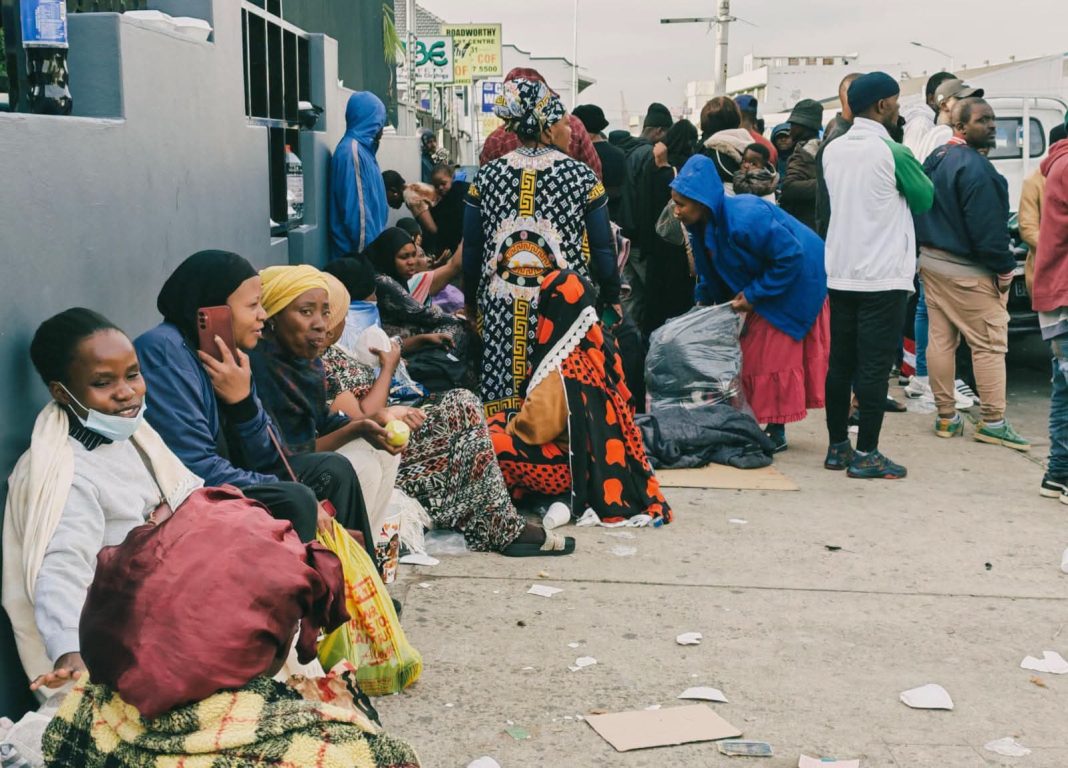
Several foreign nationals displaced by anti-immigrant tensions in Durban were on Friday still camped outside the Home Affairs Refugee Reception Centre on Moore Road, despite authorities confirming that the overwhelming majority are legally documented asylum seekers and refugees.

Speaking to Inside Politics, KZN SAPS spokesperson Colonel Robert Netshiunda said officers had been deployed overnight to maintain safety and security, and confirmed that about 50 migrants had reported feeling unsafe.

“They were chased and told to return to their homes, and if they do not feel safe, they should open a case and allow the law to take its course,” he said.

The group, which had initially sought refuge at the Diakonia Centre in central Durban earlier this week, was moved to a Home Affairs refugee centre for verification after days of protests, threats and confrontations.

Earlier on Friday, eThekwini mayor Cyril Xaba confirmed that 455 of the 457 people processed had valid documentation, with only two found to be undocumented.

One individual was arrested, while another’s application was reportedly rejected.

Despite the verification outcome, many migrants remained outside the centre, saying they feared returning to areas such as Redhill, Avoca and other communities where they allege threats, forced removals and intimidation linked to ongoing anti-immigration tensions.

Some also claimed landlords had been threatened and businesses forced to close amid fears of violence targeting foreign nationals.

Meanwhile, anti-immigration protests spread to the Eastern Cape, where residents near Gqeberha marched under the “Vukuzenzele” banner against crime, drugs and undocumented immigration.

Residents gathered in KwaZakhele and New Brighton before marching to a local police station, with organisers describing parts of the Nelson Mandela Bay region as “war zones” plagued by gangsterism, violent crime and drug activity.

Police monitored the demonstration and urged residents to protest peacefully.

The march drew support from community patrollers and anti-crime activists, including ActionSA Ekurhuleni mayoral candidate Xolani Khumalo, who joined the demonstration alongside senior party leaders, including parliamentary leader Athol Trollip.

“Today, I am marching alongside the people of Gqeberha against crime, drugs and the decay of this beautiful city. Most of you were born here, and this is the only home that you know. And if you can’t take care of your home, you can’t take care of yourself,” Khumalo said.

“We are today crying for the SAPS, as the community, we are tired of crime. We are tired of drug dealers. There are those who are honest and want to see this country clean and in a better place,” he added.

This comes in the wake of the abaThembu Royal Kingdom warning that tensions around undocumented migration were escalating dangerously.

“The issue confronting our society is not merely one of documentation or non-documentation regarding foreign nationals. We will not be fooled by the media stance and the arrogance of our authorities in heinous crime and explosive extortion,” the statement read.

The royal family urged foreign nationals to “go back home timeously before things go out of hand” and called on South Africans living abroad in countries affected by immigration tensions to “return home urgently without delay”.

Tensions also flared in Gauteng, where residents of Dunnottar in Ekurhuleni staged protests against undocumented immigrants following allegations that a local teenager was beaten to death in February by a group of foreign nationals.

The Ekurhuleni Metro Police Department (EMPD) arrested eight undocumented immigrants during the demonstrations, although spokesperson Kelebogile Thepa cautioned against linking those arrested to the teen’s death before investigations are concluded.

Thepa said police had not confirmed whether foreign nationals were responsible for the killing.

The situation became volatile when protesters moved into a residential area and attempted to forcibly remove a foreign national from his home, while community members carrying South African flags demanded that undocumented immigrants leave the area, blaming them for rising crime.

The growing protests have also prompted reactions from prominent public figures amid mounting national debate around immigration enforcement, crime and xenophobia.

Former Public Protector Thuli Madonsela, speaking to SABC News, described the treatment of African foreign nationals as “quite sad”, while arguing that government failures and labour exploitation lay at the centre of the crisis.

“What is failing us is the enforcement of the law. Instead of people going to beat up and traumatise fellow human beings who are just looking for a better life, we should look at those who are breaking the law by only employing foreigners and secondly underpaying them,” Madonsela said.

Madonsela said employers exploiting undocumented workers were contributing to tensions in poor communities.

“If employers paid everyone the same amount under decent conditions of the law, they would not prefer undocumented foreigners over locals,” she said.

As tensions continue to spread nationally, more than 40 civil society organisations, migrant rights groups and legal advocacy bodies in Cape Town have united in opposition to a planned “March and March” protest scheduled to take place from Bellville to Parow on Saturday.

The coalition, which includes Lawyers for Human Rights, the Legal Resources Centre and the Consortium for Refugees and Migrants in South Africa, warned that the mobilisation risked fuelling xenophobia, intimidation and violence.

“March and March pretends to be a large civic movement, and pretends to speak for ordinary people, while directing anger downward toward migrants, refugees, street traders, undocumented workers and the poor, instead of toward the systems and institutions actually responsible for misery in this country,” the coalition said.

The organisations warned that slogans such as “citizens first” and “illegal foreigners” risked deepening hostility toward African migrants at a time of heightened tensions in KwaZulu-Natal and Gauteng.

INSIDE POLITICS

More articles

LEAVE A REPLY

Please enter your comment!
Please enter your name here

Inside Education E-Edition

spot_img

CATHSSETTA

spot_img

AVBOB STEP 12

spot_img

Inside Metros G20 COJ Edition

spot_img

JOZI MY JOZI

spot_img

QCTO

spot_img

Latest article



