
THEBE MABANGA
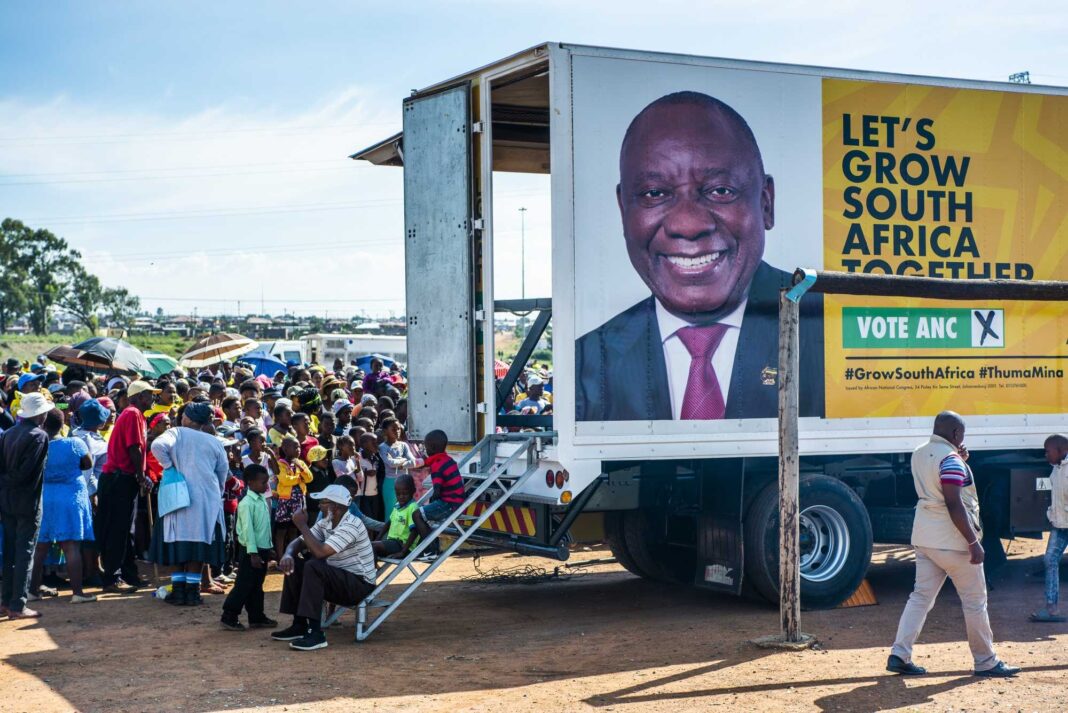
CYRIL Ramaphosa will on Thursday reach a defining moment in South Africa’s history and his Presidency when he addresses a joint sitting of Parliament to present government’s economic response to the COVID-19 pandemic.
In some ways, we have been here before, except this time the stakes are much higher and the country cannot afford to fail.
In September 2009, less than six months into Jacob Zuma’s first term as President, government had to present its response to the Global Financial Crisis, which had started a year earlier with the collapse of the Lehman Brothers.
The task of unveiling the plan fell to newly appointed Minister of Economic Development Ebrahim Patel, who at the time had no government or Cabinet experience.
Patel acknowledged that the formulation of the plan suffered from a number of delays, most notably the election campaigning, which took place that year to prepare for transition to the fourth administration.
Three months into the crisis, in December 2008, journalists had been summoned to Tuynhuys in Cape Town to receive an update from the caretaker President Kgalema Motlanthe and the business community led by former Eskom Chairman Bobby Godsell about government and business response to the unfolding crisis.
That session became nothing more than an exchange of pleasantries and quickly became clear that the message was: “We have no plan; we are still figuring this out”
In Parliament nine months later, Patel unveiled a range of measures which included a retraining scheme for retrenched workers and a plan to save the textile sector, among others.
The total package amounted to R2 billion and was to be funded by the Unemployment Insurance Fund (UIF).
Given that the South African economy stood to shed some R2 trillion in GDP and eventually lost a million jobs, the response was clearly inadequate.
Unfortunately, the response set the tone on economic management that led to the worst performing decade on record, according to he Reserve Bank, worse even than the turbulent 80s and uncertain 90s.
More than a decade later, it is reasonable to expect that Ramaphosa, deputy president at the time, and Patel, now a senior member of Cabinet, have learned that a response to an economic crisis needs you to act with speed and urgency and sometimes with limited information.
You do not have to wait for Statistics South Africa (Stats SA) to tell you that GDP fell by 51% quarter on quarter to imitate action.
In many ways, Ramaphosa is also responding to a number of crises that existed before COVID-19.
These include the income inequality crisis, as well as the crisis of underpayment.
The problem with unemployment is not only the 23.3 % reported in the Quartey Labour Force Survey but also the long term unemployment, defined as unemployment for a period of five years or more, of 71%.
The reality is much longer than that.
What this represent is some among the unemployed who are in their 40s and have never worked since completing high school 20 years earlier.
The economist JP Landman once remarked that the reality is that some of these people “will never work in their lives.”
They need a far more special comprehensive social safety net subsidized by those who work and pay tax.
The first thing that Ramaphosa needs to do, as leaders do in a crisis, is to instill confidence.
As developed countries, most notably the United Sates and the United Kingdom were putting together bailout packages for their major banks, Manuel announced that South Africa was to spend R187 billion on infrastructure over the next three years and strengthen its financial regulation in a move that served to boost confidence.
It is the fiscal consolidation and austerity path that South Africa pursued after that which set back efforts in recovery.
Fiscal policy negated accommodating monetary policy overseen by Reserve Bank Governor Gill Marcus, which cut rates to boost growth and employment, with only the public sector responding as an employment growing sector when all others were shedding jobs.
Ramaphosa faces a different kind of problem.
Next week, Finance Minister Tito Mboweni will unveil a self-imposed straitjacket in the form of austerity measures as promised to the IMF and World Bank as part of their $4.3 billion loan package to the country.
Ramaphosa also has to contend with a Reserve Bank that believes it has done enough by cutting rates by 275 basis points yet is still sitting on a 3.5% cushion of the repo rate with no threat of inflation.
The bank is also sitting on more than R900 billion in reserves with no discussion about what role these can play in a crisis.
Ramaphosa’s additional problems is that the plan that he mulled over with the ANC and cabinet is nothing more than a reiteration of goals with limited funding that have been stated over the past decade or more.
Ramaphosa does not articulate for South Africa, a post-COVID global positioning about South Africa’s role to the world that goes beyond the export of raw minerals and includes the export of value added products like capital equipment and agro-processed and specialized goods
The plan does not include South Africa raising its spending on Research and Development as a percentage of GDP and increasing the number and proportion of patents registered in a year, which is a significant measure of development in a knowledge based economy.
South Africa has an ambition to transform its tourism sector but even that is not underpinned by the goal to, say, double the number of tourist, from the current 10 million a year, who visit the country over the next decade. COVID-19 may have caused short term interruptions, but the long-term goals should remain.
The next hurdle Ramaphosa has to overcome is to have a clear sense of who his backers.
Which constituency can bring cities to a standstill in the midst of a pandemic to defend Ramaphosa? Is it the poor and grant recipients?
It certainly is not civil servants, with whom he faces difficult negotiations over the size and cost of their Wage Bill and its not his former constituency of workers, who see him as formerly being one of their own, but having evolved and detached from their needs.
His support appears to lie in sections of business but even that might have its patience wearing thin.
Another problem with capital is that sometimes what is good for business, such as shedding jobs to lower costs, is not good for the economy.
The popular support he may enjoy among South African public is inaccessible until he deals with his divided party.
Sometimes it feels as though Ramaphosa is on his own.
Ramaphosa does not speak as though he is in charge of an economy whose fortunes were transformed by the discovery first of diamonds in 1871 and gold in the Reef in 1886 to set in motion a period of prosperity alongside exclusion, exploitation and segregation.
He now needs to take that economy into a new growth trajectory that is globalised, digital and inclusive. Thursday presents his first opportunity.
(COMPILED BY INSIDE POLITICS STAFF)





