


By Johnathan Paoli
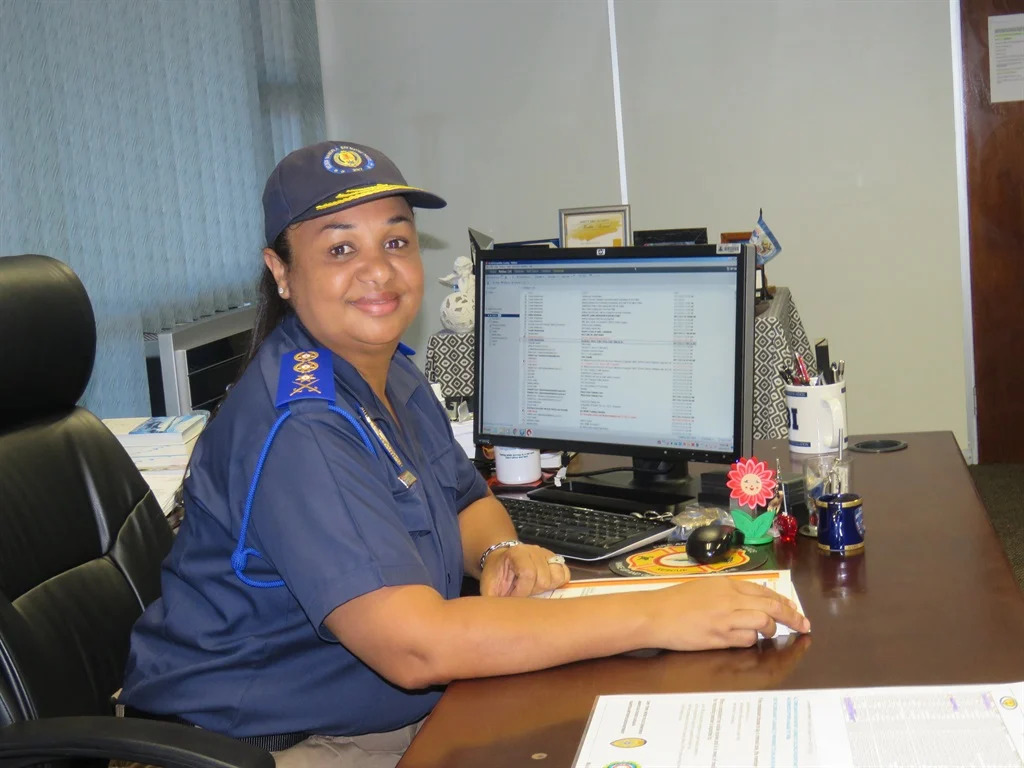
Tshwane Metro Police Department (TMPD) Chief Commissioner Yolande Faro has insisted that she moved swiftly to halt what she described as “unauthorised irregularities”, raising concern over how ad-hoc services were approved, deployed and paid for outside formal processes.
Testifying before the Madlanga Commission of Inquiry on Tuesday afternoon, Faro said she only became aware of the irregularities after an internal email flagged the scale of spending.
“I became aware of the cost and the fact that there was no clarity of the procurement of this ad hoc security services. It was not apparent that there was a proper procedure in place,” Faro said.
Faro told the commission that she received an email from suspended Deputy Commissioner for Support and Administrative Services Umashi Dhlamini flagged a surge in additional sites requiring urgent security.
Faro said the request for additional funding, or an extension of the existing budget, was communicated in a 12 March 2025 email from Dhlamini to Deputy Commissioner for Asset Protection and Security Services Revo Spies.
“This email stated that the deployment of ad hoc security guards had grown exponentially, and indicated that an extra 37 sites were added in January 2025, with a further six sites added in February 2025. In total, it came to 43 sites. I was copied in this email, and notably, it attached invoices for ad hoc services for January and February 2025,” Faro said.
She said she immediately instructed Asset Protection unit-head Deputy Commissioner Revo Spies to halt all ad-hoc deployments, warning that the expenditure could trigger audit findings and harm the municipality’s finances.
“I’m not going to request additional budget for unauthorised ad hoc sites, this behaviour must stop,” she said, describing her response as urgent after discovering that dozens of additional sites had been secured without clear approval.
In line with Spies’ previous testimony before the commission, Faro identified an “Inspector Lebogang Phiri” as a key figure in the irregular deployments, stating he had no authority to issue instructions for ad-hoc security services.
“It would seem that the rising cost largely emanated from the unauthorised and irregular deployment of ad hoc security services by Inspector Phiri. He had no authority to issue such directives,” she said.
Evidence before the commission shows that Phiri signed multiple deployment letters authorising security services, specifically despite not being empowered to do so.
Faro confirmed that Phiri has since been issued with a notice of intention to suspend, although commissioners questioned why disciplinary action took nearly a year.
She attributed the delay to a “complex” internal investigation involving multiple departments, missing information and internal bottlenecks, including documents that were not escalated timeously by senior officials.
Commissioners raised concern that payments continued to be processed despite the apparent lack of authority behind the deployments.
Faro acknowledged that the problem extended beyond Phiri, confirming that officials who approved invoices were also under scrutiny.
“People just approved invoices without checking service levels, but we know who processed it, and we are looking at the entire process,” she said.
She added that investigators are tracing who authorised, stamped and approved payments, with consequence management expected across what she described as the “whole food chain”.
The probe has also widened to include the role of suspended Tshwane CFO Gareth Mnisi, after evidence leaders presented WhatsApp messages suggesting close coordination between Mnisi and accused SAPS Sergeant Fannie Nkosi.
The exchanges indicate that Nkosi was involved in discussions around requisitions, purchase orders and payments.
In one instance, Nkosi appears to relay messages between Mnisi and senior municipal officials regarding payment processing.
The commission heard that messages also referenced efforts to increase target values and fast-track payments, raising questions about whether procurement processes were manipulated after services had already been rendered.
Faro was pressed on how such large-scale spending could occur without being detected during routine budget oversight.
She said that ad-hoc services were effectively invisible within formal financial reporting structures.
“You could only pick up the ad-hoc if the ad-hoc is done in the correct way, if people are doing things not in a manner that you do it transparently, then you will not immediately pick it up,” she said.
Unlike fixed “watchman services”, which are budgeted and reported, ad-hoc deployments had no dedicated budget line, no reporting mechanism and no approval process, allowing expenditure to escalate unchecked.
Commission chairperson Mbuyiseli Madlanga described the absence of a budget framework as strange, noting that such security needs are foreseeable.
The commission also heard concerns about the distribution of work among the 22 contracted companies, with one firm, Gubis 85 Solutions, appearing to receive a disproportionate share of ad-hoc deployments.
Proceedings adjourned for the day, with Faro to resume her testimony on Wednesday morning.
INSIDE POLITICS