

By Johnathan Paoli
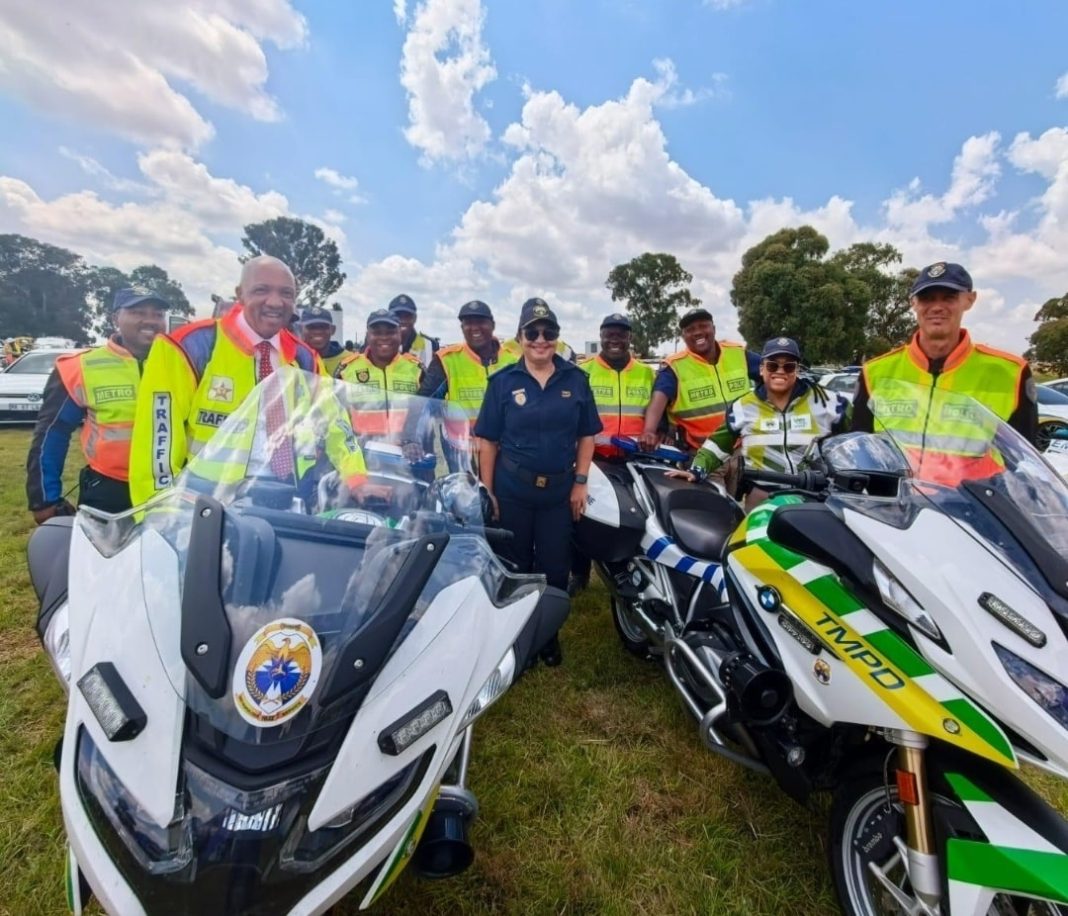
Deputy Commissioner Sean Bolhuis told the Madlanga Commission on Wednesday that officials within the Tshwane Metro Police Department (TMPD) were unknowingly drawn into processes that enabled corruption, admitting that he and others had been “used” as irregularities unfolded under their watch.
“But it’s clear, looking back now, that there are elements within the city and in our department who use existing processes as a mechanism for corruption,” Bolhuis said.
“We were used as decent, law-abiding, loyal officials. It happened under our noses — and it’s shameful.”
Bolhuis was testifying in his capacity as former caretaker of the Asset Protection and Security Services (APSS) unit, a role he held for eight months from July 2024 to February 2025 before being replaced by Deputy Commissioner Revo Spies.
He said he inherited a deeply flawed system when APSS was transferred from the city manager’s office back to TMPD without a proper handover.
A formal report on the unit’s operations only arrived nine months later — after he had already relinquished the role.
The lack of a structured transition left him and his team “in the dark”, forcing them to reconstruct operational and financial processes while maintaining service delivery and preparing a new security tender.
Bolhuis described the unit as vast and unwieldy, with more than 1,300 contracted security guards and an approved structure exceeding 4,000 posts — most of them vacant and unfunded.
“That structure was not feasible,” he said, adding that it had begun to be scaled down due to financial constraints.
Budget shortfalls were a recurring challenge.
Bolhuis said the R245 million allocation for watchman services in the 2023/24 financial year fell more than R300 million short, forcing repeated requests to the city manager for additional funding to sustain operations.
He described the under-budgeting as systemic, leaving officials reliant on emergency adjustments rather than stable financial planning.
Bolhuis also flagged governance weaknesses, particularly around vetting.
Despite holding top-secret clearance himself, he said vetting is not mandatory across the city, even for senior officials in sensitive roles.
“Some cooperate fully, others refuse,” he said, referring to lifestyle audits conducted by the State Security Agency.
On procurement, Bolhuis said he initially detected no irregularities while co-signing invoices.
Concerns only emerged after the finance section intervened, prompting tighter controls.
“Invoices stopped coming to me once processes were revised,” he said, adding that the changes helped uncover patterns of irregular expenditure.
Commissioners pressed him on how significant payments could have been processed without earlier detection.
Commissioner Sandile Khumalo pointed to instances where purchase orders appeared to have been issued after services were rendered — contrary to standard practice.
Bolhuis acknowledged the concern but said suspended chief financial officer (CFO) Gareth Mnisi would be better placed to explain the process.
He conceded, however, that oversight could have been stronger.
“If you need to fall on your sword for not doing enough, then you fall on your sword,” he said.
The commission also probed the allocation of work to service providers, including Gubis 85 Solutions, which reportedly received a disproportionate share of contracts.
Bolhuis said he was unaware of any such skewed allocation and had not authorised it. While procedures required his office to be informed of all ad hoc deployments, he said this did not always happen.
Reflecting on the failures, Bolhuis described a system vulnerable to manipulation by individuals exploiting procedural gaps and institutional trust.
“We were thrown in the deep end. You trust people. You don’t want to enter a space with immediate mistrust,” he said.
However, he acknowledged that this trust may have allowed wrongdoing to go undetected, adding that stronger controls might have been implemented earlier had warning signs been clearer.
INSIDE POLITICS