
- Advertisement -spot_img

Kenya Inaugurates William Ruto as President

- Advertisement -spot_img

Must read

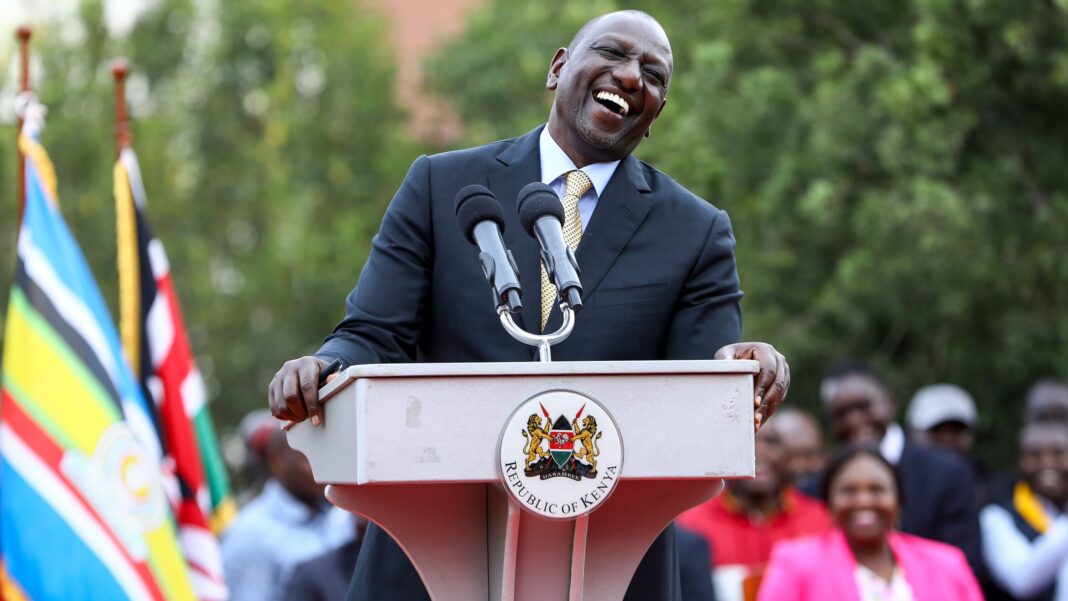
WILLIAM Ruto was sworn in as Kenya’s fifth president on Tuesday in a ceremony attended by dozens of global leaders and diplomats — a peaceful handover of power following a bitter election campaign that underscored the entrenched if troubled place of democracy in East Africa’s largest economy.

The Moi International Sports Center was filled to its capacity of 60,000 people by 5 a.m., with attendees blowing vuvuzelas, dancing to gospel and patriotic songs and waving the Kenyan flag. Immediately after the new president was inaugurated, the crowd broke into chants of “Ruto, Ruto” as fireworks popped near the dais and confetti was scattered across the stadium.

Mr. Ruto promised in his speech to alleviate the challenges posed by a spike in food and fertilizer costs, improve access to credit for small and medium businesses and make Kenya a thriving investment and business destination.

Commending the role of the electoral commission and the Supreme Court in managing the vote, he vowed to improve election integrity, scale up the budget allocated to the judiciary, build more courts and swear in six Court of Appeal judges rejected by his predecessor. He also pledged to give the police financial independence to boost their fight against corruption.

“Today is a momentous moment for our country,” Mr. Ruto said to roaring applause. “I will work hard for all the people of Kenya irrespective of who or how they voted.”

But in a potentially ominous sign for freedom of the press, Mr. Ruto’s team limited the access of local television stations to the inauguration, handing exclusive broadcast rights for the ceremony to a local affiliate of a South African pay-TV company. (Journalists from local newspapers and radio stations could cover the proceedings in person.)

During the campaign, Mr. Ruto had repeatedly accused Kenya’s media outlets of bias against him, and some analysts said that his decision to limit their access to the ceremony was a sign of his resentment.

Mutuma Mathiu, editor in chief of the Nation Media Group, which owns print and television news outlets, said in an interview that the media had a “national duty” to cover the transfer of power, and defended his organization against charges of bias.

However, he said, “I don’t think we want to start a mud fight at a wedding and in the process soil the bride’s gown.”

Security was tight at the stadium, straining to stop hundreds more people who thronged the gates. At least a dozen people were injured as they jostled to enter, a dispatcher with the St. John ambulance service said.

Mr. Ruto triumphed in the Aug. 9 vote with a thin margin over his rival, Raila Odinga, who rejected the result and challenged it in the Supreme Court. But the court upheld Mr. Ruto’s victory in a unanimous decision last week.

Mr. Ruto, 55, who has been the country’s vice president for the last 10 years, was born to a religious family in a small village in Kenya’s Rift Valley, where he helped plant maize and went to school barefoot. He showed his initial interest in politics in the 1990s, becoming a stalwart ally of Kenya’s longtime ruler, Daniel arap Moi, winning a position in Parliament and later serving as a cabinet minister for agriculture and higher education.

His extraordinary rise almost came to an end a decade ago, when the International Criminal Court charged him with crimes against humanity, accusing him of helping to orchestrate the violence that followed the 2007 elections. But the court dropped the case against him in 2016, citing “witness interference and political meddling.”

Despite his dizzying wealth, with a business empire that includes luxury hotels, ranches and a huge poultry processing plant, Mr. Ruto pitched his campaign this year to Kenya’s “hustlers,” the multitude of young and ambitious strivers trying to make ends meet. During the campaign, Mr. Ruto clashed with his boss, Uhuru Kenyatta, who had endorsed Mr. Ruto’s rival, Mr. Odinga, a former prime minister and opposition figure.

Mr. Kenyatta did not congratulate Mr. Ruto until Monday evening, when he finally welcomed him to the presidential office. Mr. Kenyatta attended the inauguration on Tuesday, and the two leaders shook hands, and at one point, hugged. Mr. Odinga said in a tweet that he was out of the country and would not attend the ceremony.

Mr. Ruto and his vice president, Rigathi Gachagua, who also took the oath of office, both said they knew they were taking the helm of a nation facing mounting economic, political and social challenges. Kenya’s economy is saddled with onerous debt, much of it borrowed to finance large infrastructure projects. Inflation is climbing, the currency continues to depreciate against the dollar and food and fuel prices are skyrocketing because of the war in Ukraine. Four back-to-back seasons of below-average rainfall have left over four million Kenyans hungry and thirsty.

Kenya is in a region layered with strife — in Ethiopia, Somalia, South Sudan and the Democratic Republic of Congo — and Mr. Ruto, observers say, could play a role in promoting peace and stability.

Mr. Ruto said on Tuesday that Mr. Kenyatta had agreed to his request to serve as his representative in peace initiatives in conflicts in Ethiopia and the Great Lakes region.

But at home, Mr. Ruto faces a divided nation after a nail-biter of an election that also saw more than a third of voters, many jaded by political infighting and endemic corruption in government, stay home.

“The incoming administration has a full inbox,” said Karuti Kanyinga, a scholar at the Institute for Development Studies at the University of Nairobi. “There’s a lot to worry about.”

One of those worries will be how Mr. Ruto’s government will treat the media.

He was part of an administration that over the past decade took steps to muzzle the press by threatening journalists with arrest, shutting down broadcasters, starving media outlets of advertising revenue and warning journalists that they didn’t have full freedoms as protected by the Constitution.

Those worries were revived this weekend when Mr. Ruto’s team announced that it was giving exclusive broadcast rights to cover the inauguration to MultiChoice Kenya — an affiliate of the South African pay-TV company MultiChoice. Kenyan media had to rely on the broadcast from the South African outlet.

Dennis Itumbi, Mr. Ruto’s spokesman, justified the move by saying MultiChoice Kenya was not just any private contractor but was partly owned by Kenya’s national broadcaster. Wanjohi Githae, a member of Mr. Ruto’s communications team, said in a text message on Monday that while local media could bring their broadcasting vans, there was no parking space for them “anywhere near the stadium.”

On Tuesday morning, Mr. Mathiu of Nation Media said that after negotiations with Mr. Ruto’s team, they were allowed to have their vans around the stadium but that the main feed would still come from MultiChoice. The contract with the firm has not been made public but Mr. Mathiu had said he expected the feed would be free to relay.

Media analysts said they hoped the move did not augur an era in which the press will be further stifled.

“The optics don’t look favorable given how this measure was rolled out,” said David Makali, a veteran journalist and communications strategist. “But I am ready to give the new government the benefit of doubt and hope this isn’t a deliberate move to suppress the press.”

New York Times

More articles

LEAVE A REPLY

Please enter your comment!
Please enter your name here

AVBOB STEP 12

spot_img

Inside Education E-Edition

spot_img

Inside Metros G20 COJ Edition

spot_img

JOZI MY JOZI

spot_img

QCTO

spot_img

Latest article



