

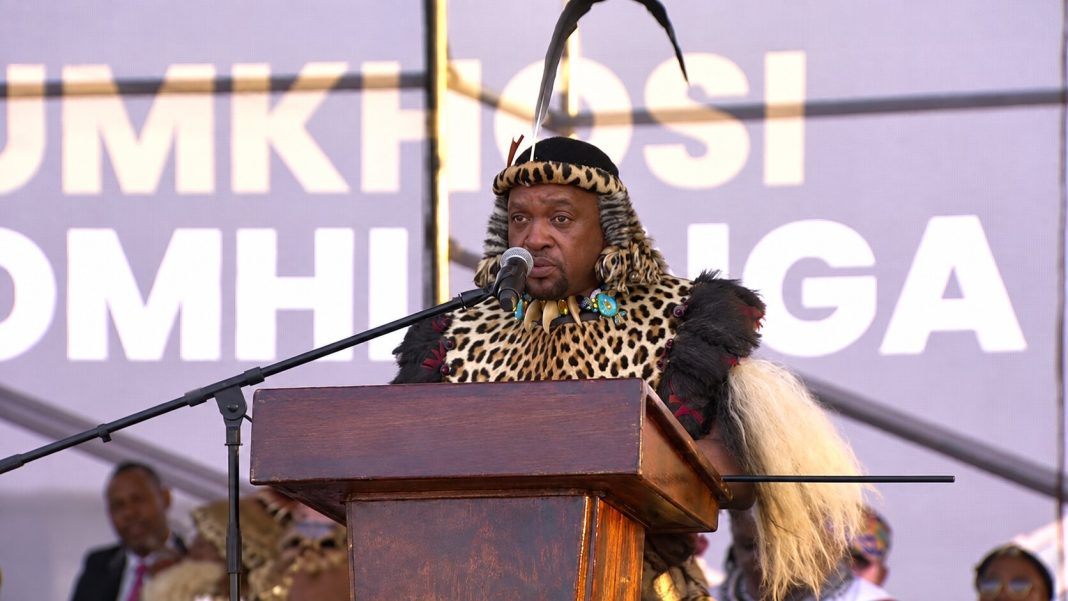


AmaZulu King Misuzulu kaZwelithini used the annual uMkhosi woMhlanga, or Reed Dance, to call for greater protection of women and children, while urging young people to remain resilient amid the social challenges confronting KwaZulu-Natal.
More than 30,000 maidens gathered at the eMashobeni Royal Palace in uPhongolo for the ceremony, where the King reflected on the importance of culture, education and the role of women in preserving values passed from one generation to the next.
His remarks came amid widespread concern over gender-based violence in KwaZulu-Natal, with the King warning about alcohol abuse and its contribution to violence against women.
In a lighter moment, he joked about his own previous public controversy involving alcohol, telling the maidens that if alcohol caused people to behave badly, they should leave it alone.
His remarks drew laughter from the crowd but formed part of a broader message about confronting alcohol abuse and its links to gender-based violence.
The King praised the maidens for participating in months of preparation leading up to the ceremony and thanked the women of the royal household and his mothers for supporting the event.
He encouraged the young women to stand firm in their cultural identity and remain resilient when confronted by difficulties.
The King also congratulated KwaZulu-Natal’s matriculants, particularly the young women participating in the ceremony, and wished the Class of 2026 success in their final examinations.
The Reed Dance is a major annual Zulu cultural gathering during which unmarried young women present reeds to the King.
The ceremony promotes self-respect, dignity, cultural pride, abstinence and community responsibility. The reed is regarded as a symbol of purity and dignity, while the ceremony marks an important stage in the transition to womanhood.
KwaZulu-Natal Premier Thami Ntuli said the ceremony also served an important social purpose by encouraging young women to delay sexual activity and avoid early pregnancies and sexually transmitted infections.
“It also goes a long way in making sure that young girls do not involve themselves prematurely in sex, which may expose them to different diseases such as STIs, HIV and others. Even early pregnancy, because you know that when that happens it affects the future and affects their achievements in future. Hence, this ceremony or culture preserves them, giving them an opportunity to prepare for the future,” Ntuli said.
The Reed Dance is rooted in a centuries-old Zulu custom, although the large-scale modern ceremony was revived in the late 20th century.
It has since developed into one of the most prominent public celebrations of Zulu heritage, attracting thousands of participants from communities across KwaZulu-Natal and beyond.
This year’s gathering included Xhosa maidens from Yabantu village near Hartbeespoort Dam in North West. They said their participation was intended to promote African unity and demonstrate the shared traditions and values of Nguni communities.
The ceremony has continued to grow since its revival under the late King Goodwill Zwelithini kaBhekuzulu, Queen MaNtomfombi Dlamini-Zulu and the late Prince Mangosuthu Buthelezi.
KwaZulu-Natal Arts and Culture MEC Mntomuhle Khawula described the Reed Dance as a legacy of the Zulu nation that should be protected and preserved.
He said King Zwelithini, together with Queen MaNtomfombi and Buthelezi, played an important role in reviving and expanding the tradition. It has continued under King Misuzulu at the palace he established at eMashobeni.
The event extends beyond the presentation of reeds. Maidens undergo extensive preparation and receive cultural teachings before travelling to the royal palace, with communities often holding send-offs that include prayers and messages of encouragement.
Maidens attending for the final time before marriage are recognised during a special ceremony, with the King expected to offer gifts and words of encouragement as they enter married life.
The royal household has also indicated that programmes for young men and boys are being considered, similar to those offered to maidens participating in the Reed Dance.
Prince Nkosinathi Zulu said plans were under way for the King to develop such programmes, potentially broadening the ceremony’s cultural and educational focus beyond the young women traditionally at its centre.
The King’s call for greater protection of women and children comes as the Reed Dance continues to combine cultural preservation with messages about education, responsible adulthood, sexual health, social cohesion and the responsibilities of the next generation.
INSIDE POLITICS






