
By Johnathan Paoli
Carnilinx has strongly rejected suggestions that it forms part of any criminal enterprise, telling the Madlanga Commission that historical tax disputes and regulatory engagements with the South African Revenue Service (SARS) should not be conflated with allegations of present-day criminality.
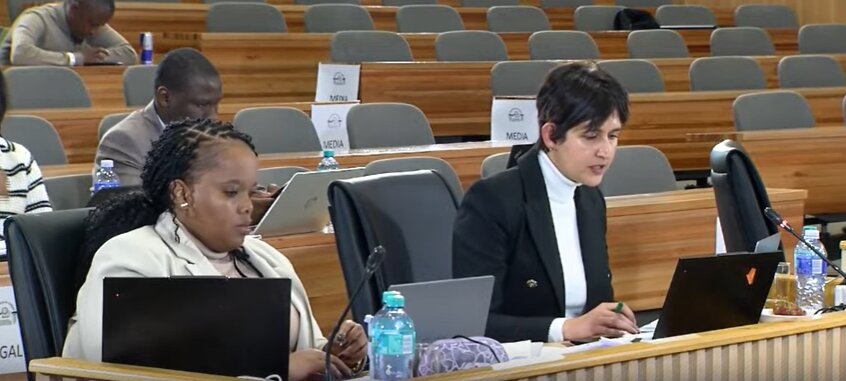
The tobacco manufacturer featured prominently on Friday morning as evidence leader began presenting material linked to suspended Gauteng Crime Intelligence boss Major-General Feroz Khan, with the commission first examining a voluntary affidavit submitted by Carnilinx director Adriano Mazzotti before moving on to WhatsApp exchanges involving businessman Mohamed Sayed.
Leading evidence, Advocate Adila Hassim told the commission the first theme of proceedings concerned Carnilinx and allegations surrounding the illicit tobacco trade.
Reading portions of the affidavit into the record, Hassim said the company wanted to place its own version before the Commission.
According to the submission, Carnilinx stated that it had “no intention of shielding any corruption” but instead wished “to set out the legal framework and background.”
“The question presently before the Commission is whether there exists credible, reliable and independently verifiable evidence establishing the allegations presently made against Carnilinx. Carnilinx respectfully submits that those questions should be answered on the basis of evidence relevant to the issues before the Commission and not by inference drawn solely from historical regulatory engagement, unresolved tax disputes, media reporting, industry advocacy or commercial rivalry,” the statement read.
The affidavit describes Carnilinx as a licensed cigarette manufacturer operating lawfully in South Africa, stressing that the company is a member of the Fair-Trade Independent Tobacco Association, which advocates for lawful competition and measures to combat illicit tobacco trading.
A substantial portion of the affidavit addressed previous interactions between Carnilinx and SARS.
According to the company, an affidavit it previously submitted to the revenue service formed part of confidential engagements over historical tax compliance matters but later found its way into the public domain without its knowledge or consent.
“At some stage thereafter, information purporting to originate from that affidavit entered the public domain without Carnilinx’s knowledge or authority,” the statement read.
The company argued that it cannot verify the authenticity or completeness of versions currently circulating publicly because it no longer possesses those copies.
“Carnilinx is therefore unable to determine whether quotations attributed to the affidavit accurately reflect the original document, whether they have been reproduced completely or whether they have been presented out of context.”
The company urged the commission not to draw conclusions from media reports or excerpts of the earlier affidavit, arguing that any assessment should be based on the original document and evidence properly before the Commission.
The company also rejected allegations contained in an affidavit compiled by commission investigator Tshepo Nyatlo.
“Carnilinx has carefully considered the allegations contained in the affidavit. To the extent that those allegations concern Carnilinx, they are denied,” the statement read.
The company said that the investigator’s affidavit appears to conflate “historical regulatory matters, unresolved tax disputes, media reports and industry commentary with evidence of present-day criminality”.
Carnilinx denied allegations that it improperly used state institutions against commercial rivals.
“Carnilinx unequivocally denies those allegations. Like any responsible corporate citizen, Carnilinx has, where appropriate, reported information concerning suspected unlawful conduct to the relevant authorities. Carnilinx has never exercised control over the investigative functions of SARS, SAPS or any other organ of state,” the statement read.
Concluding its submission, the company said it welcomed scrutiny but asked the Commission to assess the evidence fairly.
The company said it voluntarily approached the Commission because “the search for truth is best served when all relevant perspectives are placed before it,” adding that it remained willing to provide further assistance should additional information become relevant.
The commission continues.
INSIDE POLITICS





