
- Advertisement -spot_img

Madlanga Commission takes recess to mull over second interim report

- Advertisement -spot_img

Must read

By Johnathan Paoli

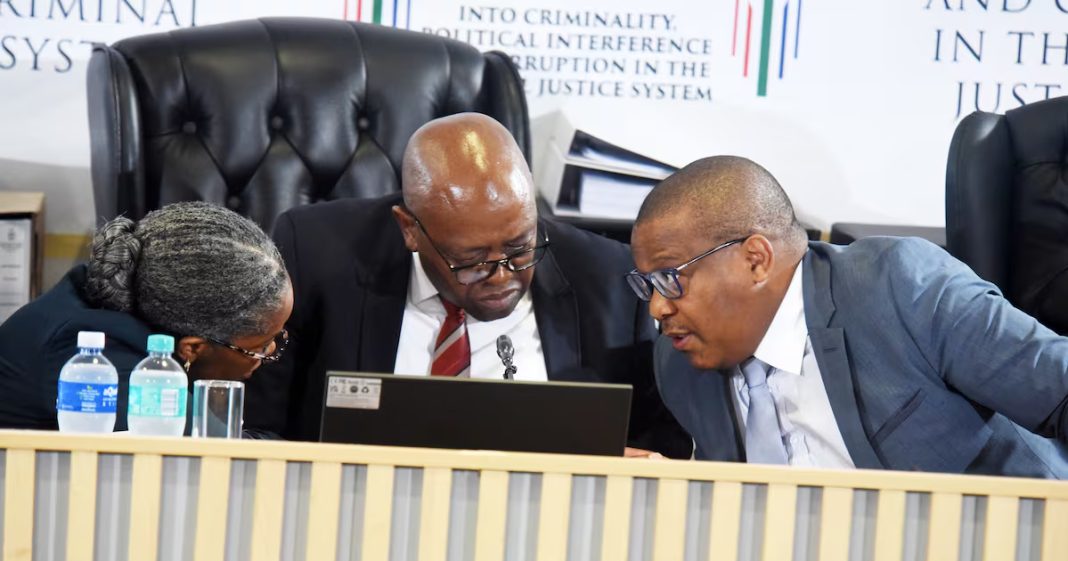
Ten months after President Cyril Ramaphosa established the Judicial Commission of Inquiry into Criminality, Political Interference and Corruption in the Criminal Justice System, also known as the Madlanga Commission the inquiry has entered a crucial pause in its work as commissioners prepare their second interim report due to be handed to the president on 29 May.

Commission chairperson and former Deputy Chief Justice Mbuyiseli Madlanga announced that the commission would adjourn public hearings from 18 May until 1 June to focus on compiling the report, which is expected to address some of the most explosive allegations yet heard about organised crime, political interference, and corruption inside South Africa’s policing and criminal justice institutions.

ALSO READ: Sibanyoni’s alleged extortion allegations deepen as an insider speaks

The commission’s final report is due by 31 August, but already the inquiry has transformed into one of the most consequential post-apartheid investigations into alleged criminal infiltration of state security structures.

Since hearings began in September last year, the inquiry has heard dozens of witnesses ranging from senior police generals and metro police executives to forensic analysts, intelligence operatives, investigators, and controversial political fixers.

Evidence aired before the commission has already triggered criminal investigations and arrests by a SAPS task team established following referrals contained in the commission’s first interim report.

Among those arrested or criminally charged during the commission’s lifespan are suspended Ekurhuleni Metro Police Department deputy chief Julius Mkhwanazi, suspended SAPS sergeant Fannie Nkosi, and political fixer Brown Mogotsi.

Much of the commission’s work has centred on allegations that organised criminal syndicates infiltrated law-enforcement agencies and cultivated protection networks involving police officers, intelligence operatives, politicians, and business figures, as well as possibly, cabinet figures like Police Minister Senzo Mchunu. 

One of the dominant themes involved allegations surrounding procurement corruption inside the Tshwane Metro Police Department (TMPD).

ALSO READ: Moya flags R30 million bill for suspended officials alongside delay tactics

Evidence leaders presented testimony suggesting that politically connected individuals and alleged underworld figures may have manipulated policing tenders and procurement systems to benefit favoured companies and networks.

Witnesses described an environment in which law-enforcement procurement allegedly became intertwined with patronage systems, with the commission probing whether police officials, intelligence operatives and private business interests operated in coordinated networks that compromised operational independence inside policing structures.

The commission repeatedly framed the TMPD allegations as evidence of a broader phenomenon in which criminal syndicates allegedly infiltrated state institutions and weakened public confidence in law enforcement.

Another major line of inquiry focused on anti-drug operations in Port Shepstone in KwaZulu-Natal and Aeroton in Johannesburg.

Evidence presented before the commission examined allegations that narcotics seized during police raids were improperly handled, diverted, or stolen before being formally entered into SAPS evidence systems.

The commission has also devoted extensive attention to allegations involving the Ekurhuleni Metro Police Department (EMPD), where testimony painted a picture of alleged collusion between metro police officials, organised crime figures and politically connected individuals.

Central to those hearings were allegations against Julius Mkhwanazi, who was repeatedly implicated in testimony involving alleged unlawful operations, corruption and the protection of criminal networks.

ALSO READ: Former NW Premier Bushy Maape passes away

Evidence before the commission included claims that EMPD officers participated in unlawful raids, extortion schemes and fabricated police documentation to legitimise illegal seizures.

One particularly serious allegation involved a 2023 Hillbrow operation in which officers allegedly stole precious stones worth approximately R14 million before attempting to portray the operation as a legitimate law-enforcement raid.

Investigators from the Independent Police Investigative Directorate testified that they could find no evidence that the operation had been authorised.

The inquiry also examined alleged links between EMPD officials and controversial businessman Vusimusi “Cat” Matlala, who was accused during testimony of benefiting from politically connected policing contracts (the “blue lights scandal) and maintaining relationships with compromised officials.

One of the commission’s defining case studies has been the December 2024 raid on the Sandhurst mansion of alleged underworld figure Katiso “KT” Molefe.

Testimony explored allegations that senior law-enforcement officials attempted to interfere with or obstruct the operation, which formed part of an investigation into the murder of Vereeniging engineer Armand Swart.

Witnesses alleged that heavily armed Hawks officers unexpectedly arrived at the scene and delayed the operation despite eventually being shown official documentation authorising the raid.

The commission heard claims that Molefe was regarded by some investigators as “a general’s person”, implying protection from powerful figures inside law enforcement.

Despite the gravity of the allegations, the commission also produced moments of unintended humour that captured public attention and became widely discussed on social media.

One of the most memorable incidents involved suspended SAPS Sergeant Fannie Nkosi denying allegations that he received cash from Molefe in a suspicious bag.

ALSO READ: Mhlauli calls on young people to actively shape the country’s future

Nkosi insisted the bag merely contained Harley-Davidson biker gear and merchandise, prompting laughter inside the hearing room as evidence leaders repeatedly questioned why expensive motorcycle apparel was being exchanged during meetings with a controversial businessman.

Brown Mogotsi’s testimony also generated widespread amusement after he initially refused to answer questions following his attempt at having Chief Evidence leader advocate Matthew Chaskalson recused.

Technical mishaps, contradictory testimony and awkward courtroom exchanges further contributed to the commission becoming one of the country’s most closely watched public inquiries.

Yet behind the occasional humour lies an increasingly serious picture painted by the evidence: allegations that organised criminal networks may have deeply infiltrated South Africa’s policing and criminal justice institutions.

As the commission enters recess to prepare its second interim report, attention will now shift to whether its findings trigger even broader criminal prosecutions and political fallout in the months ahead.

INSIDE POLITICS

More articles

LEAVE A REPLY

Please enter your comment!
Please enter your name here

Inside Education E-Edition

spot_img

CATHSSETTA

spot_img

AVBOB STEP 12

spot_img

Inside Metros G20 COJ Edition

spot_img

JOZI MY JOZI

spot_img

QCTO

spot_img

Latest article



