

By Johnathan Paoli
Former defence minister and National Assembly Speaker Nosiviwe Mapisa-Nqakula has rejected the state’s version of her relationship with whistleblower Nombasa Ntsondwa-Ndhlovu, maintaining that their conversations about sangomas, impepho and traditional medicine reflected a genuine shared spiritual belief and were not coded references to allegedly exchanging bribes.
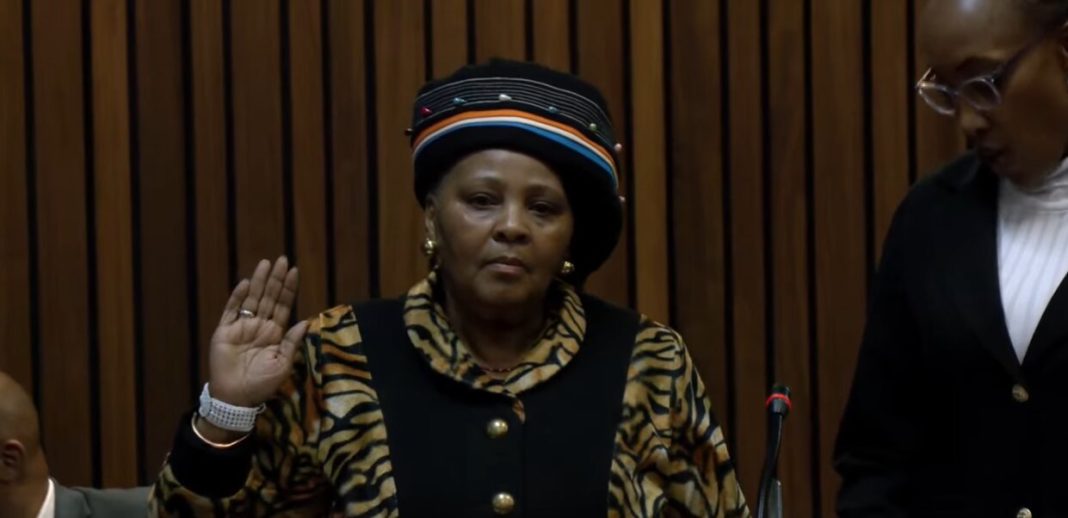
Taking the witness stand in her own defence on Monday, following a failed discharge application, Mapisa-Nqakula said Ntsondwa-Ndhlovu had approached her partly because the two women believed they belonged to the “same spiritual realm”, after initially connecting over the contractor’s complaints about her treatment by the South African National Defence Force (SANDF).
“She came due to the fact that we belong in the same spiritual realm in terms of beliefs,” Mapisa-Nqakula said through a court-appointed translator.
The former speaker sought to explain the nature of her relationship with Ntsondwa-Ndhlovu, a defence contractor and the state’s main witness, after the witness previously testified that the pair agreed to use sangoma terminology to disguise requests for and payments of cash.
Ntsondwa-Ndhlovu told the court that words including indumba, impepho, amayeza, wig and padkos were used between them as coded references to money.
She said the meaning of the terms had to be understood in the context of their relationship and rejected suggestions during cross-examination that some of the communications could have referred to ordinary objects rather than cash.
The allegation was illustrated by evidence about a July 2019 exchange, when Ntsondwa-Ndhlovu said Mapisa-Nqakula told her that her indumba did not have muti or medicine.
The witness interpreted this as a request for R100,000, which she subsequently delivered to Mapisa-Nqakula.
According to Ntsondwa-Ndhlovu, Mapisa-Nqakula responded, “Amen Sisi, let it be so”, which she understood as acceptance of the payment.
Mapisa-Nqakula’s account places the references to spirituality in a different context.
She said Ntsondwa-Ndhlovu had told her she was a traditional healer, although she was not practising, during an earlier conversation about the white beaded wristbands she wore.
Mapisa-Nqakula told the court that the spiritual connection formed part of their conversations when Ntsondwa-Ndhlovu visited her at her home in Bruma.
She said the meeting was primarily about Ntsondwa-Ndhlovu’s personal problems, including a dispute with her sister, and that she advised the contractor to seek assistance from an older family member who could mediate.
Mapisa-Nqakula also described the origins of their relationship as stemming from Ntsondwa-Ndhlovu’s complaints about her treatment by the defence force.
She said an official in her office approached her in 2016 after learning that Ntsondwa-Ndhlovu intended approaching the media over problems within the Defence Department.
Mapisa-Nqakula said she authorised the official to give the contractor her cellphone number.
Ntsondwa-Ndhlovu’s company had secured a R104-million defence logistics contract to transport cargo into Sudan, but the deal was suspended after South Africa’s decision to withdraw troops from the region.
She later received a replacement contract worth about R79-million for operations in the Democratic Republic of Congo.
It was after this period, Ntsondwa-Ndhlovu alleges, that requests for money began.
Mapisa-Nqakula faces 12 corruption charges and one count of money laundering.
The state alleges that she unlawfully accepted gratification from Ntsondwa-Ndhlovu between December 2016 and July 2019, and that R2.15 million in cash constituted proceeds of unlawful activity.
Proceedings adjourned for the day, with Mapisa-Nqakula, who is out on bail, expected back in court on Tuesday morning.
INSIDE POLITICS