
- Advertisement -spot_img

Mashatile warns AI could deepen inequality, calls for worker protections

- Advertisement -spot_img

Must read

By Thapelo Molefe

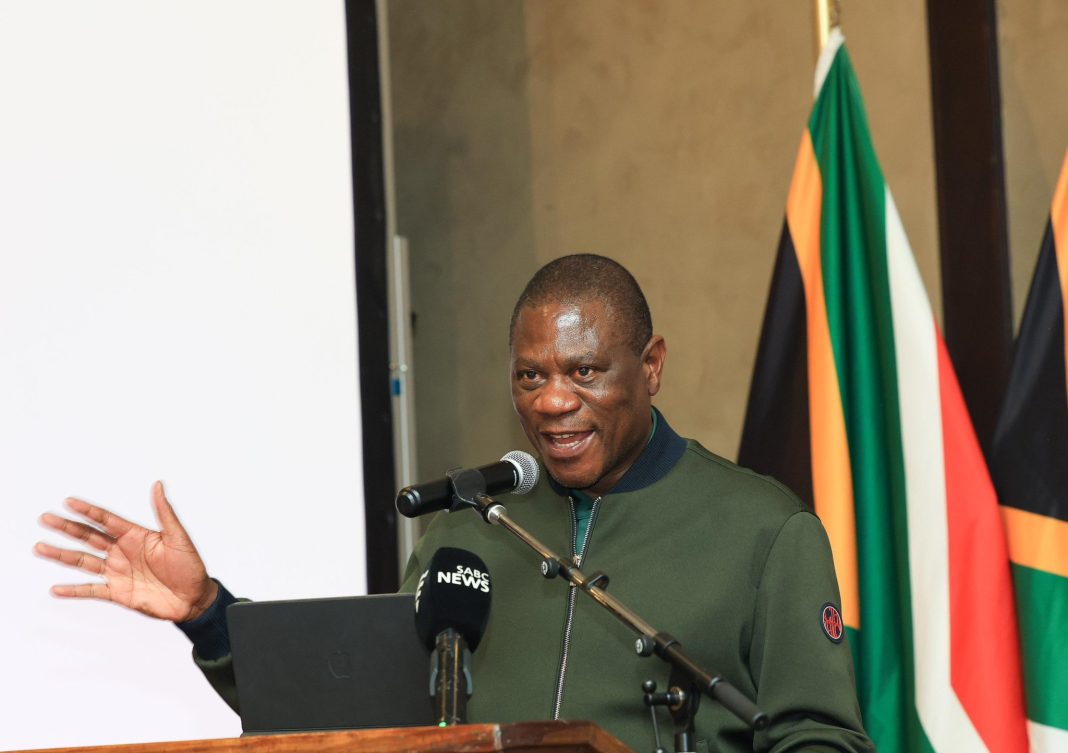
Deputy President Paul Mashatile has warned that the rapid rise of Artificial Intelligence (AI) could worsen inequality and job insecurity in South Africa if it is not properly regulated, urging organised labour to play a leading role in shaping safeguards for workers.

Speaking at the 2026 Annual NEDLAC Organised Labour School in Pretoria on Sunday, Mashatile said technological change is already transforming key sectors of the economy and reshaping the nature of work.

He pointed to the growing use of AI in operations at Transnet and maintenance systems at Eskom as examples of how automation is improving efficiency while also altering job roles.

“We must also confront the rise of Artificial Intelligence,” Mashatile said. 

“While these innovations improve efficiency, they also reshape jobs and demand new skills.”

He warned that without intervention, the benefits of digital transformation could be concentrated among a small segment of society, leaving many workers behind.

“Inequality is deepening, with the risk that digital economies benefit a few while excluding many,” he said.

Mashatile stressed that workers must be protected from the negative impacts of automation, including job losses and unfair workplace practices driven by technology.

“No worker must be managed or dismissed by an algorithm alone,” he said.

He added that employees affected by automation should be retrained and supported, and must share in productivity gains brought by new technologies.

The Deputy President called on trade unions to take a more active role in shaping the future of work, including developing a “Digital Workers’ Charter” that would set out rights related to retraining, data protection and human oversight in automated systems.

“Our trade unions must also evolve,” he said, adding that labour organisations need to go beyond wage negotiations and engage in broader economic and technological policy debates.

Mashatile linked the rise of AI to broader changes in the labour market, including the decline of formal employment and the growth of precarious work.

“Too many workers live with uncertainty,” he said.

He emphasised that skills development will be critical in helping workers adapt to technological change, highlighting the role of the Human Resource Development Council in aligning education and training with labour market demands.

The Deputy President said government’s economic strategy remains focused on inclusive growth and job creation, but acknowledged that current growth levels are insufficient to absorb the country’s high levels of unemployment.

“Growth without jobs is not enough,” he said.

He reiterated the need for cooperation between government, business and labour through platforms such as the National Economic Development and Labour Council to address the challenges posed by technological change.

“Dialogue alone is not enough. Dialogue must lead to action,” Mashatile said.

INSIDE POLITICS

More articles

LEAVE A REPLY

Please enter your comment!
Please enter your name here

CATHSSETTA

spot_img

AVBOB STEP 12

spot_img

Inside Education E-Edition

spot_img

Inside Metros G20 COJ Edition

spot_img

JOZI MY JOZI

spot_img

QCTO

spot_img

Latest article



