By Lebone Rodah Mosima
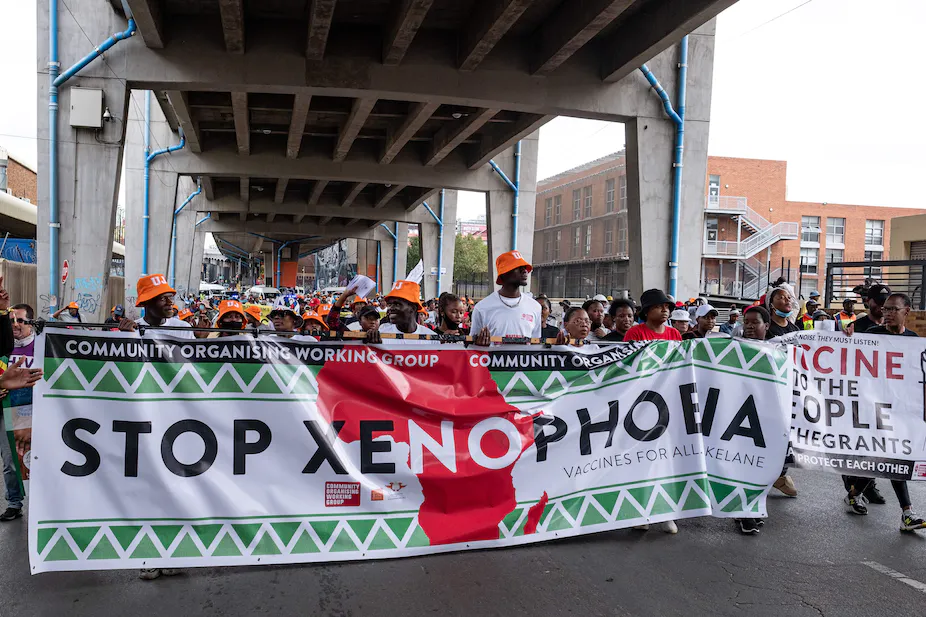
Build One South Africa leader Mmusi Maimane has warned that hatred of fellow Africans will not solve South Africa’s healthcare crisis, that xenophobia will not create jobs, and that violence against immigrants will not restore safety to communities.
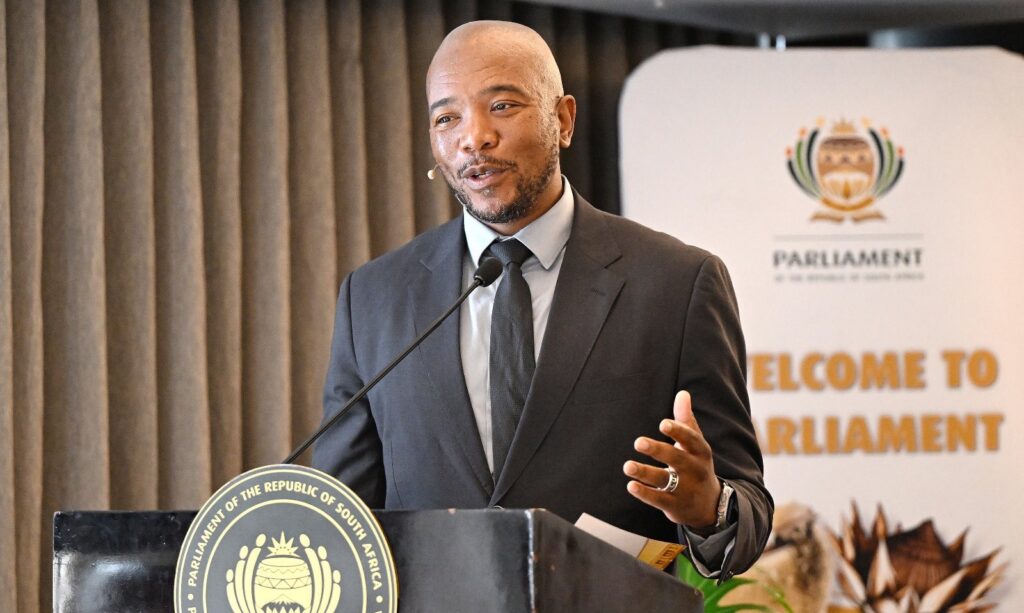
Speaking at Constitutional Hill in Johannesburg on Monday to mark Africa Day, Maimane said South Africa’s status as the continent’s most industrialised and economically sophisticated country had made it both an attractive destination and a home for people from many African nations.
But he said life was becoming harder for too many South Africans, with economic growth remaining painfully low and struggling even to reach 1%.
“There is a shortage of housing, pressure on healthcare facilities, rising unemployment, and growing insecurity in many communities. Communities feel abandoned,” Maimane said.
“South Africans feel economically cornered. Migrants often live in fear and exploitation. And the government has failed to provide leadership.”
He said government should be held accountable for failing to manage the country’s borders and to provide centres where immigrants could register.
“We ought to hold government accountable for underfunding the BMA and for its absolute failure to uphold our laws. Too often, government fails in its responsibilities and then allows citizens to direct their anger toward the immigrant instead of toward failed leadership and broken governance,” he said.
“Because we cannot enforce our laws properly, because corruption weakens our institutions, and because economic growth has stalled, we begin blaming and attacking “the other.’”
Maimane said the national conversation about immigration had for too long been trapped between two dangerous extremes: those who deny that South Africa has a serious immigration crisis, and those who believe the answer lies in hatred, scapegoating and violence against foreign nationals.
He said a mature response required recognising two realities at the same time: migration must be regulated, and human dignity must be protected without exception.
“Xenophobia is the antithesis of Ubuntu, which is encapsulated as “I am because we are ‘”. I am my brother’s keeper,” he said.
“This philosophy is not sentimental; it is foundational to social cohesion. Societies are not sustained by identity alone, but by the recognition that our wellbeing is bound up in the wellbeing of others.”
Maimane said xenophobia was not patriotism, justice or economic policy, but the language of fear, tribalism and division.
He criticised organisations such as March and March and Operation Dudula for taking the law into their own hands, harassing and attacking fellow Africans.
He also condemned suggestions by parliamentarians that hospital machines should be turned off because a patient is foreign.
“We condemn xenophobia without hesitation and without qualification. No grievance – economic or otherwise – can justify violence, intimidation, looting, or the dehumanisation of another African,” he said.
Maimane said South Africa’s unemployment crisis predated current migration patterns and was driven by low growth, skills mismatches, weak investment and declining industrial capacity.
He said blaming immigrants was politically lazy because it allowed leaders to divert legitimate public frustration away from government failure and onto scapegoats with limited power and protection.
“No serious country can build social cohesion through scapegoating. Honesty also demands that we reject simplistic narratives,” he said.
“This is not fundamentally a race issue. It is a governance issue. A resource issue. A regulatory failure. A failure of border management, urban planning, economic growth, and state capacity.”
Maimane said undocumented migrants who wished to live in South Africa had to abide by the law, be documented, and enter and remain in the country legally.
He said South Africa’s constitutional and legal order also required an honest conversation about Section 27 of the Constitution, which guarantees the progressive realisation of healthcare, housing, food, water and social security for all.
“A state that cannot manage its borders, administer its resources, or maintain public trust ultimately weakens the very constitutional project it seeks to uphold,” he said.
“Where the state fails to deliver services, regulate markets effectively, or ensure fair access to opportunity, social tensions invariably increase. But the existence of frustration does not justify its misdirection.
But equally, no democracy can survive if political leaders weaponise immigration to inflame hatred rather than solve problems.”
Maimane, who has been elected president of the African Democratic Alliance of Political Parties, said South Africa’s challenges required practical action.
He called for stronger border capacity, with increased resources to ensure every asylum seeker and refugee arriving at the borders is verified, identified and registered.
He also called for purposeful border security, with proper funding and capacity for the Border Management Authority.
Maimane said South Africa also needed reform in the management of work and opportunities, and should lead with vision rather than isolation.
He said the country’s foreign policy must stand for something.
“We cannot speak of African unity while turning a blind eye to dictatorship. Our diplomacy must actively oppose authoritarianism on this continent. Because stability abroad means security at home,” he said.