



By Charmaine Ndlela
South Africa must actively defend its constitutional gains on gender equality, LGBTQIA+ rights and human rights as a growing global “backlash” threatens to reverse decades of progress, Deputy Justice and Constitutional Development Minister Andries Nel has said.
Speaking to Inside Politics after a Women’s Month event at Constitution Hill in Johannesburg on Monday, Nel said the country had made “significant advances” over the past 30 years through progressive legislation, constitutional protections and the transformation of the country’s jurisprudence.
But he said that these gains could not be treated as permanent, particularly as women and LGBTQIA+ communities continue to face discrimination, violence and inequality.
He said the country had made “huge and very practical advances” since the adoption of the Constitution, including abolishing legislation that discriminated against women and introducing progressive laws that have changed the lives of millions.
Nel also pointed to the role of the courts, particularly the Constitutional Court, in developing jurisprudence around gender and gender rights.
However, he stressed that legal progress alone was not enough.
“It’s not that nothing has been done. We were also not making the point that everything has been done and that all is fine. We’re saying we’ve made a lot of progress,” he said.
“There are some really, really serious challenges faced by women, especially poor women, and we’ve got to redouble our efforts to make sure that we deal with those challenges, that we do live up to the promise of the Constitution.”
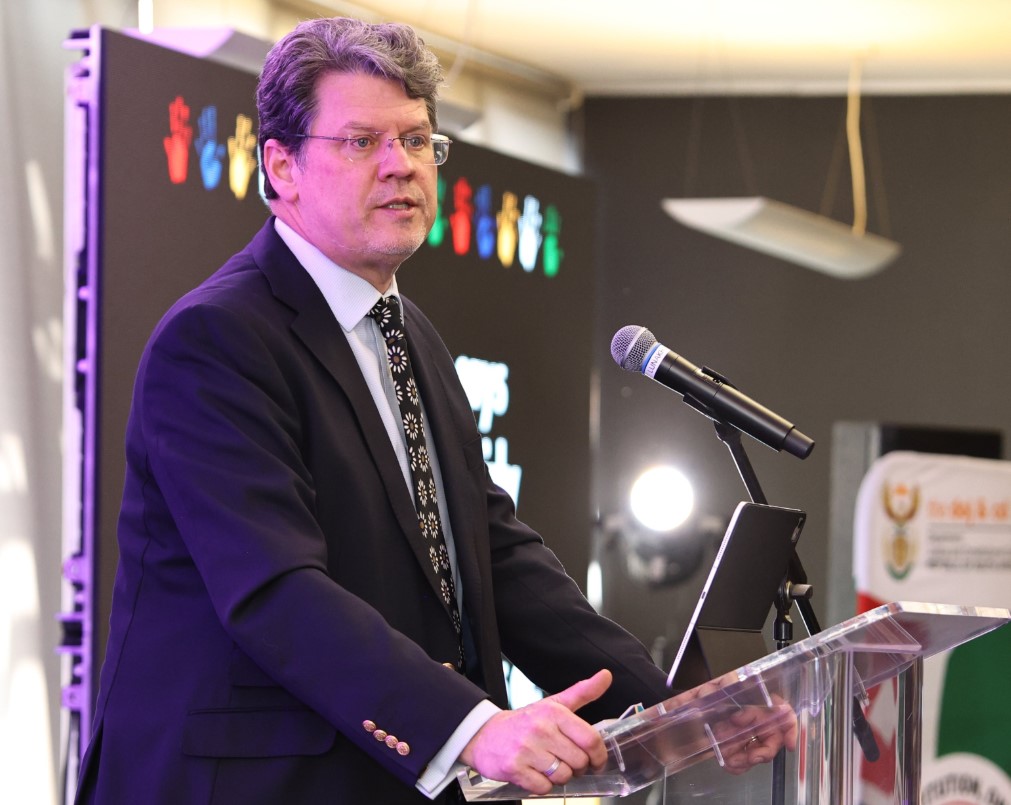
Delivering the keynote address at the 70th commemoration of the 1956 Women’s March and the 30th anniversary of the adoption of the Constitution, Nel said the world was witnessing an increasingly aggressive pushback against human rights.
He cited restrictions on women’s rights, reproductive healthcare and bodily autonomy, as well as attacks on LGBTQIA+ communities in various parts of the world.
He described the backlash as a “modern-day counter-march” attempting to push humanity backwards after centuries of progress.
“These developments show that even long-standing constitutional protections can be dismantled if society lowers its guard,” he said.
“We cannot look at our progressive legal framework and naively assume the summit of the hill has been reached,” Nel said.
“When women in South Africa still experience shockingly high levels of gender-based violence and femicide, the climb is far from over.”
He added that women continued to face disproportionate levels of poverty, structural unemployment and patriarchy in the workplace, while members of the LGBTQIA+ community continued to experience discrimination, prejudice, hate speech and hate crimes despite constitutional protections.
Nel said the response could not simply be to pass more legislation.
He said that changing attitudes required education, engagement and the cultivation of constitutional values, particularly among young people and young men.
A major theme of Nel’s address was the relationship between government and civil society.
He said government had a primary responsibility to uphold constitutional rights, but could not succeed without broader participation from society.
“Government alone cannot protect human rights, and civil society alone cannot institutionalize them. We need each other,” he said.
Nel called for a stronger partnership between a responsive and accountable government, civil society organisations and Chapter 9 institutions.
He described civil society organisations as the “early warning systems” of democracy because they are often closest to communities and are able to identify gaps in public services and failures in implementation.
Government, meanwhile, has the legislative machinery and institutional capacity to translate constitutional principles into enforceable realities, he said.
Nel warned that creating a divide between the state and civil society could leave space for anti-human rights forces to gain ground.
“Our partnership is the safety rope that binds us together on this mountain climb,” he said.
“If one slips, the other holds the line.”
Nel said South Africa needed more than a defensive approach to protecting constitutional rights.
He invoked the United Democratic Front’s “Defend, Consolidate, Advance” slogan, saying that it remained relevant in confronting what he described as a worldwide regression in human rights.
“We cannot merely hold the line. One cannot always play on the defence,” Nel said.
“To survive a global regression, one must go on the offensive.”
He outlined three priorities.
First, South Africa must defend the constitutional and legal gains made since 1994 and resist attempts to weaken human rights protections.
Second, it must consolidate those gains by ensuring that rights guaranteed on paper become a lived reality for women, children and LGBTQIA+ people.
And third, it must advance by tackling issues such as the gender wage gap, workplace patriarchy, economic exclusion and representation within the legal profession and judiciary.
Nel said this also meant ensuring that survivors of gender-based violence receive dignity and support when reporting cases, while government must continue investing in shelters, addressing DNA backlogs, strengthening support services and ensuring that courts function effectively.
Nel delivered his address at the historic Women’s Jail at Constitution Hill, a site associated with prominent anti-apartheid activists including Barbara Hogan, Fatima Meer, Albertina Sisulu and Winnie Madikizela-Mandela.
The venue, he said, was deliberately chosen because its history reflects both the oppression of South Africa’s past and the resilience of those who fought against it.
The event marked 70 years since the historic 1956 Women’s March, when about 20 000 women marched to the Union Buildings to protest against apartheid pass laws.
Nel drew a parallel between the steep climb to the Union Buildings in 1956 and the ongoing struggle for equality in 2026.
He said the journey towards justice remained an “uphill battle” against patriarchy, racism and institutionalised oppression.
Seventy years after women marched under the banner “Wathint’ abafazi, wathint’ imbokodo”, Nel said South Africans had inherited a responsibility to protect the gains made by generations before them.
“A rock is heavy, solid, and enduring. We are, and we remain, the custodians of holding that rock,” he said.
“We must refuse to let go,” he said.
INSIDE POLITICS






