
Johnathan Paoli
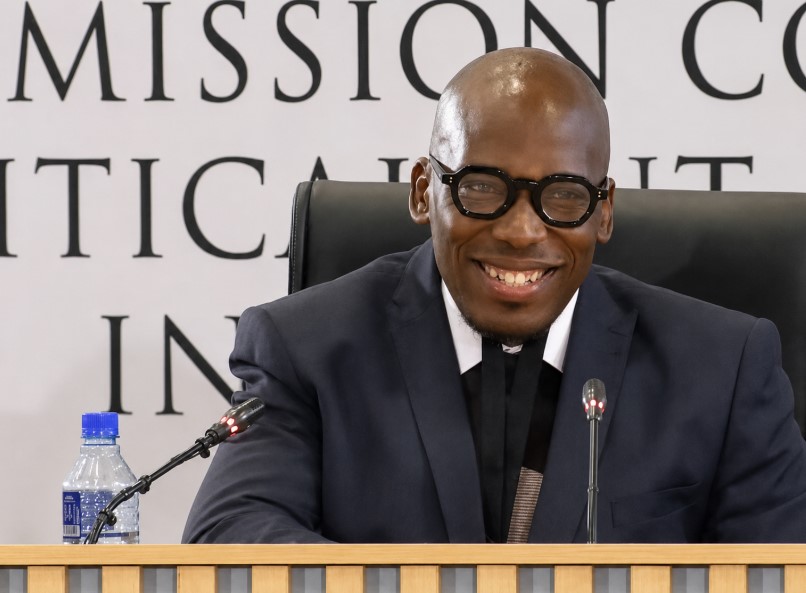
Businessman Tumelo Nku, who says his work includes data analysis, cyber security and intelligence-gathering, has come under sustained questioning over his explanation for carrying R60,000 in cash on the day of the 2021 Aeroton cocaine bust, which involved more than 700kg of cocaine valued at about R300 million.
Nku told the Madlanga Commission on Thursday that the money found in his vehicle when he was arrested formed part of company funds used for travel and business expenses.
Nku has denied being part of a drug-trafficking network and has insisted he acted as a confidential source, rather than a formally registered police informant.
Hawks investigator Lt-Col Nkoana Joseph Sebola previously testified that when he arrested Nku at the Aeroton crime scene, he was found in possession of R60,000 in cash in his vehicle.
Nku said he had the money for travelling to Durban and back to Johannesburg, tracking the truck carrying the container of cocaine, and doing other “intel work”.
“I utilised the funds for travelling, I did not know how much, or how long one would stay in the vicinity of Durban. And going there is not limited to following up on information relating to that truck; one obviously had other business interests in infrastructural development and so forth, but it was solely on the basis that I wasn’t sure how long the trip would take, but I thought it would be best to travel discreetly,” Nku said.
However, commissioners repeatedly challenged the logic of transporting such a large amount of cash between Durban and Johannesburg.
Commission chairman Mbuyiseli Madlanga questioned why cash would be carried rather than deposited and transferred electronically.
“You take cash to then make deposits. It does not make sense to me, not in this day and age. Why not make an EFT?” Madlanga asked.
The questioning intensified after evidence leader Advocate Teboho Mosikili linked the cash to Nku’s own evidence that acquiring intelligence often came at a cost.
“[It’s] hopelessly contradictory for you to say you expected to build a profile to get paid, whereas at the same time you seem to be mentioning that part of the money you had, or that money you had, part of it, you were willing to spend as part of collecting intel,” Mosikili said.
The commission also scrutinised Nku’s explanation for being present during events leading up to the Aeroton bust, with significant attention focused on the tension between his version and that of Gauteng Traffic Police Chief Inspector Samuel Mashaba.
Nku maintained that he was instructed by Mashaba to accompany officers after identifying the Yellow Jersey Logistics depot linked to the intelligence he had provided.
He insisted he merely followed instructions and remained an observer.
“My presence at Yellow Jersey was for me to point out or give the location. I was instructed to follow by Chief Mashaba,” Nku said.
However, Commissioner Sesi Baloyi questioned why Nku remained involved after providing the information.
“You’ve given them information, you don’t doubt that they are legitimate police officers. The question remains, why are you following them?” Baloyi asked.
Nku eventually conceded that curiosity played a role.
Baloyi challenged the explanation further, asking whether Nku would have followed even without Mashaba’s instruction.
The commission then confronted him with Mashaba’s previous testimony that Nku himself had requested to accompany officers because previous intelligence he had supplied had not been acted upon.
Reading from Mashaba’s evidence, Mosikili quoted: “Mr Nku asked me that, will it be a problem for me to accompany you guys because other information that I gave to other people, I get to be told they were unsuccessful, or I get to be told stories or excuses.”
Mosikili put it to Nku that Mashaba’s evidence made his version difficult to accept, adding that Nku’s explanation was becoming increasingly unconvincing.
The commission continued probing Nku’s broader claims about being a confidential source and his relationship with law enforcement.
Using SAPS Crime Intelligence regulations, Mosikili established that Nku had never been formally registered as an informant, never received an informant number and had never been assigned an official handler.
Asked directly whether he had ever been registered as a SAPS informant, Nku replied that he had not.
He further agreed that he had never signed an informant-handler agreement and had never formally been assigned a handler.
Commissioners also directed Nku to provide a list of all law enforcement officers to whom he had supplied information, together with details of the investigations involved and approximate dates, by Friday morning.
Meanwhile, earlier in the proceedings, the commission heard arguments concerning the postponed testimony of controversial North West businessman Suliman Carrim.
Chief evidence leader Advocate Matthew Chaskalson raised concerns about what he described as Carrim’s repeated inability to testify because of hospitalisation and ill health.
After hearing submissions from Carrim’s legal representatives, Madlanga postponed Carrim’s testimony until 15 July, while leaving open the possibility of further action should he refuse to cooperate with an independent medical assessment.
Nku is expected to return to the commission on Friday morning for the resumption of his cross-examination.
INSIDE POLITICS





