



Nqabisa Gantsho
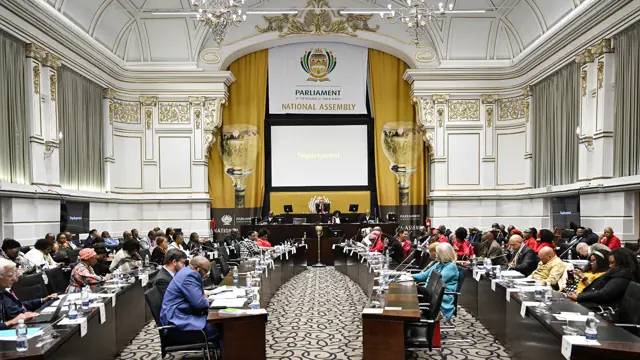
For South Africa, COP31 presents an opportunity, not only to reaffirm international commitments, but also to demonstrate how parliamentary oversight, legislation and public accountability can help translate climate ambition into meaningful action.
The question is no longer whether climate change is an urgent national priority. The question is whether South Africa’s institutions are prepared to ensure that commitments become implementation.
There are encouraging signs that Parliament is increasingly ready for this responsibility.
ALSO READ: We need functioning municipalities’: Economist on tackling unemployment
Over the past decade, Parliament’s engagement with climate change has evolved significantly. What was once viewed largely as an environmental issue is now recognised as a complex challenge affecting economic growth, energy security, trade competitiveness, employment, food security and social justice.
Parliamentary delegations have participated consistently in climate-related engagements alongside the United Nations Framework Convention on Climate Change processes, advocating for climate justice, equitable climate finance, a strengthened Loss and Damage Fund and a just transition that reflects the realities of developing countries.
These engagements have provided lawmakers with valuable insights into international best practice, emerging regulatory trends and innovative financing mechanisms.
More importantly, Parliament has demonstrated its ability to convert these lessons into domestic action. The adoption of the Climate Change Act, which came into effect in March 2025, marked a significant milestone in South Africa’s climate governance framework. However, the government’s published commencement notice excludes certain sections, and some mechanisms require further implementation steps.
ALSO READ: ActionSA, March and March reject Home Affairs’ digital asylum system
Nonetheless, Parliament played a central role in scrutinising the legislation, facilitating public participation and ensuring that competing environmental, economic and social considerations were properly debated. The task now is to oversee the implementation of the Act and ensure that it delivers real outcomes rather than remaining an aspirational policy framework.
This oversight function will be one of Parliament’s most important contributions to COP31.
Climate action without funding is merely rhetoric. Parliamentary scrutiny of climate-related budgets and expenditure helps ensure that government commitments are backed by resources and measurable programmes.
Through committee oversight, annual performance reviews and budgetary processes, Parliament monitors whether departments are investing adequately in climate resilience, adaptation measures and low-carbon development.
It also serves as an important safeguard against wasteful expenditure, corruption and the growing risk of greenwashing, where projects are branded as climate interventions without delivering tangible benefits.
ALSO READ: We need functioning municipalities’: Economist on tackling unemployment
This role becomes even more critical given South Africa’s vulnerability to climate-related disasters. Communities across the country are already confronting the consequences of floods, droughts, water shortages and extreme weather events.
For Parliament, preparedness for climate action therefore extends beyond environmental stewardship. It is fundamentally about protecting livelihoods, strengthening resilience and safeguarding long-term economic stability.
At the same time, Parliament must be honest about the challenges that remain.
Climate governance cuts across virtually every sector of government. Effective oversight requires coordination between committees responsible for energy, agriculture, water, trade, finance, transport and local government.
Parliament itself has acknowledged the need for stronger inter-committee coordination to avoid fragmented oversight and ensure that government responds to climate change in a coherent and integrated manner.
There is also a need to broaden the climate conversation. South Africa’s public discourse often focuses heavily on decarbonisation and energy transition policies. While these are essential, they should not eclipse equally important concerns around adaptation. Communities facing crop failures, water insecurity, flooding and infrastructure damage cannot afford a climate agenda that focuses only on emissions reduction. Parliament must continue to push for greater attention to adaptation strategies that protect vulnerable communities and strengthen local resilience.
The same applies to the concept of a just transition. The shift to a low-carbon economy will have profound consequences for workers, coal-dependent communities and rural areas. Parliament has already identified the need for stronger evidence and engagement on the localised socio-economic impacts of decarbonisation, particularly in vulnerable regions.
This is encouraging. Meaningful climate action cannot succeed if it leaves communities behind. Oversight must therefore be as much about people as it is about emissions targets.
South Africa’s leadership role on the continent also creates opportunities ahead of COP31.
The decision by the SADC Parliamentary Forum to begin work on a regional Model Law on Climate Change provides a platform for Parliament to contribute its legislative experience and help shape a coordinated regional response to climate-related challenges.
Issues such as climate-induced migration, shared water resources and transboundary environmental risks require collective solutions. South Africa’s Parliament is well positioned to play a leading role in this process.
Importantly, Parliament must also lead by example.
Efforts to improve energy efficiency, expand digital parliamentary processes, strengthen green procurement and reduce waste within its own operations demonstrate an understanding that climate responsibility begins at home. While much work remains to improve institutional sustainability reporting and carbon tracking, these initiatives send an important signal about institutional commitment.
The foundations have been laid. Parliament has strengthened its legislative framework, deepened its oversight capacity and expanded its engagement with global climate governance. Yet the real challenge lies ahead. As South Africa approaches COP31, Parliament must move from being a participant in climate discussions to becoming the institution that ensures climate promises become measurable progress.
In the face of a rapidly changing climate, effective parliamentary oversight may prove to be South Africa’s most valuable contribution to a sustainable and resilient future.
Nqabisa Gantsho is the Chairperson of the Portfolio Committee on Forestry, Fisheries and Environment.
COP31 takes place from 9 to 20 November 2026 in Antalya, Türkiye.






