



By Johnathan Paoli
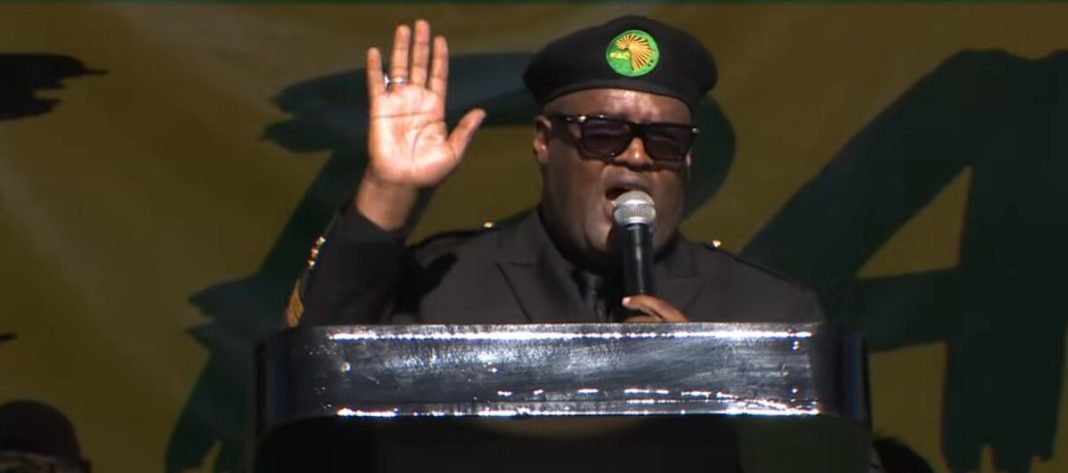
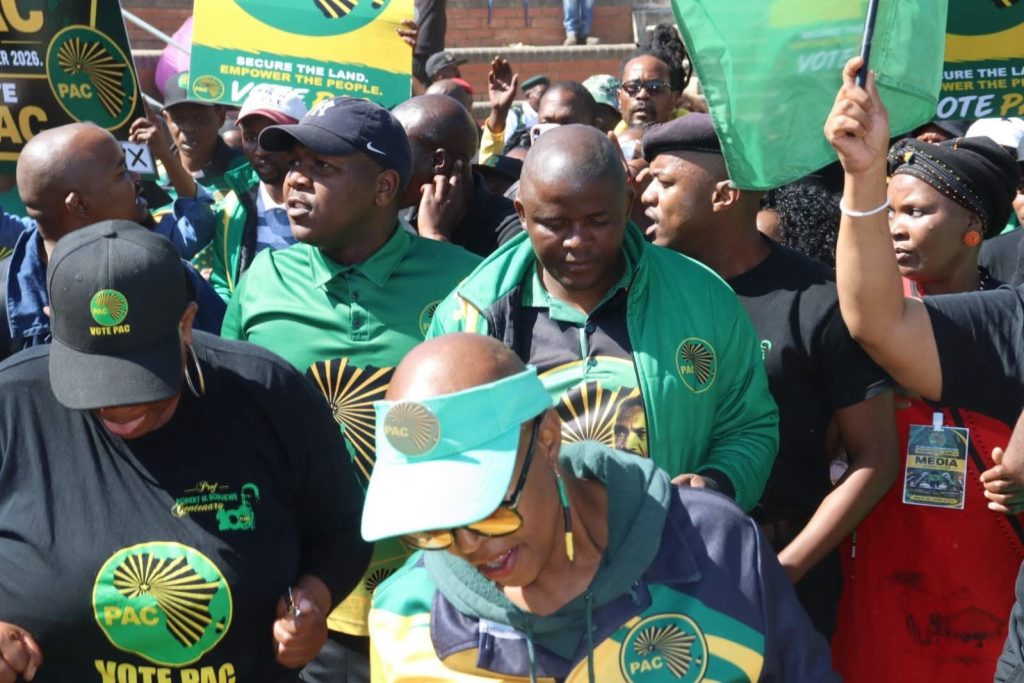
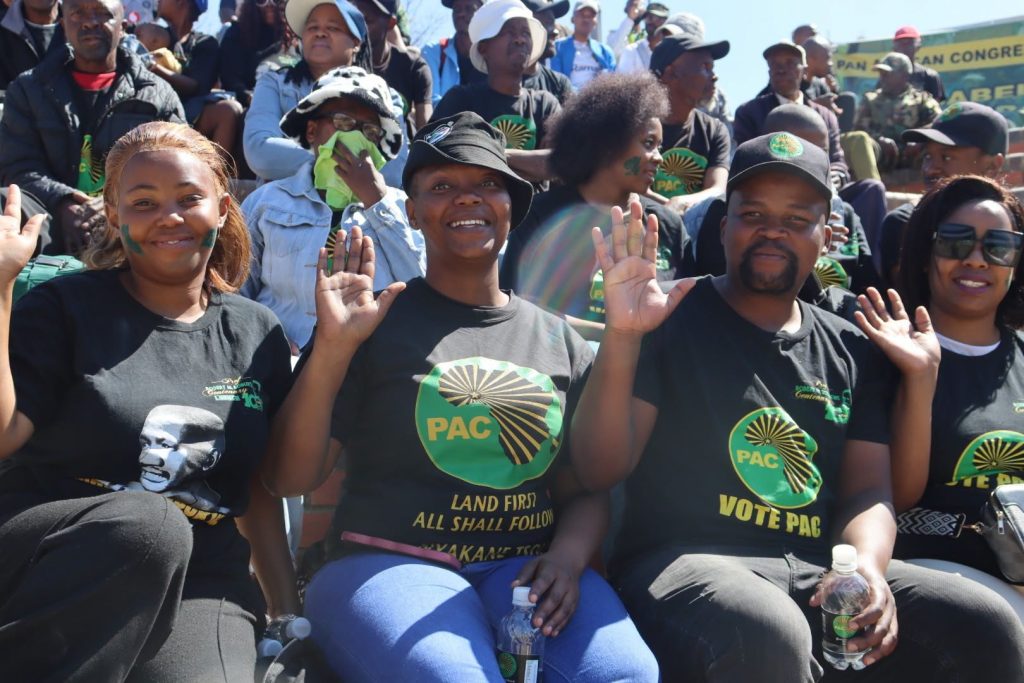
Pan Africanist Congress of Azania (PAC) says it is set to contest a record number of municipalities in the upcoming Local Government Elections, with the party expected to field councillor candidates across all provinces and in all Metros. This is according to PAC president Mzwanele Nyhontso, who spoke around the launch of the party’s manifesto on Saturday at the Soweto Amphitheatre in Jabulani, Soweto.
Nyotsho told the SABC that the PAC “will field 2500 ward councillors” without giving details and suggested this has never been the case in the five previous iterations of municipal elections.
Referring to the PAC’s central theme, land, Nyotsho said the PAC would like to see municipal-owned land being released and used to build housing and social infrastructure such as schools and clinics, rather than being held speculatively by foreign owners.
Nyhontso used the occasion to launch a blistering attack on Democratic Alliance Johannesburg mayoral candidate Helen Zille, warning Soweto residents that she would improve the city for white people while leaving Black communities behind.
Addressing the PAC’s manifesto launch at the Soweto Amphitheatre in Jabulani on Saturday, Nyhontso urged Johannesburg voters not to be seduced by the DA’s reputation for governing Cape Town.
“Do not dare give our oppressors the Johannesburg corridor through the back door to say Zille will bring change. She will never bring change to you, she will bring change to the white people and not to you,” Nyhontso said.
“You must be careful of doing that. Don’t play with power, don’t play with people, don’t play with the idea that Cape Town is well run,” he added.
Nyhontso’s intervention places the PAC firmly among the parties seeking to turn Johannesburg’s mayoral contest into a battle over race, inequality and the contrasting conditions between affluent suburbs and impoverished townships ahead of the 4 November local government elections.
Zille was announced as the DA’s candidate for Johannesburg mayor, while the PAC has selected former secretary-general Thami ka Plaatjie, who recently returned to the party from the ANC, as its candidate for the city’s top political office.
Nyhontso said the DA’s administration of Cape Town should serve as a warning to Johannesburg voters, arguing that the city’s international reputation for efficient governance masked the experiences of Black residents living in poor and crime-ridden communities.
He referred to township communities around Cape Town, including Philippi, claiming that residents continued to live in shacks and faced severe insecurity despite years of DA governance.
“We have Cape Town residents, people who come from the streets and they are suffering, thanks to the DA that is running that municipality against our own people,” Nyhontso said.
He criticised the local government, which he said had left communities across the country facing deteriorating infrastructure, unreliable electricity and water supplies, housing shortages and widespread economic exclusion.

Nyhontso said municipalities had become trapped by incompetence, bureaucracy and poor leadership, preventing communities from building sustainable local economies.
The PAC’s manifesto, he said, was intended to offer a different model of local government centred on land, service delivery, economic empowerment and greater accountability to communities.
“It is a common feature of many municipalities that their administrations are presiding over systematic decay,” Nyhontso said.
ALSO READ: Eastern Cape records SA’s highest murder and rape rates
He also used the manifesto launch to issue a warning about coalition politics, saying his party would oppose arrangements that diluted African political control while leaving what he described as the underlying structures of dispossession intact.
He invoked the legacy of PAC founder Robert Sobukwe, arguing that political power should be used to transform the material conditions of ordinary people rather than simply distribute positions among political parties.
“We must therefore never allow racist reactionaries to return to power through the back door and to use our votes in a way that seeks to recreate apartheid and its curfews, slave wages and racially segregated living spaces,” Nyhontso said.
The PAC is part of the Government of National Unity (GNU) nationally, and Nyotsho in the Minister of Land Reform and Rural Development.
Land reform remained central to the PAC’s political message.
“The PAC was founded to answer the fundamental question of who owns this country, and this country is owned by African people, the rest are visitors and we are accommodating them,” Nyhontso said.
He said the party wanted townships and rural communities to move beyond being centres of consumption and instead become productive local economies capable of supporting businesses and employment.
Nyhontso said the party’s success should not simply be measured by the number of councillors elected, but by whether its representatives delivered visible improvements in communities.
As the contest for Johannesburg intensifies, Nyhontso told supporters that the choice facing voters was about more than fixing potholes or restoring basic services.
The PAC, whose electoral support has declined sharply since the advent of democracy amid years of internal divisions and leadership disputes, is seeking to use the local elections to rebuild its political footprint.






