
By Johnathan Paoli
President Cyril Ramaphosa has reiterated that the interim report of the Madlanga Commission of Inquiry investigating allegations of corruption and political interference in the criminal justice system will not be made public until the inquiry has completed its work, warning that premature disclosure could jeopardise investigations and prejudice witnesses.
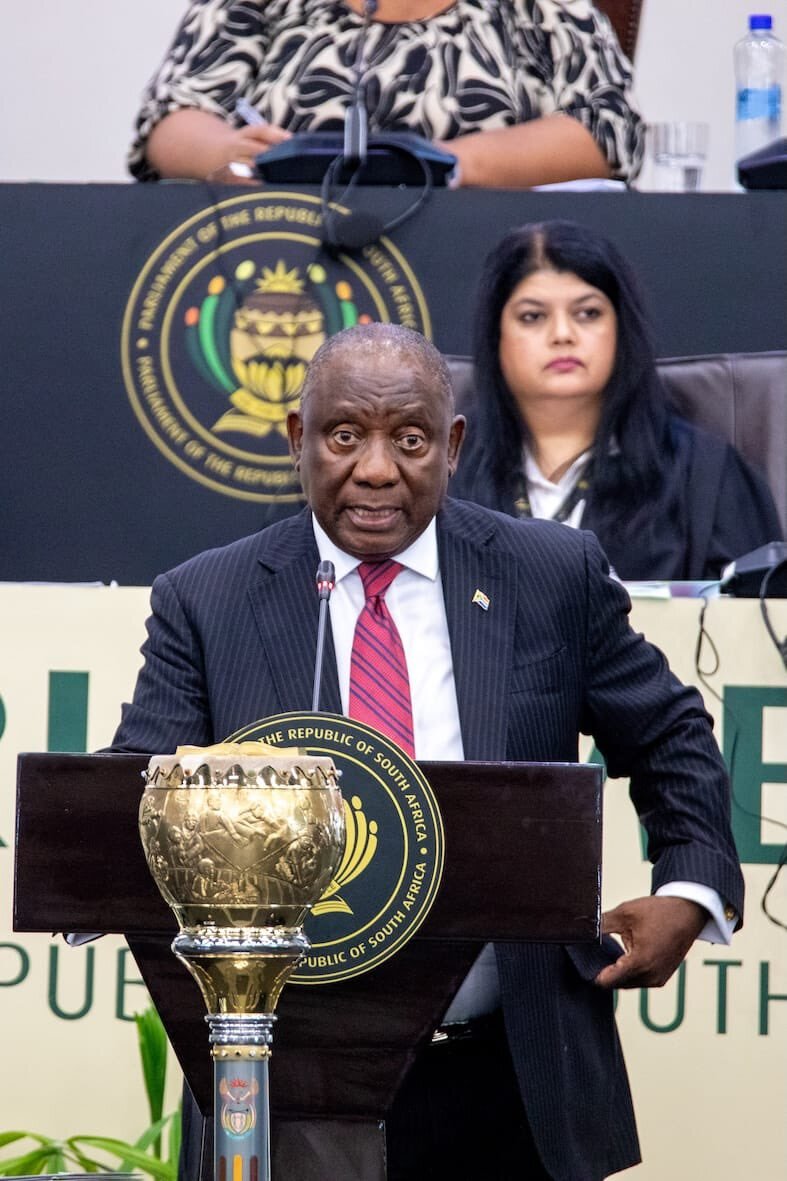
Responding to oral questions in the National Assembly on Thursday, Ramaphosa defended his decision to withhold the interim findings, saying in light of the ongoing word and incomplete testimony, releasing the interim report would not be a good idea.
ALSO READ: Chetty tells Parliament about law enforcement abuse of power
“The commission’s work is ongoing. In its interim report, the commission noted that it will require further evidence from a number of people who had not yet appeared before it. Beyond the referrals and recommendations that I have made public, it would be unfair to witnesses whose testimony is not complete or individuals against whom the commission has not yet made any findings to publicise the information at this stage,” the president said.
The commission was established following explosive allegations made in July 2025 by KwaZulu-Natal police commissioner Nhlanhla Mkhwanazi, who claimed that criminal syndicates had infiltrated elements of the criminal justice system and were being protected through political interference.
Ramaphosa told MPs that the commission had submitted an interim report to him on 17 December 2025 containing recommendations based on “prima facie evidence of wrongdoing”, but stressed that the inquiry’s work was still underway.
ALSO READ: Commission tears into Shibiri’s explanation of R70 000 Matlala loan
Ramaphosa added that releasing the report prematurely could undermine ongoing investigations and the commission’s lines of inquiry.
“Furthermore, it may jeopardise investigations as well as lines of questioning of the commission, to make inconclusive avenues with regard to the investigation that could be made public,” he said.
The president said the interim report had made recommendations in three main areas.
These include referrals for immediate criminal investigations where prima facie evidence of wrongdoing had been identified, calls for urgent decisions on prosecutions, and recommendations concerning the employment status of individuals currently working in law enforcement or intelligence structures who may be implicated in misconduct.
“To ensure that these matters are given the necessary attention, I directed the Minister of Police and the National Commissioner of the South African Police Service to constitute a special investigations task team reporting directly to the National Commissioner,” Ramaphosa said.
“The team will institute investigations against those identified by the commission for such investigation,” he added.
ALSO READ: Lamola warns SADC of Middle East economic shocks
He said that matters requiring disciplinary action were already being handled by relevant departments and some cases had resulted in suspensions.
According to the interim report’s referrals, at least 14 senior officials from the South African Police Service and the Ekurhuleni Metropolitan Municipality were identified for further investigation.
Despite mounting public interest in the report’s contents, Ramaphosa said transparency would be balanced against the need to protect the integrity of the inquiry and the safety of those appearing before it.
Given that the commission’s work was expected to conclude within a relatively short timeframe, recently extended to 31 August 2026, Ramaphosa said all reports would be released once the final findings had been submitted.
“Given the short time frame in which the commission is expected to complete its work, we will make all its reports public once the commission has submitted its final report,” he said.
However, he cautioned that publication would also depend on advice from the commission regarding whether certain information could endanger witnesses or compromise sensitive personal information.
Ramaphosa emphasised that government remained committed to transparency and accountability throughout the process.
“Any witness that appears before the commission should not feel that they are prejudiced,” he said.
MKP MP Des van Rooyen stressed concerns that politically connected individuals might be protected, specifically referring to businessman Hangwani Maumela.
Ramaphosa assured Parliament that no one implicated in wrongdoing would be protected.
“We will implement the recommendations from the commission, and we will take action. I can give assurance that no one, who is either implicated or will be implicated, will be shielded,” Ramaphosa said.
He admitted that thus far, the commission has revealed deep-seated divisions within the top leadership of SAPS, expressing hope that the conclusion of its work would assist the country in fixing the glaring holes in its criminal justice system.





