
Johnathan Paoli
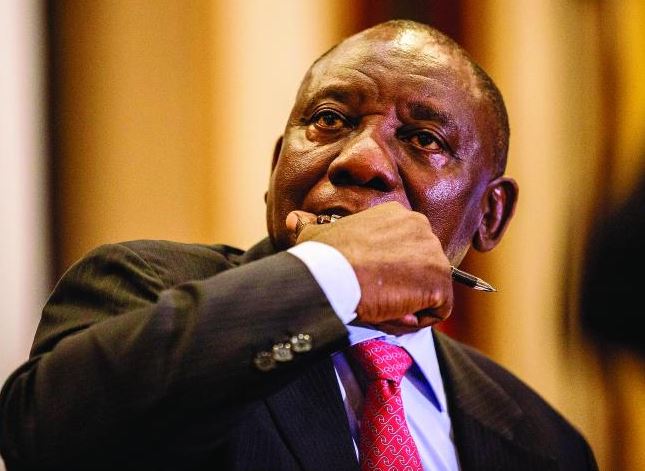
President Cyril Ramaphosa has dismissed claims that he collapsed over the weekend and was hospitalised.
This follows rumours which arose on social media that Ramaphosa was ill after his failure to address a prayer service in Mbombela, Mpumalanga on Sunday.
“The president is fine, he was never hospitalised, and there was no emergency. He attended a meeting and decided to spend the rest of the day at home ahead of a busy week,” presidential spokesperson Vincent Magwenya said.
Ramaphosa was represented by Deputy President Paul Mashatile at the prayer service, with other ANC leaders in attendance as part of the programme ahead of the party’s January 8th Statement on this coming Saturday.
The ANC NEC will also visit the families of struggle stalwarts in the province.
Ramaphosa was speaking to the media after the wreath-laying ceremony at the grave of Dr Enos Mabuza in Louwville, Mpumalanga, and confirmed he was in good health.
ANC national chairperson Gwede Mantashe said that the wreath-laying ceremony aimed to ask the party’s forefathers to guide the organisation during turbulent times.
“We use those visits as a pilgrimage as well, where we visit people who we want to link up spiritually. We are hoping that they’ll give us guidance and make us strong, particularly in the phase of the ANC under siege,” Mantashe said.
The wreath-laying ceremony also happened at the burial site of Enos Mabuza, who served as chief executive councilor and chief minister of the Bantustan of KaNgwane of South Africa as well as founding the Inyandza Movement which played a critical role in preventing attempts by the apartheid government to incorporate KaNgwane into the country of Eswatini.
Ramaphosa’s statement highlighted the gains of the ANC, while reflecting on some of its errors, in addition to reaffirming the party’s alignment with the plight of the Palestinian people.
The lead up in activities in the province centres around both the birthday of the ANC as a party as well as the build up to rally at Mbombela Stadium this weekend.
Founded on 8 January 1912 in Bloemfontein as the South African Native National Congress, the organisation was formed to agitate for the rights of Black people in the country.
When the white National Party government came to power in 1948, the ANC’s central purpose became to oppose the new government’s policy of institutionalised apartheid.
INSIDE POLITICS





