
- Advertisement -spot_img

Ramaphosa says government strengthening institutions to prevent future corruption

- Advertisement -spot_img

Must read

By Simon Nare

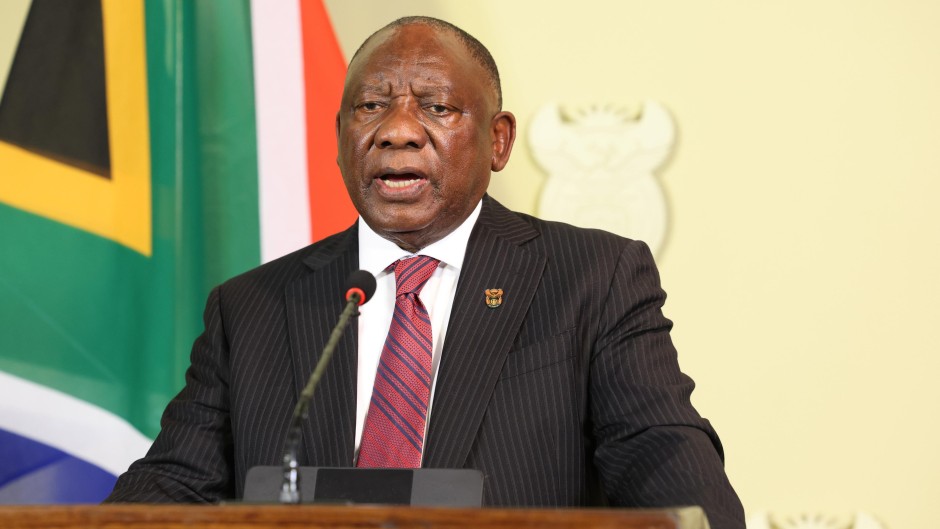
President Cyril Ramaphosa said on Wednesday that the government was working to build transparent, accountable and resilient institutions, while strengthening consequence management and procurement oversight to prevent a repeat of the state capture era.

Responding to the Presidency Budget Vote debate in the National Assembly, Ramaphosa said his administration had focused on rebuilding institutions weakened during the years of state capture under former president Jacob Zuma.

He said billions of rand had been lost during that period as key institutions, including the National Prosecuting Authority (NPA) and the South African Revenue Service (SARS), were undermined, while safety, security and intelligence structures were politicised and weakened.

Ramaphosa said efforts to recover stolen funds and rebuild affected institutions were continuing.

“Beyond the recovery of stolen funds and the prosecution of wrongdoing, we are working to build institutions that are transparent, accountable and resilient against future abuse,” he said.

“We are working hard to strengthen consequence management, improve procurement oversight and promote ethical leadership across the public sector.”

The president also dismissed what he described as attempts by some political parties to distract his administration from its priorities.

“This Presidency is resolutely focused on the task of growing an inclusive economy and creating jobs. We will not be sidetracked by narrow agendas that have nothing to do with the needs, interests and concerns of the people of South Africa,” he said.

“The Presidency will not be distracted by political theatre or electoral posturing.”

Ramaphosa said the government remained focused on accelerating economic transformation and addressing the country’s major challenges.

He said issues such as economic growth, energy security, infrastructure investment, climate adaptation, national security, logistics reform and public employment required coordinated action across government rather than isolated interventions by individual departments.

“The Presidency’s role in South Africa should therefore be understood not as the centralisation of power for its own sake, but as the coordination of national priorities that require collective action across multiple departments, spheres of government and social partners,” he said.

According to Ramaphosa, the centre of government serves to remove obstacles, align competing priorities and monitor implementation to ensure national objectives are achieved.

Addressing concerns about crime raised during the debate, the president said the fight against crime could not be treated as a routine government function but required a coordinated national response.

He said South Africans continued to face the effects of violent crime, organised criminal activity, gender-based violence and the exploitation of vulnerable communities.

Despite the challenges, Ramaphosa expressed confidence in the country’s prospects, saying opportunities were being created for millions of South Africans.

“While much work remains to be done, we can say with confidence that our country is moving forward,” he said.

“Let us reject pessimism and cynicism. We must draw strength from what we have achieved together and from what remains possible.”

He called on South Africans to work together to build a growing, inclusive and prosperous country in which all citizens could realise their potential and no one was left behind.

INSIDE POLITICS

More articles

LEAVE A REPLY

Please enter your comment!
Please enter your name here

Inside Education E-Edition

spot_img

CATHSSETTA

spot_img

AVBOB STEP 12

spot_img

Inside Metros G20 COJ Edition

spot_img

JOZI MY JOZI

spot_img

QCTO

spot_img

Latest article



