
- Advertisement -spot_img

Moepya punts electoral body peer review to protect democracy

- Advertisement -spot_img

Must read

By Lebone Rodah Mosima 

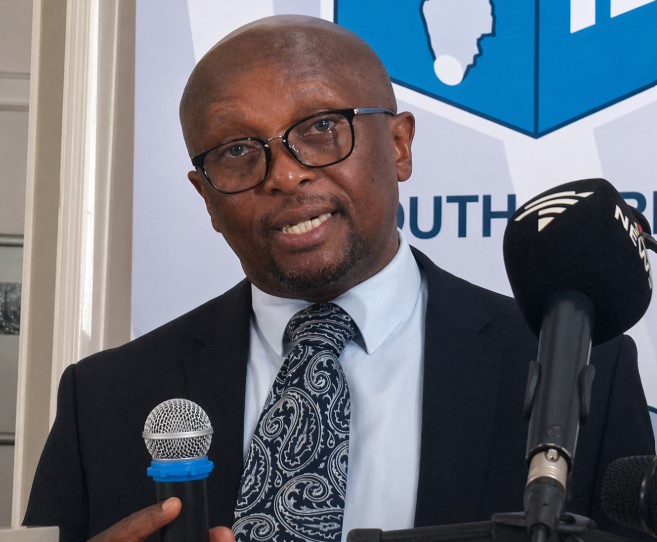
Electoral Commission (IEC) chairperson Mosotho Moepya has told electoral bodies in Southern Africa to hold one another accountable through peer pressure and peer review, warning that democracy across the world is under growing pressure.

Moepya was speaking as the IEC hosted the SADC Electoral Commissions Forum New Commissioners’ Induction Programme, in partnership with the SADC Electoral Commissions Forum and International IDEA, at the Radisson Hotel in Kempton Park, Ekurhuleni, on Wednesday.

He said the region had built a system where electoral commissions could strengthen one another through practical support, benchmarking studies, sharing best practices, observing elections and supporting one another, even though each country was governed by its own laws.

“Every country, even in our region, is governed by their jurisdictional laws – in South Africa, we have electoral legislation and the constitution that guides us,” Moepya said.

ALSO READ: Ramaphosa says government strengthening institutions to prevent future corruption

“Zimbabwe has its own laws, as well as Zambia, Lesotho, Botswana and so on, to the extent that members of the commissions present here or not even here who have gone through this programme in the past, have appreciated that we are required to act without fear, without favour and without prejudice, but they work against those principles.”

Moepya said electoral commissions in the region did not have the power of law over one another, but could still hold each other accountable through peer pressure and peer review.

He said this instrument had worked exceptionally well.

“I’m not saying we are perfect in every respect, but if you look at how we have done in the last 30 years, we have moved from instances where democracy as a concept was sometimes fussy to where it is crystal clear and where holding each other to account has become such a fundamental part of the work we do,” he said.

“So we are proud of that and we believe, that is the thing we need to continue to improve and do going forward.”

Moepya said global democracy was under huge pressure, and that the best response was for Southern African countries to work in unity in an exercise aimed at strengthening democracy, and not an exercise in futility.

Deputy Minister of Justice and Constitutional Development Andries Nel, in his opening remarks, agreed, saying confidence in electoral institutions and democratic governance was under pressure across the continent and in Southern Africa.

Nel said electoral commissioners were not merely administrators of elections, but custodians of democratic legitimacy, protectors of constitutional order and guardians of public trust in democratic institutions.

He said the SADC region had made commendable strides over the years in advancing constitutional democracy, political stability and electoral governance.

Elections, he said, had increasingly become the accepted mechanism through which citizens expressed their sovereign will and determined the direction of governance in their countries.

However, he warned that credible elections remained central to democratic consolidation.

“Where elections are transparent, inclusive, peaceful, and trusted, democracy flourishes,” Nel said.

ALSO READ: SCOPA to charge former RAF CEO Letsoalo after inquiry no-show

“Conversely, where electoral processes are disputed or lack legitimacy, democratic institutions become vulnerable and public confidence erodes.”

Nel said electoral commissions had to uphold the highest standards of integrity, impartiality, professionalism and accountability, especially in an era marked by rapid technological change, misinformation, political polarisation and declining trust in institutions globally.

He said the integrity of voter registration systems, transparency in results management, effective dispute resolution mechanisms, cybersecurity and combating disinformation had all become central to safeguarding electoral credibility.

“There may be attempts to draw you onto the partisan course, to advantage one political entity above the other. In such circumstances muster the courage to stay the constitutional and independent course,” Nel said.

“Any partisan tendency erodes the edifice of electoral integrity with deleterious consequences for the public interest.”

Nel said the Afrobarometer Round 10 survey, released in May 2026 and conducted across 38 African countries with more than 50,000 respondents, found that Africans remained strongly committed to democracy and elections.

According to the survey, about 74% of Africans supported choosing leaders through regular, open and honest elections, 63% supported multiparty competition, while large majorities rejected dictatorship and one-party rule.

Nel said about 71% of respondents reported voting in their most recent national election, showing continued public engagement in democratic processes despite a gradual decline in support for elections over the past decade.

However, he said confidence in the quality and integrity of elections was weakening.

Only 55% of citizens believed their most recent national election was free and fair, down from previous survey rounds, while 36% disagreed.

“Although 86% of citizens say they are free to vote without pressure and 77% say they can join a political organisation of their choice, concerns remain significant: 19% feared political intimidation or violence during the last election campaign, and 28% believe powerful people could discover how they voted despite the secrecy of the ballot,” Nel said.

“Most strikingly, only 38% trust their country’s electoral management body, while a majority express little or no trust in the institutions responsible for administering elections.”

Nel said the report also highlighted a growing gap between electoral participation and perceived political responsiveness.

While 77% of Africans believed elected officials should follow voters’ demands, only 17% believed members of parliament often or always listened to ordinary citizens.

Nel said most respondents felt elected leaders were insufficiently accountable, raising doubts about whether elections translated into meaningful representation and responsive governance.

He said that although Africans continued to value elections and democratic freedoms, strengthening electoral institutions, protecting political rights and improving government responsiveness were essential to maintaining public confidence in democracy.

For Southern Africa, including Angola, Botswana, Eswatini, Lesotho, Malawi, Mozambique, Namibia, South Africa, Zambia and Zimbabwe, Nel said the Afrobarometer findings revealed a mixed picture.

Citizens remained committed to democratic elections, but confidence in electoral institutions and outcomes was under pressure.

“Southern Africa recorded the lowest regional support for elections among Africa’s five regions, compared to the continental average of 74%,” he said.

Nel said support for elections in Southern Africa stood at 65%, with several countries in the region also experiencing some of the sharpest declines in support for elections over the past decade.

ALSO READ: Shinga turns to court to stop NFP from removing her from KZN Legislature

“Several countries in the region also experienced some of the sharpest declines in support for elections over the past decade, including Eswatini, South Africa, Lesotho, Botswana, Namibia and Mozambique,” he said.

He said most Southern Africans continued to reject authoritarian alternatives, indicating that declining enthusiasm for elections did not necessarily translate into support for dictatorship or one-party rule.

The report also found that younger citizens and urban residents across Africa were generally less likely to vote, a trend Nel said may be contributing to declining engagement in several Southern African countries.

“Perhaps the most significant challenge for Southern Africa is trust in electoral management bodies and perceptions of political responsiveness,” he said.

The survey found that 62% of respondents in South Africa, 58% in Botswana, 50% in Namibia, 51% in Lesotho, 50% in Malawi, 47% in Eswatini and 43% in Zimbabwe expressed little or no trust in their electoral commissions.

Nel said citizens across the region also believed elected representatives were not sufficiently responsive to voters.

He said the findings suggested that while democratic principles remained widely supported in Southern Africa, declining confidence in electoral institutions and dissatisfaction with government responsiveness were eroding trust in the effectiveness of democratic governance.

Nel also cited the IEC Voter Participation Survey 2025/26, conducted by the Human Sciences Research Council, which he said revealed a concerning decline in democratic confidence in South Africa.

He said national pride remained relatively high, but support for democracy as the preferred form of government had fallen to a historic low of 36%, while growing numbers of citizens either felt the type of government did not matter or were open to non-democratic alternatives.

Satisfaction with how democracy was functioning had also deteriorated sharply, with 68% dissatisfied and only 17% believing the country was moving in the right direction.

Nel said trust in public institutions had weakened significantly over the past two decades, with confidence in national government, Parliament, local government and political parties declining to some of the lowest levels recorded.

“While trust in the Electoral Commission has dropped to 32% among the general public, however, it remains much higher among active voters,” he said.

“At the local level, dissatisfaction with service delivery remains a major concern ahead of the 2026 elections.”

He said while social grants, education, healthcare and electricity received relatively positive evaluations, large majorities were dissatisfied with government performance in creating jobs, reducing crime, providing affordable housing and ensuring reliable water and sanitation services.

He also highlighted that citizens’ engagement with ward councillors was limited, although a majority expressed some level of satisfaction with their performance.

“Overall, the survey paints a picture of a society experiencing declining institutional trust, and frustration with governance outcomes, while still maintaining a commitment to participation and democratic processes that will shape the upcoming local government elections,” Nel said.

“This induction programme is therefore both timely and strategic. It provides newly appointed Commissioners with an opportunity not only to deepen technical knowledge and institutional understanding, but also to reflect on the broader democratic mission entrusted to electoral institutions.”

Nel stressed that electoral institutions had to continuously evolve to respond to emerging threats while remaining anchored in the principles of transparency, inclusivity, fairness and accountability.

He said SADC countries shared a collective responsibility to ensure that electoral systems continued to inspire confidence among citizens, particularly young people, whose faith in democracy would shape the future of the region.

Senior Adviser on electoral processes for the Africa and West Asia regional programme at International IDEA, Olufunto Akinduro, said the New Commissioner Orientation had created an opportunity for electoral officials to learn from peers in other regions and compare experiences from similar programmes in other countries.

“It’s quite interesting how we’re able to adapt to the programme for each one, looking at emerging needs,” Akinduro said.

“So for instance, this particular one, we have extensive sessions looking at protecting elections, looking at emerging issues like digitalisation and elections – key issues around inclusion.”

Akinduro said one of the biggest emerging concerns was the disengagement of young people from democratic processes across the African continent.

She said the orientation programme would also include sessions on inclusion, focusing on youth, women and persons with disabilities, while allowing participants to frame questions around those issues.

INSIDE POLITICS

More articles

LEAVE A REPLY

Please enter your comment!
Please enter your name here

Inside Education E-Edition

spot_img

CATHSSETTA

spot_img

AVBOB STEP 12

spot_img

Inside Metros G20 COJ Edition

spot_img

JOZI MY JOZI

spot_img

QCTO

spot_img

Latest article



