

By Charmaine Ndlela
President Cyril Ramaphosa has called on government and the private sector to place small businesses at the centre of economic growth and job creation, saying they are expected to generate about nine million of the 11 million additional jobs envisaged by the National Development Plan (NDP) by 2030.
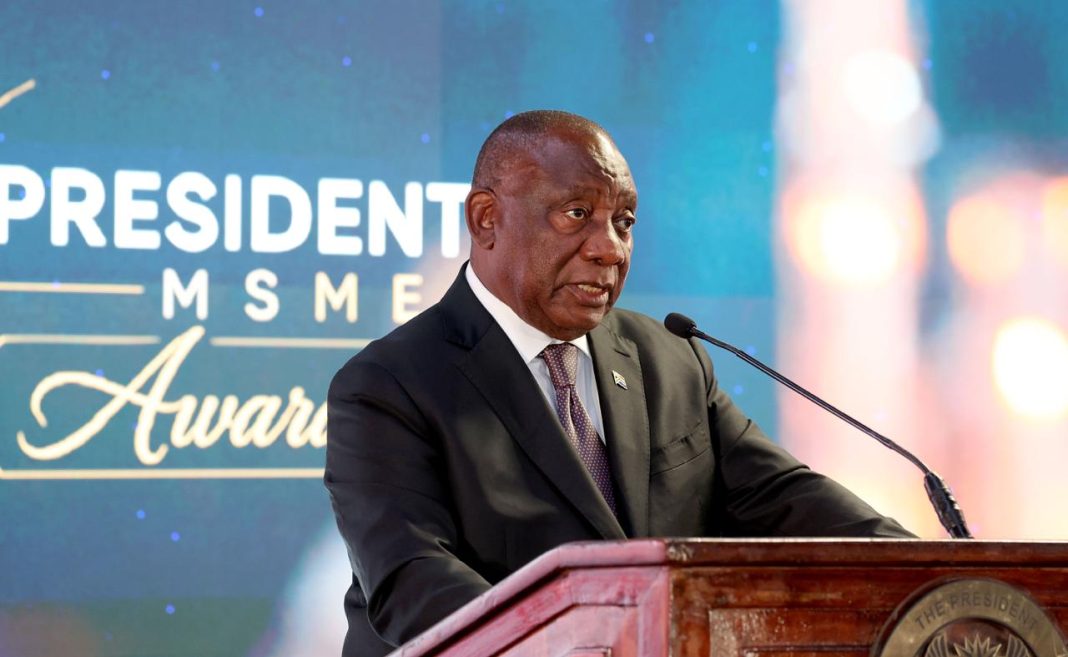
Addressing the 2026 National Presidential Micro, Small and Medium Enterprises (MSME) and Cooperatives Breakfast at The Galleria Arena and Conference Centre in Sandton on Thursday, Ramaphosa said South Africa’s approximately three million MSME owners represented enormous potential to expand production, strengthen local value chains, increase exports and create employment.
ALSO READ: Ntuli says ending GBV is ‘collective responsibility’ as Inanda again tops rape cases
Held under the theme “2026 MSME and Cooperatives Awards: A Seat at the Presidential Table”, the breakfast brought together government representatives, business leaders and entrepreneurs ahead of the Presidential MSME and Cooperatives Awards.
Ramaphosa said the country would not achieve sustainable economic transformation if small businesses were excluded from major investment opportunities, despite the R890 billion in investment pledges secured at the South Africa Investment Conference earlier this year.
“These are welcome commitments, but we will not see sustainable economic change if small businesses are left behind,” he said.
He called for stronger links between small enterprises and established industries, saying more local manufacturers should supply major industrial companies, while township businesses should expand beyond their immediate communities into other provinces and across the continent.
He also expressed the need for South African technology companies to develop solutions capable of competing in international markets.
His remarks come as government seeks to position MSMEs and cooperatives at the centre of its economic growth and employment agenda, with access to finance, markets, infrastructure and technology remaining among the major barriers confronting entrepreneurs.
Ramaphosa said he had listened with interest to contributions from business owners at the breakfast, noting that they had raised concerns about financing, market access, regulatory constraints and the support needed to sustain and grow their businesses.
“These issues need to be foremost in the ‘National MSME One Plan’ that the Minister is championing, and they need to be part of our broader programme of reforms,” he said.
He added that entrepreneurs’ experiences must continue to inform government policies, programmes and decisions.
Since its introduction in 2022, the Presidential MSME and Cooperatives Awards have developed into a platform for recognising entrepreneurial achievement and raising the profile of small businesses across different sectors.
ALSO READ: Fake news flooded local elections, but fewer politicians backed false claims
Now in its fourth edition, this year’s nominees reflect the diversity of South Africa’s entrepreneurial sector, with representation from women, young people and persons with disabilities, as well as entrepreneurs operating in townships and rural communities.
The nominated enterprises span agriculture, manufacturing, financial services, technology and the green economy.
Ramaphosa said their achievements demonstrated that entrepreneurial ability was spread across society, but stressed that the challenge was to ensure these businesses could grow, employ more people and contribute to national prosperity.
Government is working through the Department of Small Business Development and the Small Enterprise Development and Finance Agency to address constraints facing small businesses.
The President also called on the private sector to strengthen its support through supplier development, procurement opportunities, mentorship, technology transfer and access to finance.
He thanked Absa for its continued support of the Presidential Awards, as well as Huawei and the Wholesale and Retail Sector Education and Training Authority for supporting this year’s programme.
Ramaphosa also placed emerging technologies at the centre of his vision for small business development, warning that entrepreneurs needed to be equipped to benefit from changes in the global economy.
“We are living through a period of profound technological change,” he said.
“Artificial intelligence, advanced computing and automation are reshaping industries and creating new opportunities.”
Drawing on his recent engagements with leading technology companies and innovators in Silicon Valley, Ramaphosa said one of the lessons was that innovation required investment in research and opportunities for entrepreneurs to take their ideas to market.
“One lesson stood out. Innovation thrives where research is supported, investment is mobilised and entrepreneurs can bring their ideas to market,” he said.
He said government planned to use development finance institutions, including the Small Enterprise Development and Finance Agency, to attract early-stage venture capital.
It also intended to build partnerships with universities to establish centres of excellence in artificial intelligence and connect start-ups to coordinated support systems.
“Our ambition is to make South Africa a leading centre for artificial intelligence on the African continent. Small businesses must be at the heart of that ambition,” he said.
The President urged successful entrepreneurs to share their experiences and mentor emerging business owners, particularly young South Africans seeking to establish their own enterprises.
“We need a society where successful businesspeople become mentors to those who follow,” he said.
He said stronger collaboration was needed to make it easier for promising businesses to secure funding, access public and private procurement opportunities, establish relationships with established industries and benefit from emerging technologies and the African Continental Free Trade Area.
ALSO READ: Madlanga Commission postpones Witness T testimony over security concerns
South Africa’s economic future, he said, would depend in no small measure on the ability of small businesses to grow and participate meaningfully in the economy.
Ramaphosa called for an economy in which entrepreneurs could establish and expand businesses without being held back by unnecessary barriers.
“Let us make it easier to start a business. Let us make it easier to grow one. And let us ensure that every entrepreneur with a good idea has a seat at the table,” he said.