



By Akani Nkuna
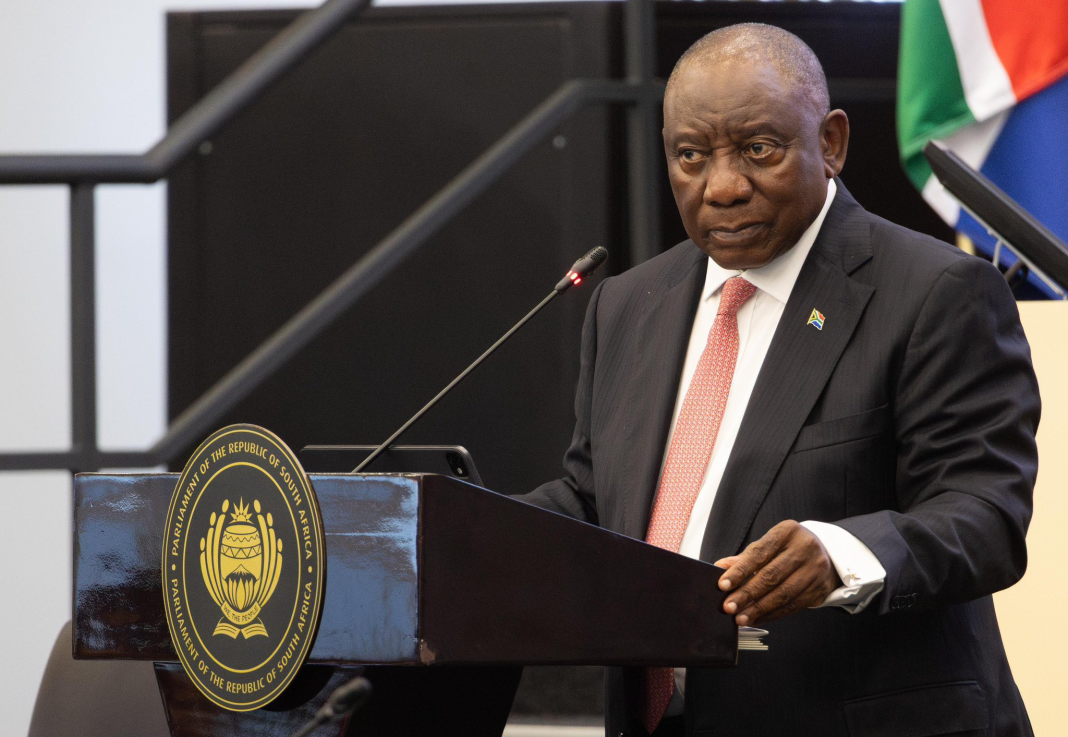
President Cyril Ramaphosa says South Africa must position itself as an active participant in the global artificial intelligence (AI) revolution rather than remain a consumer of technologies developed in Western countries.
Ramaphosa said the country’s working visit to Silicon Valley in the United States was aimed at strengthening its role in the development of advanced technologies while representing the interests of the Global South and other developing countries.
ALSO READ: Proportional representation councillor list disputes rock MKP in KwaZulu-Natal
“We have come with a clear understanding that the decisions we make today will determine whether this technological revolution becomes a powerful instrument to overcoming our developmental challenges, or becomes another source of inequality and exclusion,” said Ramaphosa.
The president is leading a multi-stakeholder delegation comprising representatives from business, universities and research institutions on a working visit to Silicon Valley. The Presidency said the visit aims to provide insights into global AI developments to inform South Africa’s approach to the adoption and implementation of the technology.
Ramaphosa addressed the South African delegation in California on Monday ahead of a week-long AI learning programme.
He said South Africa had already made inroads into AI development and implementation, supported by investments from international companies. He urged the delegation to capitalise on the confidence shown by these investors.
Ramaphosa said the country’s ambitions should extend beyond becoming a gateway to Africa’s digital economy, arguing that South Africa should position itself as one of the engines driving its growth.
He stressed that the success of AI should ultimately be measured by its impact on the lives of ordinary citizens.
ALSO READ: Manhunts launched after 17 killed in two mass shootings in Gauteng and KZN
The president said South Africa should explore how technological advancements could improve education in rural and disadvantaged communities, assist teachers in providing individual attention to learners and help medical professionals diagnose diseases earlier while extending quality healthcare to underserved communities.
He also challenged the delegation to consider whether AI could improve public safety, strengthen crime prevention and justice systems, and create employment opportunities for millions of unemployed young South Africans.
“If we want to do proper deep dives on AI as we interface with people we are going to meet here, this is what we need to focus on. We must approach AI not simply as a technological development, but as an instrument of economic and social transformation,” said Ramaphosa.
However, Ramaphosa warned that the country’s pursuit of advanced technologies, including AI, could deepen existing inequalities and compound its social challenges if the potential consequences were not properly considered.
He said South Africa’s history of exclusion, coupled with persistent poverty, unemployment and inequality, made it particularly vulnerable to the disruptive effects of technological advancement.
“This new technological advancement, as we admire it, as we are awed by it, could displace jobs, it could deepen inequality in our country and widen the gap between people of our country,” he said.
“For a country like ours with our history of exclusion, and our continuing challenges of poverty, unemployment and inequality, these developments are particularly consequential and we cannot afford to be passive observers of this revolution.”
Silicon Valley is widely regarded as a global hub for technological innovation, with major developments in computing, software, semiconductors and artificial intelligence.






