By Simon Nare
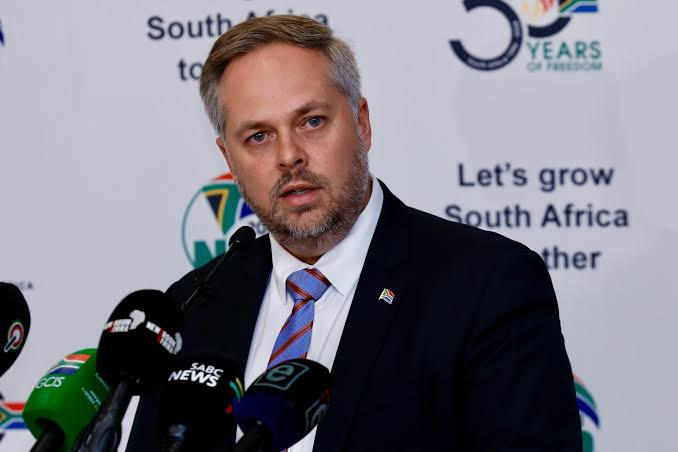
Home Affairs Minister Leon Schreiber has hailed the repatriation of about 75,000 undocumented foreign nationals in recent months as an unprecedented effort that is beginning to yield results in fixing the country’s immigration system.
Addressing a virtual meeting of the Portfolio Committee on Home Affairs on Tuesday, Schreiber said the Department of Home Affairs and the Border Management Authority (BMA) had carried out the repatriations with dignity and in accordance with human rights.
He described the operation as an enormous challenge given the scale of the work required, including the construction of a fully fledged repatriation centre in the border town of Musina as foreign nationals volunteered to return home amid rising tensions following anti-immigration protests.
Schreiber said the department would on Wednesday unveil a new biometric system that he said would significantly improve the tracking of people entering the country.
“If we look at the numbers of repatriation that were done, the latest figure was 74 000 or 75 000. Really unprecedented in such short space of time and the process involved in that,” he said.
“It is quite an extensive and rigorous process, and I will just say from my side that there is a reason for us to be very proud for the work that was done in this space of time. No serious incidents caused by government and the work that we were doing.”
The minister said there had been two incidents involving foreign nationals being transported to repatriation points, including a bus accident and the death of a traveller from natural causes.
“I think if you look at the scale of ferrying people all across the country, certainly building that facility in Musina within five days or so at a scale of accommodating people with water, food and medical facilities. Everything required for a dignified repatriation process, I can say that it has demonstrated what we are capable of,” he said.
Schreiber also praised the Inter-Ministerial Committee on Migration for its role in coordinating the repatriation process, saying the departments of Public Works, Health and Social Development, as well as the Limpopo provincial government, had played an important role.
He commended the cooperation between government departments in an operation led by Home Affairs and the BMA, saying valuable lessons had been learnt.
“I would go so far to say the culture change work which myself and BMA has been focused on is really starting to bear fruits. I must thank the director general and the teams that led the teams as well where we have that right institutional culture which says we must uphold the rule of law without fear or favour but we must also do it with dignity and inherent human rights of every person in the repatriation process. That was really the high-level approach on that,” he said.
Schreiber and officials from his department faced questions from MPs about border security and whether governments of the countries from which the foreign nationals originated should contribute towards repatriation costs.
The minister said some of the matters raised by the committee were still being discussed at diplomatic level, while measures had been put in place to strengthen border security.
The BMA said procurement of additional drones and other tools of trade along the borders was under way.
It said it currently had only 40 body cameras for its employees and needed significantly more.
The authority said intelligence-led patrols involving the BMA, South African Police Service, South African National Defence Force and South African Revenue Service had been deployed.
It said it would also intensify immigration screening at all ports of entry, deploy advanced cargo scanners at priority points and implement multi-agency integrity campaigns.
INSIDE POLITICS