



By Lebone Rodah Mosima
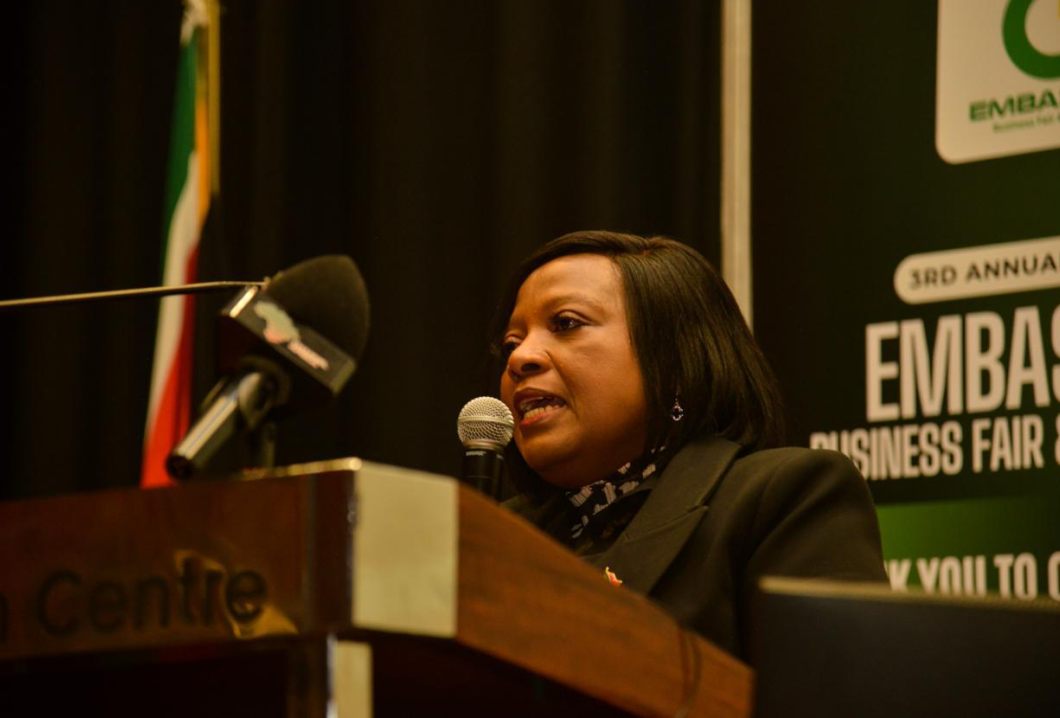
Small Business Development Deputy Minister Jane Sithole says South Africa’s trade missions should be judged by the contracts, jobs and export-ready businesses they produce instead of the number of delegates they attract.
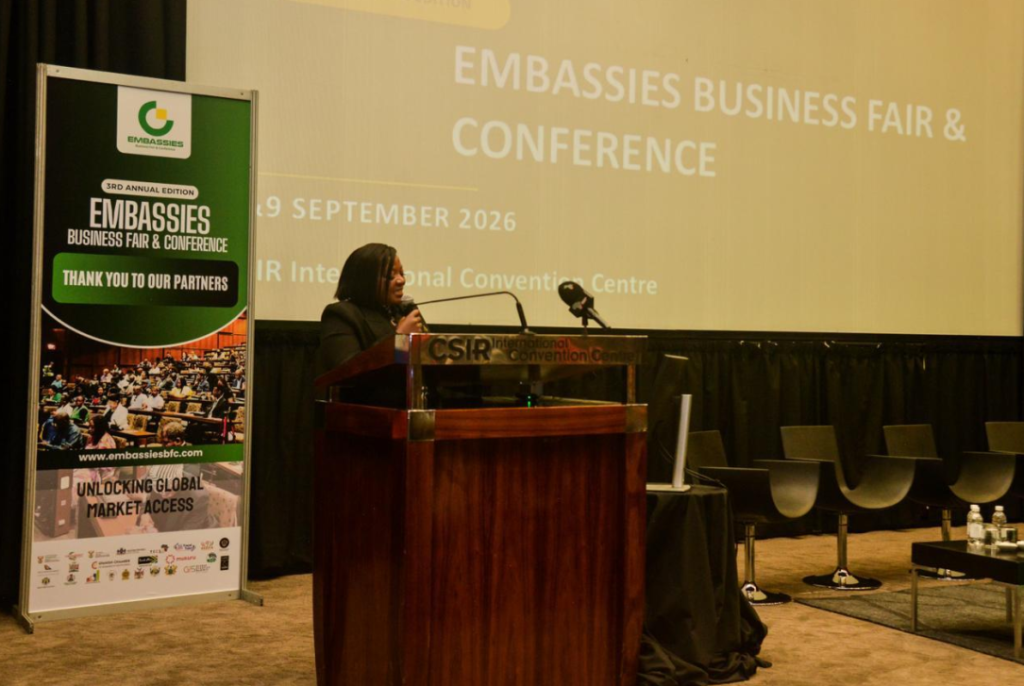
Speaking at the 3rd Annual Embassies Business Fair and Conference at the CSIR International Convention Centre in Pretoria on Tuesday, Sithole said government and diplomatic missions needed to turn international engagement into measurable commercial opportunities for small businesses.
ALSO READ: No Joburg mayoral win without Soweto, says Mashaba of Zille
“The true test of a trade mission is not how many delegates attended. It is how many qualified leads were generated, how many businesses became export-ready, how many contracts were signed and how many new jobs and sustainable revenues followed,” she said.
Sithole said African entrepreneurs were producing quality manufactured goods, processed agricultural products, technology, professional services and distinctly African brands, but many struggled to move beyond provincial or national markets.
She said small businesses could have strong products but lack reliable market intelligence, knowledge of certification and labelling requirements, working capital, logistics support, suitable packaging, foreign distribution networks or trusted commercial partners.
“In other words, export potential does not automatically become export participation,” Sithole said.
“Our task is to close that gap. We must help businesses move from readiness to relationships; from relationships to contracts; and from contracts to repeatable, sustainable trade.”
She said global trade opportunities should not be limited to large corporations with established international networks and called for women- and youth-owned businesses, township and rural enterprises, cooperatives, businesses owned by people with disabilities and micro-enterprises to be included.
“A business should not be excluded from global opportunity because of its postcode, its size or the limited reach of its current networks,” she said.
ALSO READ: Legal association takes Phala Phala impeachment committee to court over Madonsela removal
Sithole said diplomatic missions had an important role to play because of their knowledge of foreign markets, including where demand was growing, what buyers expected, applicable regulations and potential commercial partnerships.
“You are uniquely placed to help convert broad interest into trusted, country-specific pathways,” she said.
“Economic diplomacy must therefore be practical.”
She called on diplomatic partners to treat micro, small and medium enterprises as commercial partners rather than simply beneficiaries of development programmes, and to identify opportunities suitable for smaller businesses, bring buyers closer to export-ready firms and support business-to-business matchmaking.
Sithole also urged diplomatic missions to provide entrepreneurs with practical market intelligence and help build commercial relationships that extended beyond a single conference or trade mission.
She said the African Continental Free Trade Area offered businesses greater access to markets across the continent, but argued that agreements would only have meaning if businesses could use them.
“The success of continental integration will not be measured only by protocols signed or tariffs negotiated,” she said.
Sithole said the AfCFTA needed to be made practical for small businesses through accessible information, simpler guidance, assistance with rules of origin and customs processes, reliable logistics, trade finance and stronger connections between buyers and suppliers.
She identified six priorities for expanding small-business participation in international markets: improving export readiness, providing better market intelligence, connecting finance to confirmed commercial opportunities, simplifying trade processes, using technology to widen access and measuring outcomes rather than activity.
She also called for greater coordination between government, diplomatic missions, chambers and trade bodies, financial institutions, large companies and entrepreneurs.
“Diplomatic missions must open doors, provide market insight and help build trusted relationships. Chambers and trade bodies must aggregate businesses, verify readiness and sustain commercial networks,” she said.
“Financial institutions must design instruments that match the transaction cycles of small exporters. Large firms must bring smaller suppliers into value chains. And entrepreneurs must invest in quality, governance, reliability and the discipline required to serve international customers.”
Sithole said institutions should organise support around the needs of businesses rather than their own structures, arguing that entrepreneurs should not have to navigate disconnected government and development programmes.
“The distance between a local business and a global market is not measured only in kilometres. It is measured in information, standards, finance, logistics, trust and relationships,” she said.
“Every institution represented here has the power to shorten that distance.”
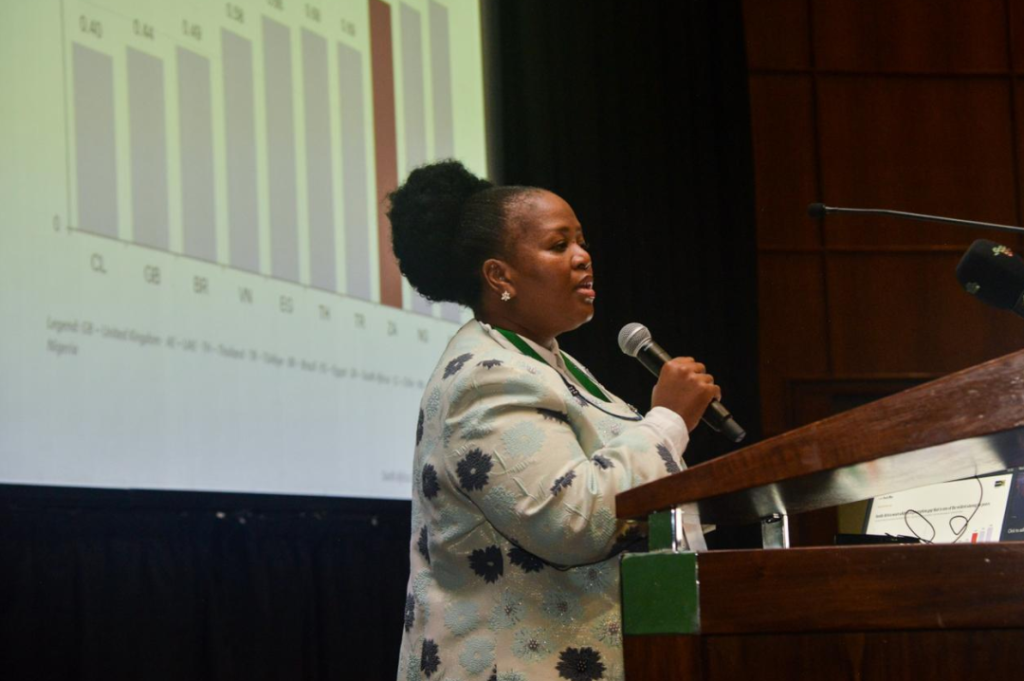
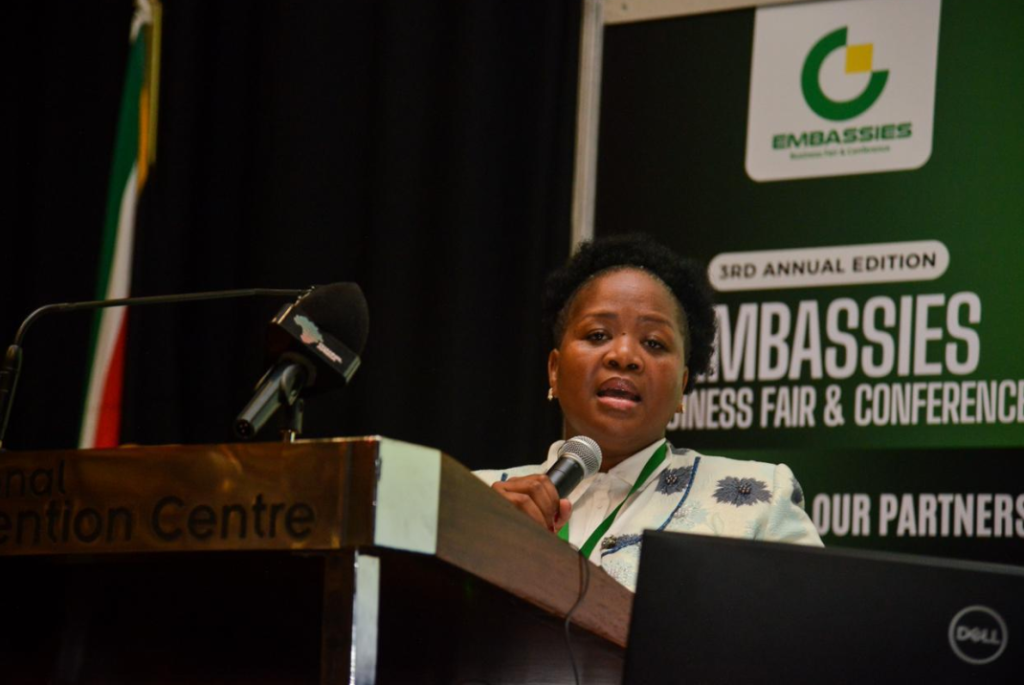
Acting Brand South Africa marketing manager Toni Gumede, who also addressed the conference, said the country needed to position itself not only as a domestic market but as a platform for investment and trade across Africa.
ALSO READ: ANC defends IEC court challenge, says it is not questioning electoral body’s integrity
“When we ask whether South Africa is a compelling destination for trade and investment, we must go beyond simply listing what our country possesses,” Gumede said.
“Investors do not invest in potential alone. They invest where they can see an opportunity to turn that potential into value.”
Gumede said South Africa’s proposition combined resources, capability, connectivity and opportunity, supported by sophisticated financial services, established legal and corporate institutions, telecommunications infrastructure, deep capital markets and an extensive professional-services sector.
“Through the African Continental Free Trade Area, businesses operating from South Africa have an opportunity to participate in an increasingly connected African marketplace,” Gumede said.
“South Africa began preferential trade under the AfCFTA in 2024, creating another pathway for our manufacturers and exporters into continental markets.”
She said Johannesburg demonstrated the country’s role as a regional commercial hub because it was home to the Johannesburg Stock Exchange, major financial institutions, professional-services firms and multinational companies.
“So our proposition is not simply: Come and sell to South Africa,” Gumede said.
“It is: Come and build from South Africa. Partner from South Africa. Innovate from South Africa. And use South Africa as a platform into a growing African market.”
Gumede also highlighted South Africa’s mineral resources, particularly platinum-group metals, saying the opportunity extended beyond extraction into beneficiation, manufacturing, hydrogen and fuel-cell technologies.
She said agriculture and automotive manufacturing were further examples of South Africa’s integration into global markets.
“South Africa is one of the world’s leading citrus exporters, demonstrating our ability to meet demanding international standards,” she said.
“Our automotive sector is integrated into global production networks. BMW, Mercedes-Benz, Volkswagen, Toyota, Ford and Isuzu are among the manufacturers producing vehicles here for domestic and international markets.”
Gumede said renewable energy, green hydrogen, digital technologies, tourism, the creative economy and global business services also offered opportunities for future investment.
She acknowledged that investors were aware of South Africa’s economic and structural challenges, but said the country’s investment proposition depended on whether it had the institutions and capacity to address them.
“The question is: Does the country have the capability, institutions, partnerships, determination and the goodwill to address them?” she said.
“We are seeing important reforms and increasing collaboration between government and business around energy, logistics and other structural constraints. Greater private-sector participation in electricity generation and growing renewable-energy investment demonstrate this changing landscape.”
Gumede said South Africa should not be marketed as a country without problems, but as one that was “investable, capable and actively working to improve its competitiveness”.
She said the continued presence and reinvestment of multinational companies that had operated in South Africa for decades was an important indicator of investor confidence.
Gumede urged prospective investors and trading partners to look beyond negative headlines and consider the country’s manufacturing base, mineral and agricultural resources, financial sector, technology industry, renewable-energy potential and creative economy.
“South Africa’s greatest competitive advantage is not only what lies beneath our soil,” she said.
“It is what our people are capable of building above it.”
Her message to prospective investors and trading partners was: “Do not only observe South Africa’s potential. Participate in it.”
“Trade with us. Invest with us. Innovate with us. Build with us,” she said.






