
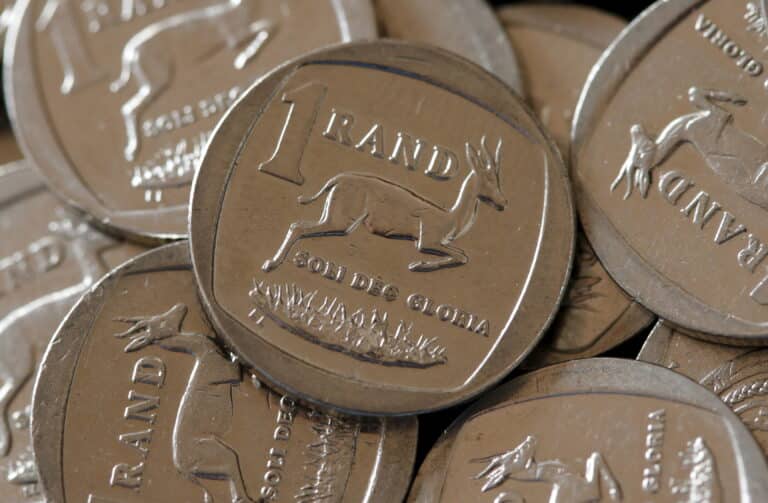


The South African rand was weaker on Thursday on doubts over a fragile two-week ceasefire between the U.S. and Iran, while traders also assessed domestic economic releases for clues on the health of Africa’s largest economy.
The viability of the ceasefire was in question as Israel continued to attack Lebanon on Thursday.
At 1255 GMT, the rand traded at 16.45 against the dollar, down 0.4% from its previous close.
Investors exercised caution as energy-dependent economies stand exposed to oil price volatility, which threatens to stoke inflation and strain economic growth.
South African assets rallied after the news of the ceasefire, with the local currency gaining almost 3% on Wednesday and paring some of the losses amassed since the start of the Iran war.
“Following the initial appreciation, the rand appears to have settled into a range as investors await clarity on the ceasefire agreement, which remains fraught with challenges and distrust,” said ETM Analytics in a note. “This weekend’s events will be a critical test of whether the ceasefire holds, as officials meet in Pakistan to begin negotiations,” said the firm, adding that the rand is expected to remain range-bound into next week, due to “light positioning and lower volatility”.
South Africa’s net foreign reserves fell to $73.19 billion at the end of March from $75.84 billion in February, central bank data showed on Thursday.
The country’s manufacturing output fell 2.8% year-on-year in February, after declining by a revised 0.1% year-on-year in January.
On the Johannesburg Stock Exchange, the Top-40 index was down 0.8%.
South Africa’s benchmark 2035 government bond was weaker, as the yield rose 7 basis points to 8.545%.
REUTERS